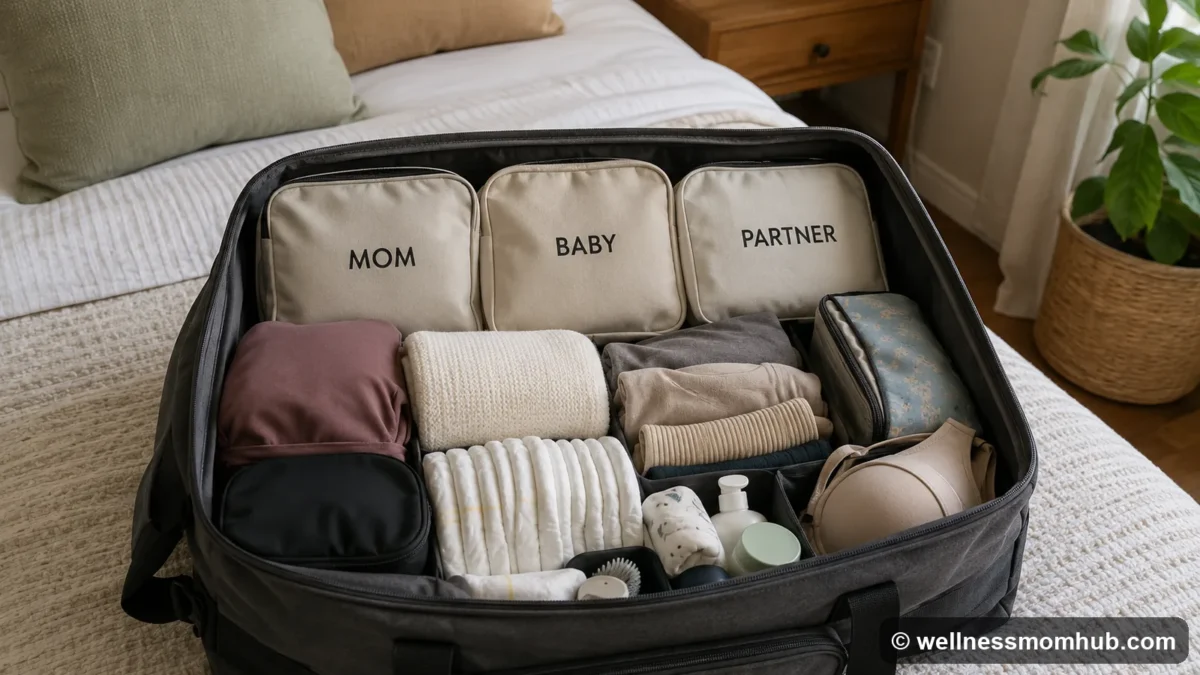
A hospital bag checklist covers three people: mom, baby and the partner or support person. Pack the requested ID and insurance paperwork, loose clothes, postpartum underwear and pads, toiletries, an extra-long charger, two simple baby outfits and the infant car seat for the ride home, and leave everything else at home.
Quick answer: one main bag with three pouches (mom, baby, partner) and a shared folder. The Cleveland Clinic suggests packing a month or two before your due date; keep a note on top for the things that can’t be packed early: phone, wallet, glasses.
Free printable Hospital Bag Checklist Printable
This list follows the Cleveland Clinic’s hospital bag advice and is a packing guide, not medical advice: your hospital’s own list wins.
Short on time? The Frida Mom postpartum kit, a 10-foot charging cable and the infant car seat cover recovery, a phone that reaches the bed and the ride home.
The Complete Hospital Bag List at a Glance
This quick-reference table separates mom, baby, partner and shared items so the room does not become a luggage carousel.
| Bag section | Pack ahead | Add before leaving |
|---|---|---|
| Mom | Loose outfit, robe, postpartum underwear, shower shoes, toiletries pouch, and requested hospital documents | Phone, wallet, glasses, and daily-use hair items |
| Baby | Two simple outfits, diapers, a soft hat, and a blanket for the trip home | Car seat planned for the ride home; check the hospital’s discharge instructions |
| Partner | Change of clothes, toiletries, shelf-stable snacks, and refillable bottle | Phone, wallet, keys, and parking information |
| Shared | Long charging cord, power bank, empty tote, paperwork folder, and pen | Any preregistration confirmation, birth plan, or forms admissions requested |
Leave a little empty space and skip the urge to fill it, because discharge paperwork multiplies. So do half-finished water bottles and the tiny things that land on the windowsill.
When to Pack Hospital Bag
Around 35 to 36 weeks is a common planning target. It is not a rule, so use the timeline your provider or hospital gives you.
Pack the non-daily items first.
Make a last-minute note.
Confirm hospital logistics.
Check the current check-in location, bag limits, parking, supplied items, food rules and visitor rules with your own facility.
Once the main bag is zipped, leave it alone. The daily-use items stay on the door note.
What to Pack in Hospital Bag Without Overpacking
To pack without overdoing it, divide mom, baby, partner, and shared items into separate pouches. Before choosing the bags, check whether your facility limits the number or size you can bring.
One mom pouch.
Why it works: Clothes, underwear, and personal-care items stay together instead of migrating to the bottom.
One baby pouch.
Why it works: Two outfits and a soft hat are easy to hand over when they are not mixed with adult clothes.
One partner packing cube.
Why it works: The support person can find a charger or clean shirt without asking where every item is.
One shared pocket.
Why it works: Paperwork, a pen, a power bank, and a long charging cable stay easy to reach.
Skip a separate bag for every category, because it creates too many handles and too many trips. Pouches inside one main bag work better.
Midway through packing, check everything against the free printable hospital bag checklist and circle the items that must wait until departure. It is much more reliable than trusting late-pregnancy memory.
 Save
Hospital Bag Essentials to Pack First
Start with these eight items and treat everything else as optional.
1. Requested identification, insurance information, and forms.
Why it works: One folder keeps the hospital’s paperwork from disappearing between snack wrappers.
2. Phone and extra-long charging cord.
Why it works: A long cable gives you more flexibility when the outlet is not beside the bed. Our pick: Anker 10 ft USB-C cable, 2 pack.
3. Loose going-home outfit.
Why it works: Soft, simple clothing is easier than planning a full discharge-day outfit.
4. Basic toiletries.
Why it works: A travel-size toothbrush, toothpaste, deodorant, face wash, and hair ties cover the practical basics.
5. Refillable water bottle.
Why it works: One familiar bottle is easier to keep track of than several disposable cups. Our pick: Owala FreeSip 40 oz.
6. Shower shoes and nonslip socks.
Why it works: They pack flat and make unfamiliar floors feel less awkward.
7. Two simple baby outfits.
Why it works: A spare covers the very realistic possibility that the first outfit gets messy.
8. Infant car seat for the ride home.
Why it works: Saving the manual and locating installation help before the trip keeps the information handy. Our pick: Graco SnugRide Lite LX.
Full-size toiletries stay home, along with anything packed only because a video said to. The long charger earns room; random gadgets do not.
If you buy one thing from this list, make it the extra-long charger.
Hospital Bag List for Mom
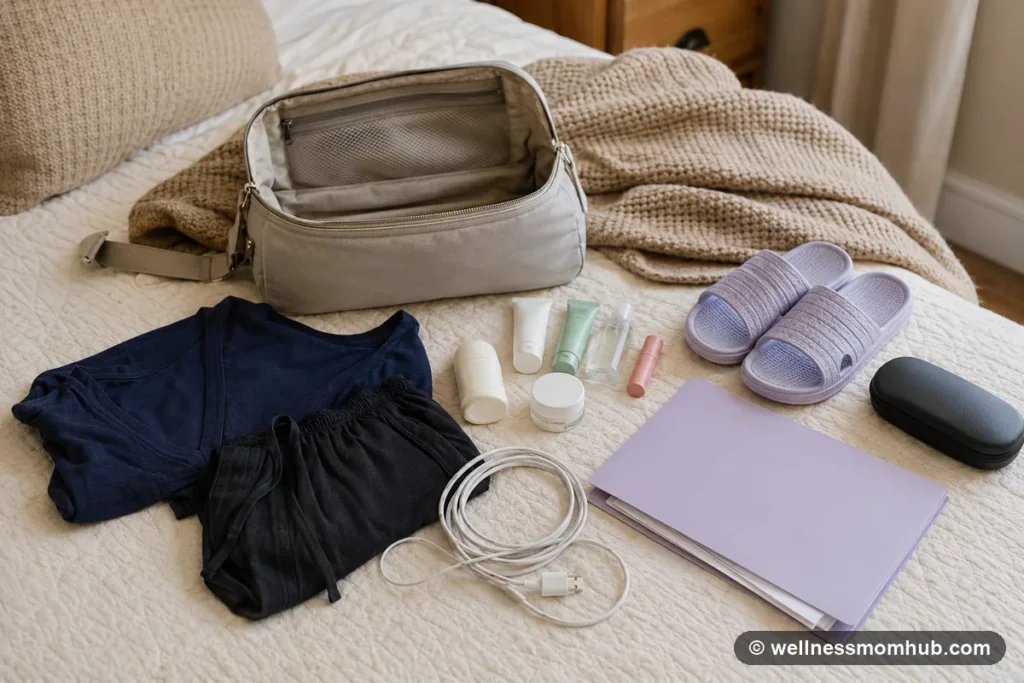
A hospital bag list for mom should focus on clothing, toiletries, paperwork, and small comfort items, not a suitcase full of “just in case” products. Start with the list your hospital gives you, then add the few personal items you know you will use.
Paperwork folder.
Why it works: Requested identification, insurance information, preregistration confirmation, and a birth plan stay flat and easy to reach.
Two loose outfits.
Why it works: Separates make it easy to change one piece without unpacking everything.
Soft robe or open-front layer.
Why it works: It adds warmth without taking up the space of a heavy sweater.
Comfortable underwear.
Why it works: A few pairs in a zip-top pouch stay clean and are easy to find.
Soft wireless bra, if wanted.
Why it works: It is an optional layer without bulky hardware. Our pick: Suekaphin wireless nursing bras.
Slip-on shoes.
Why it works: They are faster than laces when you are trying to leave with bags and paperwork.
Glasses and case, if used.
Why it works: The case protects them when the bedside table gets crowded.
Hair ties, lip balm, and moisturizer.
Why it works: These tiny comfort items take almost no space and are easy to overlook.
 Save
What to Bring in Hospital Bag for Mom: Useful Extras
Useful extras should make an unfamiliar room easier to manage without creating another bag to carry. Choose two or three from this list, based on what you actually use at home.
Small pillow in a distinct case.
Sleep mask.
Earbuds.
Empty foldable tote.
Written contact list.
Skip the home pillow if it is huge or precious, because it becomes one more bulky thing to keep off the floor. If it cannot fit inside the main bag, it stays home.
A simple rule: if an extra cannot earn its space in one specific moment, it stays home.
Postpartum Checklist: Practical Gear Only
This postpartum checklist covers practical gear only, not medical or recovery guidance. Check your hospital’s packing list before buying or packing duplicates.
High-rise or comfortable disposable underwear. Our pick: Frida Mom postpartum underwear.
Maternity pads, if requested or preferred. Our pick: Always Maxi Overnight, size 5.
Peri bottle, if requested or preferred as gear. Our pick: Frida Mom upside-down peri bottle.
Toiletries in a handled pouch.
Why it works: You can carry the whole pouch to the bathroom instead of juggling loose bottles.
Bag for worn clothes.
Do not buy or pack a duplicate of every supply before checking the hospital’s list, because those packages are bulky. One small backup pouch is enough.
 Save
C-Section Hospital Bag: Practical Additions
A C-section hospital bag uses the same core checklist with a few clothing and organization additions. For procedure or recovery questions, follow your provider.
Loose, high-waisted clothing.
Higher-rise underwear. Our pick: Frida Mom high-waist C-section underwear.
Slip-on shoes.
Extra-long charger.
Small bedside pouch.
Why it works: Lip balm, glasses, tissues, and the charging cable stay together instead of spreading across the room.
Skip making a second bag for this section. These additions go in one clearly labeled pouch inside the main bag, because fewer bags win.
Ask your provider and hospital whether a planned C-section changes the recommended bag, paperwork, arrival instructions, or expected stay.
 Save
Hospital Bag for Baby
Two easy outfits in different sizes.
Why it works: One newborn-size and one 0-3-month option give you a practical backup without overpacking. Our pick: Simple Joys by Carter’s zip sleep and play.
Soft hat, if it suits the weather.
Why it works: It takes almost no room and can stay with the going-home outfit.
One blanket for the trip home.
Why it works: It takes little room. For placement, follow the instructions for the specific car seat.
Infant car seat.
Why it works: Saving the manual and finding installation help before the hospital trip keeps the information close by. NHTSA lists car-seat inspection stations where you can get help.
Pediatrician contact details, if the hospital asks for them.
Why it works: A saved note on the phone keeps the information easy to share.
If you are still building your gear list, the full newborn checklist covers practical quantities for clothing, diapering, nursery, bath, and on-the-go gear.
 Save
What to Pack in Hospital Bag for Baby: Clothes and Ride-Home Items
Pack simple baby clothing and the items requested for discharge and the ride home. Check the hospital’s list before adding extra diapers, wipes, or blankets.
Zip or snap outfit.
Backup outfit in a labeled zip-top bag.
Weather-appropriate outer layer.
Car-seat and vehicle manuals saved on the phone.
A stiff special-occasion outfit is an easy skip. It photographs well on a hanger, then adds fiddly buttons to a day that already has enough going on. The regular diaper bag can stay ready at home for later outings.
Dad Hospital Bag Checklist for a Partner or Support Person
A dad or support person’s hospital bag should fit into one self-contained overnight bag with clothes, toiletries, food logistics, communication items, and parking details. That keeps the main bag from becoming everyone’s junk drawer.
One or two changes of clothes.
Basic toiletries.
Why it works: A toothbrush, toothpaste, deodorant, and face wash cover an unexpected overnight stay.
Phone charger and power bank.
Refillable bottle and shelf-stable snacks.
Wallet, keys, and parking information.
Short contact list and notepad.
Why it works: The partner can track updates, questions, and practical tasks without relying on memory.
 Save
Hospital Bag Must Haves for the Final Door Check
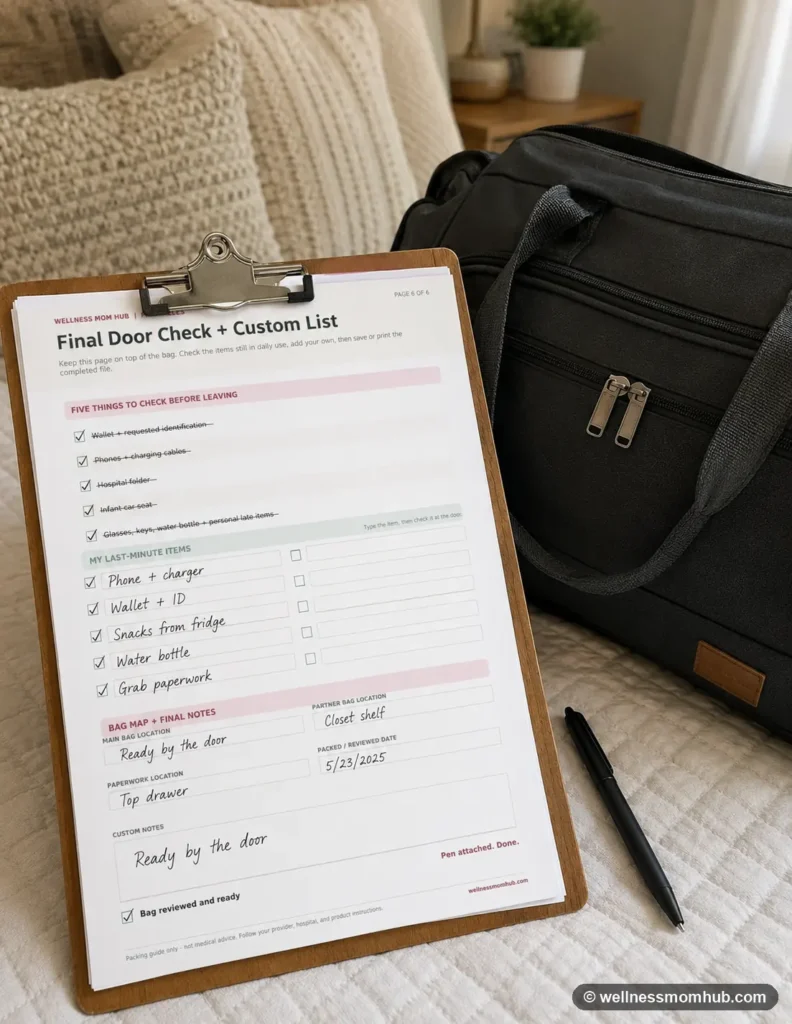
Hospital bag must haves are the items worth checking immediately before leaving, even if the rest of the bag has been ready for weeks. Keep a five-item door check on top of the bag so you can read it while standing there with your shoes on.
1. Wallet and requested identification.
2. Phones and charging cables.
3. Hospital folder.
4. Infant car seat.
5. Last-minute personal items.
Also remove anything packed out of anxiety that you cannot explain. If an item has no clear job, it probably does not need to take the trip. Do not reopen every pouch at the door, because that is how a finished bag ends up all over the floor. Check the five late items and go.
Once the bag is packed, the next step is having the baby registry checklist ready so the nursery is set up before you get home.
Hospital Bag Products Worth Buying
Most of a hospital bag is things you already own. These are the few worth buying ahead, each checked on Amazon US.
LOVEVOOK Weekender Duffle Bag with Shoe Compartment
Frida Mom Postpartum Essentials Kit
Anker 10 ft USB-C to USB-C Cable, 2 Pack
Frida Mom Postpartum Underwear, 8 Pack
Always Maxi Overnight Pads, Size 5
Lansinoh Lanolin Nipple Cream
Suekaphin Wireless Nursing Bras, 5 Pack
Lansinoh Stay Dry Nursing Pads, 100 Count
Owala FreeSip 40 oz Water Bottle
Simple Joys by Carter's Sleep and Play, 3-Pack
Graco SnugRide Lite LX Infant Car Seat
Frequently Asked Questions
When should you pack your hospital bag?
Around 35 to 36 weeks is a common planning target in US hospital guidance. It is not a rule for every pregnancy, so follow the timeline your provider or hospital gives you.
What to pack in the hospital bag?
Pack the identification and paperwork your hospital requests, loose clothes, basic toiletries, a long phone charger, and a water bottle. Add two simple baby outfits, diapers, the car seat planned for the ride home, and a small partner bag with clothes, toiletries, snacks, keys, and parking information.
What do you need in a hospital bag list?
A useful hospital bag list needs separate sections for mom, baby, and the partner or support person, plus a short last-minute list. Leave room for any preregistration details, paperwork, or hospital-specific instructions you receive.
Do you wear a bra during labor?
That depends on personal preference and the hospital or provider’s instructions. If you pack one, choose a soft wireless bra that is easy to remove, then check what is permitted for the planned setting.
What should a dad pack in a hospital bag?
A dad or support person should pack a change of clothes, basic toiletries, a charger, water bottle, permitted snacks, wallet, keys, and parking information. A power bank and short contact list are useful extras without taking much room.
What should I pack in my hospital bag for a scheduled C-section?
Use the regular mom, baby, and partner checklist, then add loose high-waisted clothes, higher-rise underwear, slip-on shoes, an extra-long charger, and a small bedside pouch. Ask your provider and hospital whether the planned procedure changes packing, paperwork, or arrival instructions.
What should you not pack in a hospital bag?
Leave expensive jewelry, large amounts of cash, bulky bedding, too many baby outfits, and full-size product bottles at home. Check what the hospital provides before packing diapers, wipes, or postpartum supplies.
How many baby outfits should I pack for the hospital?
Pack two simple outfits: one planned going-home outfit and one backup, ideally in newborn and 0-3-month sizes.
Hospital Bag Checklist Printable
The printable turns this guide into a simple three-column checklist for mom, baby, and partner, with space for hospital-specific notes. Download the free printable hospital bag checklist, cross out anything your facility says it provides, and attach a short last-minute note instead of trying to remember one more list.
 Save
Download the free checklist, stick it on the refrigerator or tuck it inside the bag, and mark the five late items right before you leave.
Registry not finished yet? Start with these baby registry must-haves, from the car seat for the drive home to a postpartum kit for you.