An obstacle course for kids takes about five minutes to set up with pillows, chairs, painter’s tape and a laundry basket, and it can burn off an afternoon’s worth of energy. Below are five ready-to-copy courses (living room, hallway, backyard, sidewalk chalk and a rainy-day ninja course), 24 station ideas sorted by age, the safety rules worth knowing, and free station cards to print.
Quick answer: to make an obstacle course for kids, pick 4 to 8 stations that mix different moves (crawl, balance, jump, throw), set them up in a loop or a line, and walk it together once before going. Use 4 stations for toddlers, 6 for preschoolers and 8 or more for kids 5 and up.
Free printable Obstacle Course Station Cards
How to set up an obstacle course in 5 minutes
The best children’s obstacle courses are built from whatever is in the room, and a kids obstacle course gets better when kids help plan it.
- Clear a path. Push the coffee table aside, or pick a stretch of lawn or driveway.
- Pick your stations. Mix the moves: something to crawl through, something to balance on, something to jump over and something to throw.
- Put the hard one in the middle. Kids start strong and finish happy if the last station is easy, like a victory dance.
- Mark the order. Tape a station card at each stop, or use arrows of painter’s tape.
- Walk it first. Go through slowly together so everyone knows what to do.
- Change one thing each round. Swap a station, go backward, or add a time challenge for older kids.
Obstacle course stations by age
The right course is short enough to finish before attention runs out. Here’s what usually works:
| Age | Stations | Good moves | Skip for now |
|---|---|---|---|
| 2 years | 3 to 4 | Crawl, step over, push, two-foot jumps over a tape line | Timing, one-foot hops, anything high |
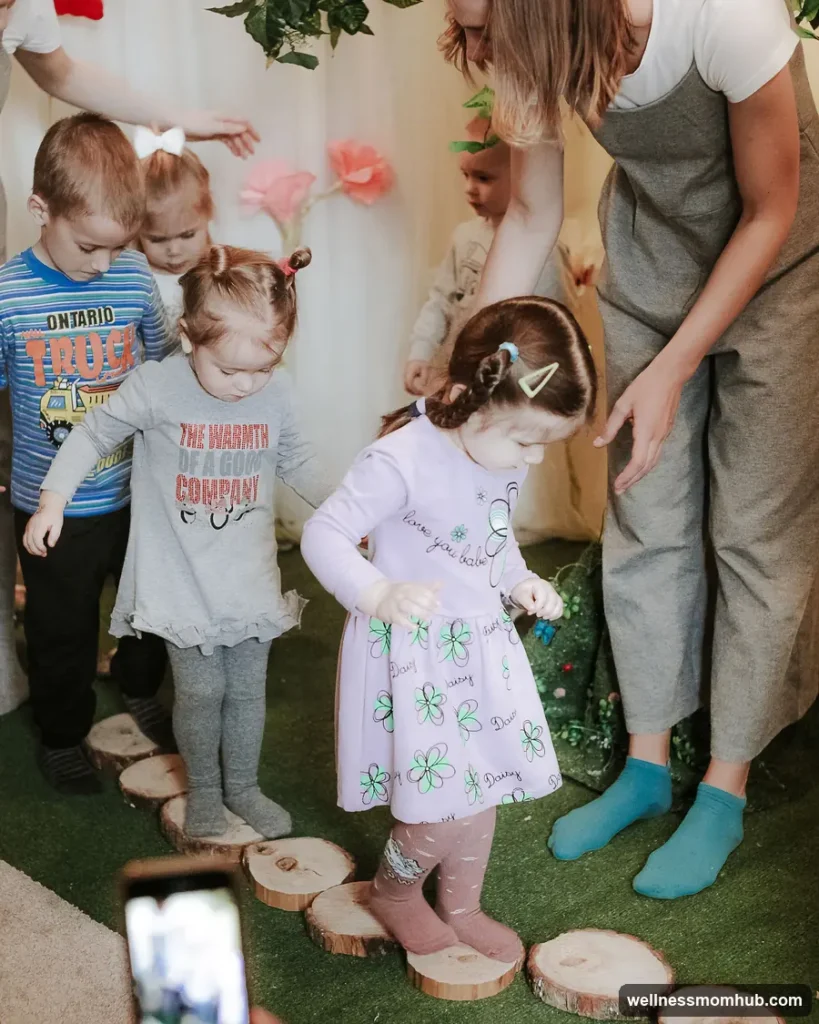
| 3 years | 4 to 6 | Bear crawls, pillow stones, beanbag toss, frog jumps | Long lines of rules |
| 4 years | 6 to 8 | Crab walks, spoon races, star jumps, catching | Racing against other kids (race the clock instead) |
| 5 and up | 8 or more | Timed laps, one-foot hops, streamer mazes, ninja moves | Climbing on furniture that isn’t anchored |
5 ready-made obstacle courses to copy
Each course is a list of stations from the printable cards, in order. Set them up as written or swap in whatever you have.
1. Living room obstacle course for toddlers (ages 2 to 3)
Setup: 5 minutes. Pillow stones (step from cushion to cushion) → chair tunnel (crawl under a row of chairs) → basket push (push a laundry basket of stuffed animals) → sock toss (3 rolled socks into the basket) → finish line dance.
Toddlers will want to go again and again, which is the point. Keep the order the same so they can learn it.
2. Hallway obstacle course for preschoolers (ages 3 to 5)
Setup: 10 minutes. Tape tightrope → streamer maze (crepe paper streamers taped across the hall to step over and duck under) → 5 frog jumps → beanbag target on a tape X → bear crawl → freeze for 5 counts.
A hallway is narrow, which keeps preschoolers moving in one direction instead of everywhere at once.
3. Backyard obstacle course (ages 4 and up)
Setup: 15 minutes. Hoop hop (two feet into each hula hoop) → jump the river (two jump ropes on the grass) → goal kick between two shoes → crawl under a patio chair → spoon race with a ball of socks → spin spot → 5 star jumps → finish line.
A backyard obstacle course can be bigger and louder. Add a water station on hot days: carry a cup of water to a bucket without spilling.
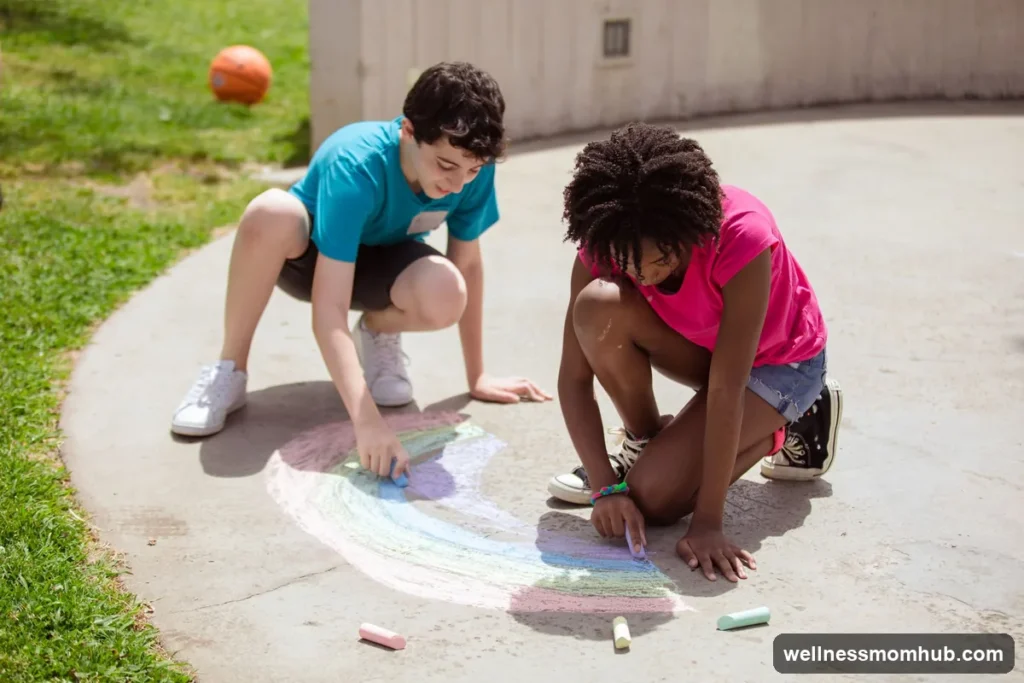
4. Sidewalk chalk obstacle course (ages 3 and up)
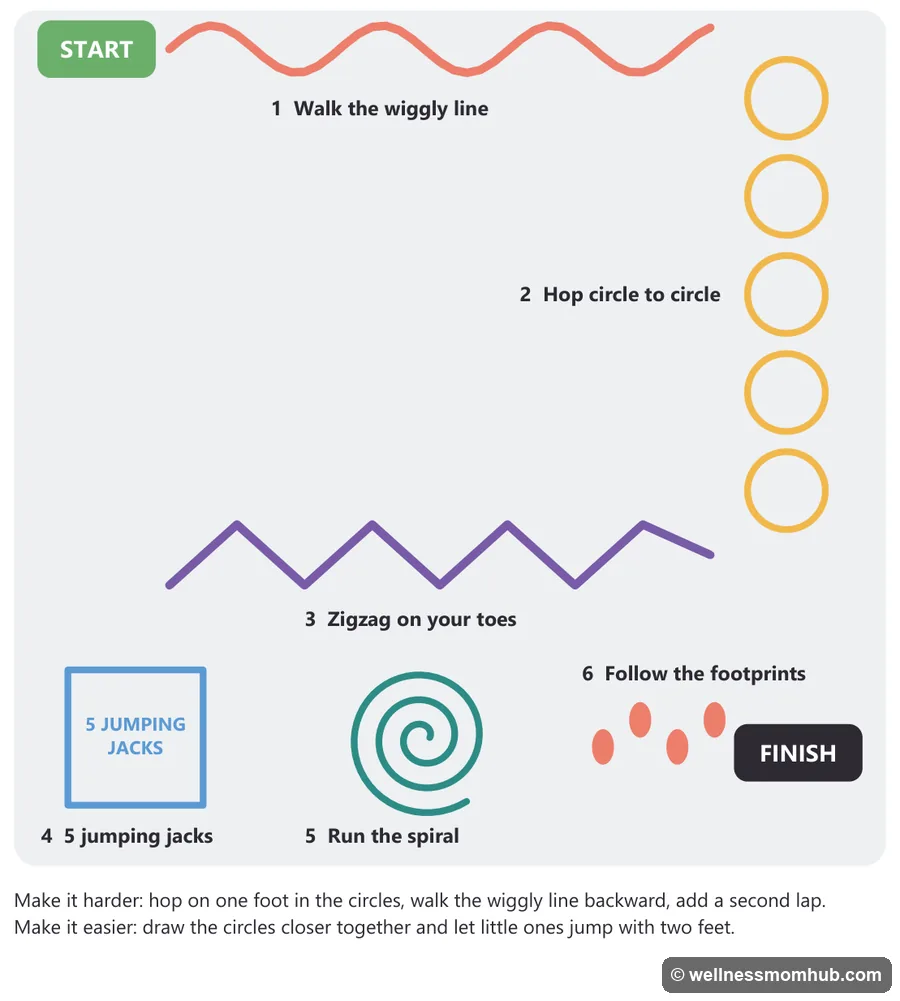
Setup: 10 minutes. A chalk obstacle course needs nothing but chalk and a driveway: a wiggly line to walk → a row of circles to hop into → a zigzag to tiptoe → a square that says “5 jumping jacks” → a spiral to run in and out of → footprints to the finish.
The printable includes a sidewalk chalk obstacle course map you can copy straight onto the pavement. Rain washes it away, so you get a fresh course next time.
5. Rainy day ninja course (ages 5 and up)
Setup: 10 minutes. Cushion mountain (climb over a pile of couch cushions) → streamer maze → crab walk → beanbag target → log roll along the rug → timed laps. Kids this age love to beat their own time, so write it down on the tracker page.
24 obstacle course ideas for kids
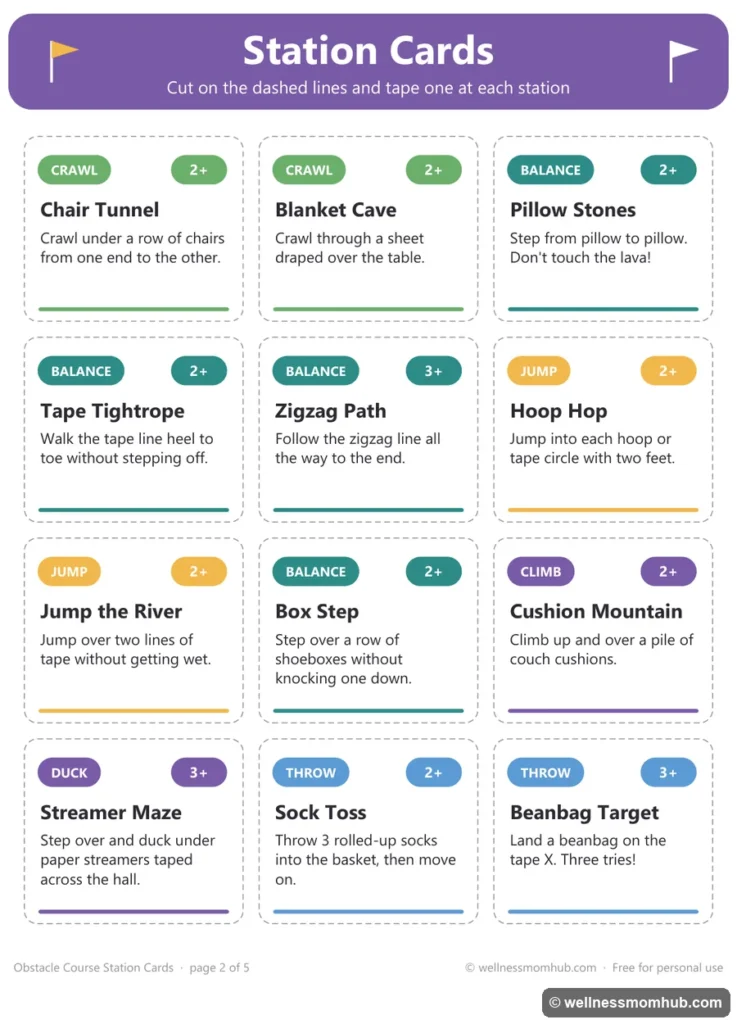
Mix and match these stations to build your own course. Each one is a card in the free printable, with the move it works on and the age it usually fits.
Crawl stations
- Chair tunnel (2+): crawl under a row of kitchen chairs.
- Blanket cave (2+): crawl through a sheet draped over the table. Our fort ideas for kids include a crawl tunnel fort that doubles as a station.
- Bear crawl (3+): walk on hands and feet to the next station.
- Crab walk (4+): tummy up, hands and feet on the floor.
Balance stations
- Pillow stones (2+): step from pillow to pillow without touching the “lava.”
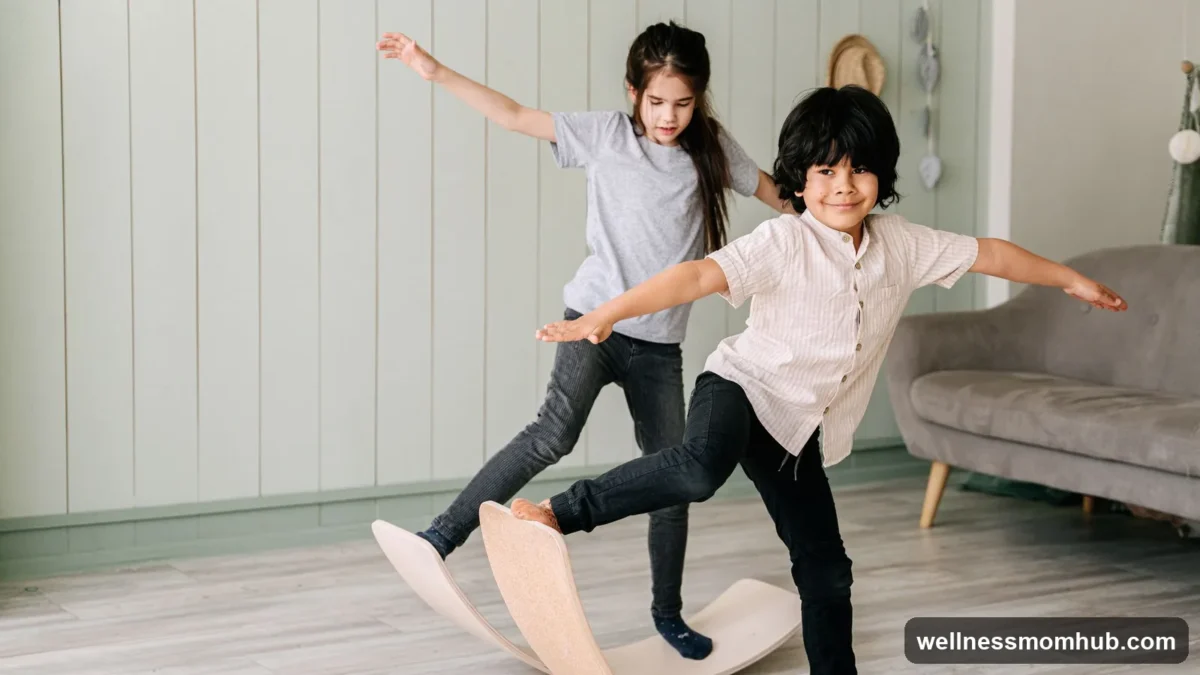
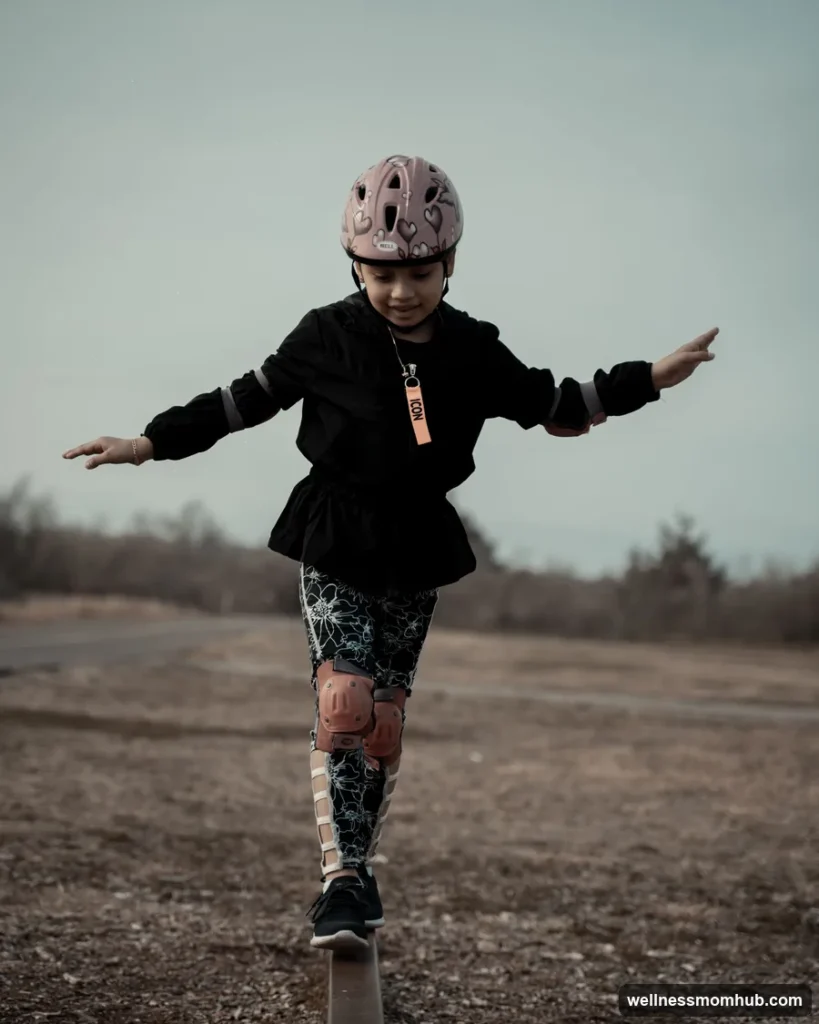
- Tape tightrope (2+): walk a line of painter’s tape heel to toe.
- Box step (2+): step over a row of shoeboxes without knocking one over.
- Zigzag path (3+): follow a zigzag of tape or chalk.
- Freeze (3+): hold a statue pose for 5 slow counts.
Jump stations
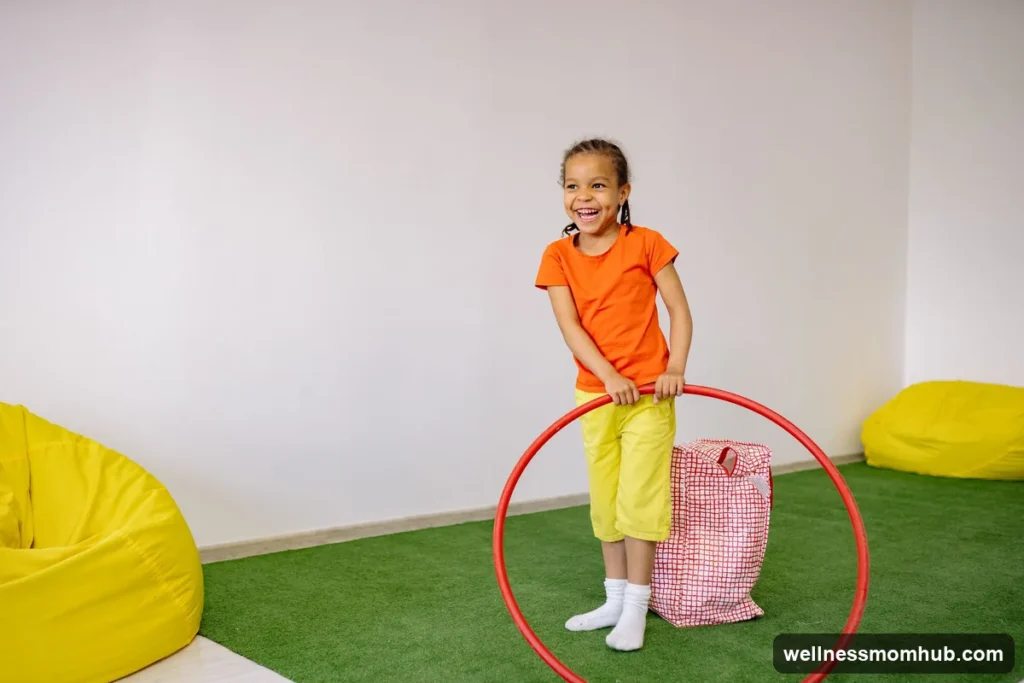
- Hoop hop (2+): jump into hula hoops or tape circles with two feet.
- Jump the river (2+): jump over two lines of tape or two jump ropes.
- Frog jumps (3+): squat low and leap 5 times.
- Star jumps (4+): arms and legs out, then in, 5 times.
Throw and kick stations
- Sock toss (2+): 3 rolled socks into a laundry basket.
- Beanbag target (3+): land a beanbag on a tape X.
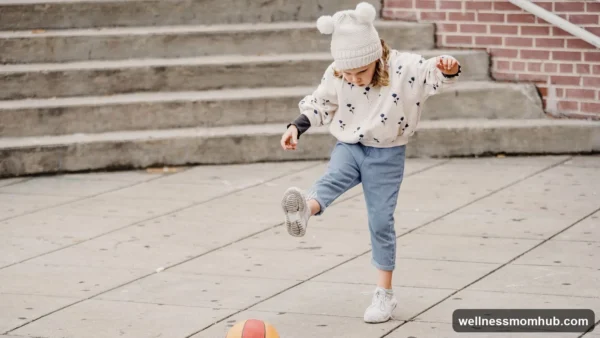
- Goal kick (3+): kick a ball between two shoes.
Climb, carry and silly stations
- Cushion mountain (2+): climb up and over a pile of couch cushions.
- Streamer maze (3+): step over and duck under crepe paper streamers.
- Basket push (2+): push a laundry basket of toys.
- Teddy rescue (2+): carry a stuffed animal to the finish without dropping it.
- Spoon race (4+): carry a ball of socks on a big spoon.
- Log roll (3+): lie straight and roll along the rug.
- Spin spot (3+): spin around slowly 3 times, then walk on.
- Finish line (2+): a victory dance, every single time.
Obstacle courses are one of the easiest ways to string together gross motor activities for toddlers and preschoolers: one course works on crawling, balance, jumping and throwing in a few minutes.
Obstacle course safety
Most obstacle course bumps come from hard corners and slippery floors, and both are easy to fix.
- No balloons for kids under 8. A lot of obstacle course ideas online hang balloons to dodge or bat. The CPSC warning is clear: children under 8 can choke or suffocate on uninflated or broken balloons. Use crepe paper streamers or a soft ball instead.
- Streamers, not string or yarn. “Laser mazes” made of yarn look fun, but anything kids duck under should break easily. Crepe paper does.
- Soft landings only. Kids jump onto pillows, never off furniture. Keep anything they climb low.
- Anchor tall furniture. Kids in obstacle-course mode climb things. The CPSC’s Anchor It campaign explains how to anchor dressers, bookcases and TVs to the wall.
- Bare feet or grippy socks on hardwood and tile.
- A grown-up at the tricky stations: climbing, spinning and anything outdoors near the street.
Free printable obstacle course station cards
The free obstacle course station cards are a 5-page PDF:
- Page 1: how to set up a course, what you need, three ready-made courses and course safety.
- Pages 2 and 3: 24 station cards, color-coded by move (crawl, balance, jump, throw and more), each with a starting age.
- Page 4: a sidewalk chalk obstacle course map to copy onto the driveway.
- Page 5: a design-your-own course page with 8 boxes to draw stations, plus a time tracker.
Let kids pick the cards and decide the order. Planning the course is half the fun for 4- and 5-year-olds.
free obstacle course station cards
For more ways to burn energy indoors, see our toddler activities at home, activities for 3-year-olds and winter activities for kids.
Obstacle course for kids FAQ
What do you need to make an obstacle course for kids?
Usually nothing new: couch pillows, kitchen chairs, a sheet, painter’s tape, a laundry basket and a ball. Outside, a few hula hoops, jump ropes or sidewalk chalk are enough for a full backyard obstacle course.
How many stations should a kids obstacle course have?
Three or four for 2-year-olds, four to six for preschoolers, and eight or more for kids 5 and up. A course a child can finish in a minute or two gets run again and again, which is better than one long course they give up on.
How do you make a chalk obstacle course?
Draw a path of chalk challenges on the driveway or sidewalk: a wiggly line to walk, circles to hop into, a zigzag, a square with an action like 5 jumping jacks, a spiral and footprints to the finish. Number each one and add arrows so kids know where to go next.
What are good indoor obstacle course ideas?
A chair tunnel, pillow stepping stones, a painter’s tape balance line, a crepe paper streamer maze, a sock toss into a basket and a cushion mountain all work in a living room or hallway.
What age can kids do an obstacle course?
Toddlers can start around age 2 with a short course of crawling, stepping and pushing stations, with a grown-up walking it beside them. Courses grow longer and harder as kids get older, with timed laps working well from about age 5.
What skills does an obstacle course build?
Obstacle courses work on gross motor skills like balance, jumping, crawling and throwing, plus following directions in order and planning how to get past each station.