Gross motor activities for toddlers don’t need a gym, a trampoline or anything you have to buy. A roll of painter’s tape, a few couch pillows and a ball will cover most of the 30 ideas below. They’re sorted by indoor, outdoor and preschool games, each one tagged with the skill it builds and the age it usually fits, plus free movement dice and move cards to print.
Quick answer: gross motor activities use the big muscles of the arms, legs and core. Good ones for toddlers are walking a tape line, pillow paths, ball rolling and kicking, crawling through tunnels, freeze dance and animal walks. Preschoolers add hopping, catching, hopscotch and rule games like Simon says and red light, green light.
Free printable Move and Play Pack: Gross Motor Dice and Cards
Gross motor activities at a glance
Short on time? Pick a row that fits your space and your child’s age, and go.
| Activity | Best from | Skill | Where | Setup |
|---|---|---|---|---|
| Ball roll | 18 months | Ball skills | Indoors | None |
| Chair tunnel | 18 months | Crawling | Indoors | 2 minutes |
| Laundry basket push | 18 months | Strength | Indoors | None |
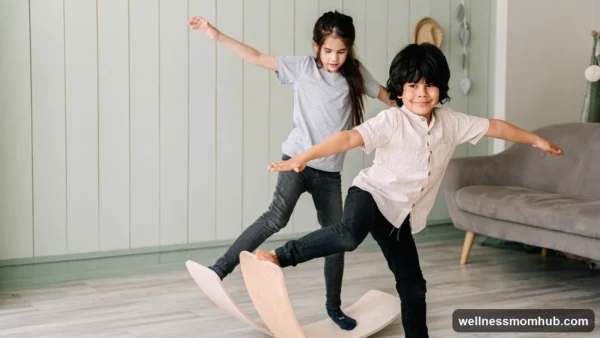
| Tape balance beam | 2 years | Balance | Indoors | 2 minutes |
| Pillow path | 2 years | Balance | Indoors | 2 minutes |
| Freeze dance | 2 years | Coordination | Indoors | None |
| Kick the ball | 2 years | Kicking | Outdoors | None |
| Simon says | 3 years | Listening and moving | Anywhere | None |
| Catch a big ball | 3 years | Catching | Outdoors | None |
| Hopscotch | 4 years | Hopping | Outdoors | 5 minutes |
What are gross motor skills?
Gross motor skills are the movements that use the large muscles of the body: running, jumping, climbing, throwing, kicking and keeping balance. Fine motor skills are the small hand movements, like picking up a Cheerio or holding a crayon (our fine motor activities for toddlers cover those).
A simple way to think about gross motor skills is in five groups. Every activity in this list builds at least one of them:
- Locomotor skills: moving from place to place, like walking, running, galloping, hopping and jumping.
- Balance: holding a position or staying steady while moving, like standing on one foot or walking a line.
- Object control: throwing, kicking, catching and rolling a ball.
- Coordination: making both sides of the body work together, like marching, crawling or skipping.
- Strength and body awareness: pushing, pulling, climbing and knowing where the body is in space.
How much active play do toddlers need?
More than most of us guess. The World Health Organization’s guidelines for children under 5 say:
- Ages 1 to 2: at least 180 minutes of physical activity a day, at any intensity, spread through the day.
- Ages 3 to 4: at least 180 minutes a day, with at least 60 of those minutes moderate to vigorous (the out-of-breath kind).
- All under-5s: not strapped into a stroller, high chair or car seat for more than an hour at a time.
That sounds like a lot, but it adds up in small pieces. Ten minutes of freeze dance before breakfast, a walk to the mailbox, a pillow path while dinner cooks. You don’t need to plan three hours of games.
Indoor gross motor activities for toddlers
These 12 indoor gross motor activities fit in a living room and work on cold, wet or too-hot days. Push the coffee table to the side first.
1. Tape balance beam
Balance · 2+. Stick a long, straight line of painter’s tape on the floor and walk it heel to toe. Make it harder with a zigzag line, a curvy line or walking it backward.
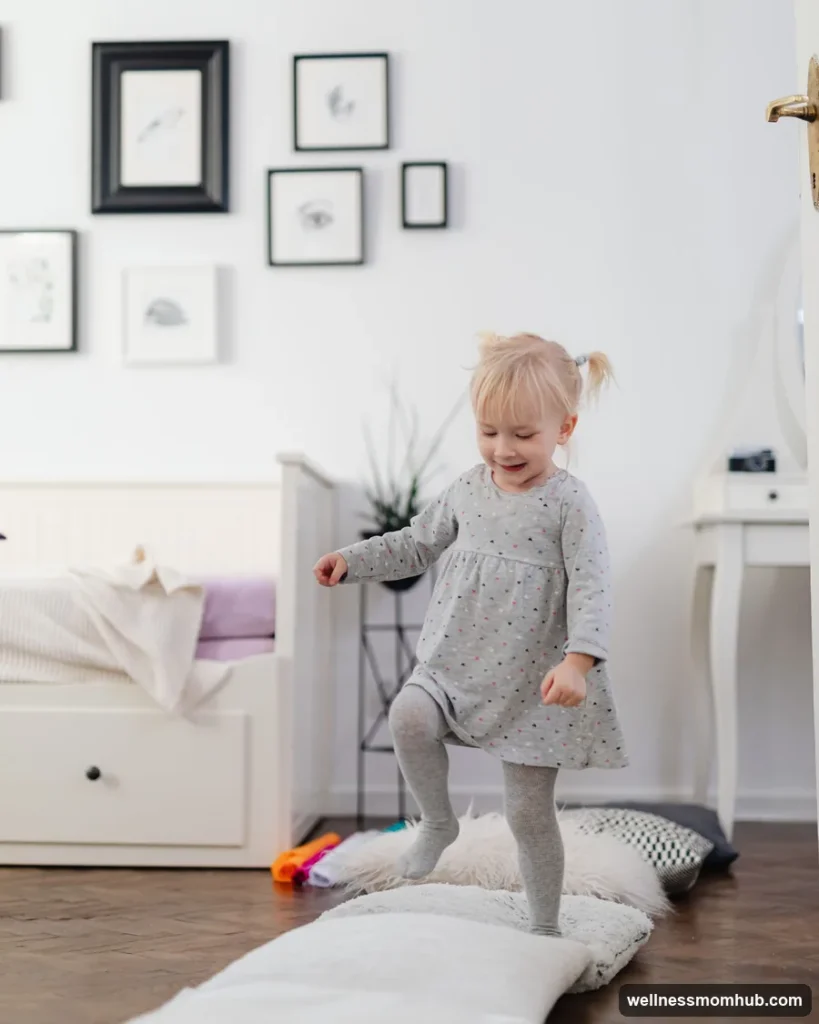
2. Pillow path
Balance · 2+. Lay couch cushions and pillows in a line and step from one to the next without touching the “lava.” Soft, wobbly surfaces make little legs and core muscles work hard.
3. Freeze dance
Coordination · 2+. Put on music, dance, and freeze like a statue when it stops. It’s one of the movement games the CDC suggests for teaching kids to stop and wait when they’re excited.
4. Chair tunnel
Crawling · 18 months+. Line up kitchen chairs and crawl underneath, or throw a sheet over the table for a tunnel. Crawling builds shoulder strength and coordination, even for kids who walked early.
5. Laundry basket push
Strength · 18 months+. Fill a laundry basket with stuffed animals and push it across the room. Heavy work like pushing is great for kids who need to burn off energy.
6. Animal walks
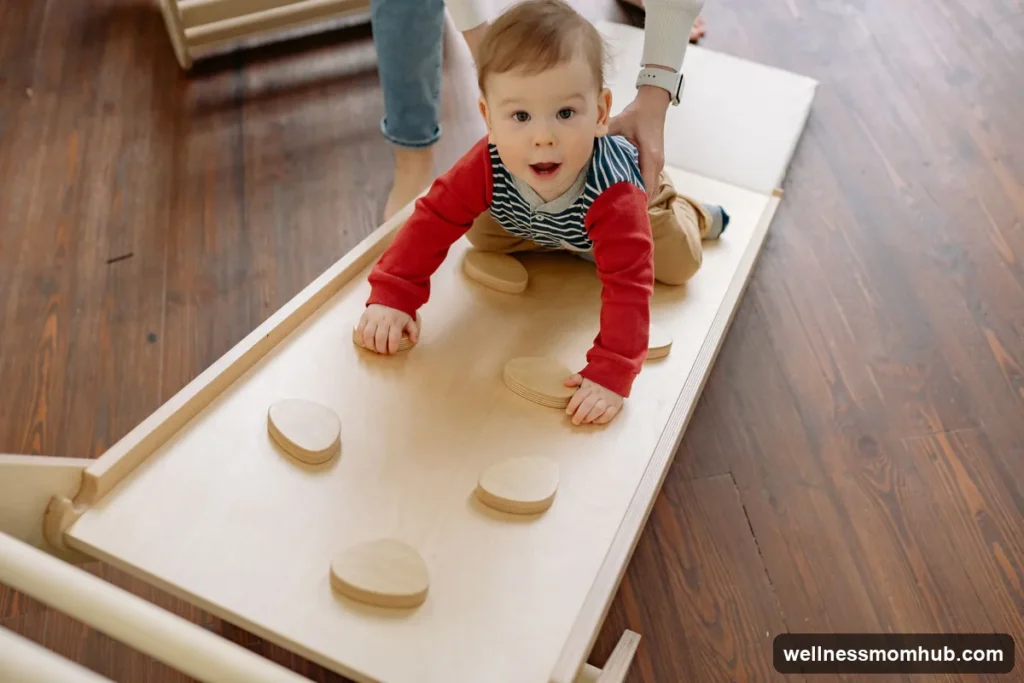
Strength and coordination · 2+. Bear walk on hands and feet, frog jump from a squat, crab walk tummy-up, bunny hop with feet together. Animal walks are the backbone of the printable animal die below.
7. Sock toss
Throwing · 2+. Roll socks into balls and throw them into a laundry basket. Step back a little after every basket.
8. Jump the river
Jumping · 2+. Two lines of tape make a “river.” Jump over it with two feet together, then move the lines a little farther apart.
9. Scarf catch
Catching · 2+. A light scarf floats down slowly, which gives toddlers time to reach and grab. It’s the easiest first step toward catching a ball.
10. Stomp and tiptoe
Coordination · 2+. Stomp like a giant across the room, then tiptoe back like a mouse. Switching between loud and quiet movement is harder than it looks.
11. Yoga animals
Balance · 3+. Tree pose, cat and dog. Hold each one for five slow counts. Count out loud together.
12. Toy clean-up race
Carrying · 2+. Carry toys to the bin one at a time while you count or sing. Walking while carrying something is real balance work, and the room ends up tidy.

Outdoor gross motor activities
Outside, kids can run, throw and kick without anyone worrying about the lamp. These work in the backyard, the park or a quiet sidewalk.
13. Kick the ball
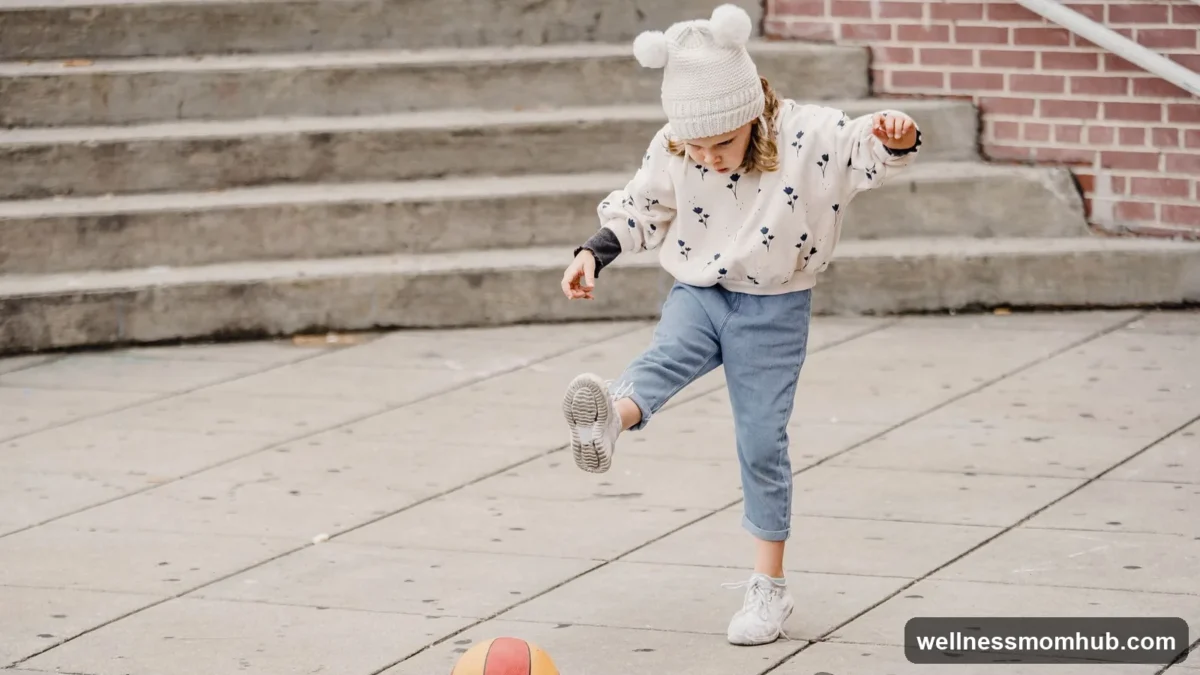
Kicking · 2+. Kicking a ball and running are two of the movement milestones the CDC lists for most children by age 2. Use a big, soft ball and kick it back and forth with a grown-up.
14. Bubble chase
Running · 18 months+. Blow bubbles and let your toddler chase and pop them. Running, reaching, clapping and stopping, all in one.
15. Sidewalk chalk paths
Balance and jumping · 2+. Draw a wiggly line to walk, circles to jump into and a spiral to run around.
16. Ball roll and chase
Ball skills · 18 months+. Roll a ball down a gentle slope and race it. For younger toddlers, sit facing each other and roll it back and forth.

17. Stair climbing
Climbing · 2+. Walking up a few stairs, holding the rail or a hand, is another CDC milestone for age 2. Practice on the porch steps with a grown-up one step below.
18. Playground climbing
Strength · 2+. Ladders, low climbing walls and slides build arm and leg strength. Stay close on anything higher than your child’s chest.
19. Wagon or wheelbarrow pull
Strength · 2+. Pulling a wagon with a few toys or pushing a toy wheelbarrow of leaves is heavy work toddlers love.
20. Ride-on toys and balance bikes
Balance and coordination · 2+. Push-along ride-ons come first, then a balance bike. Helmet on from the very first ride.
21. Nature walk with challenges
Locomotor · 2+. On a walk, take turns: walk along the curb edge holding hands, jump over a crack, step over a stick. The nature scavenger hunt adds things to look for along the way.
22. Obstacle course
All five skills · 2+. String a few of these together: crawl under a chair, walk the tape line, jump the river, throw a beanbag. Start with three stations for toddlers and add more as they grow.

Gross motor activities for preschoolers
Between 3 and 5, kids can follow rules, take turns and try harder moves like hopping on one foot. Preschool teachers often call these large motor activities for preschoolers, and these gross motor games work just as well in a classroom or a playgroup as at home.
23. Simon says
Listening and moving · 3+. “Simon says touch your toes. Simon says jump. Wave!” Kids have to listen before they move, which builds self-control along with coordination.
24. Red light, green light
Running · 3+. Run on green, stop on red, walk on yellow. The CDC names this one too, alongside freeze dance.
25. Follow the leader
Coordination · 3+. The leader marches, hops, spins and claps, and everyone copies. Let your child lead half the time.
26. Catch the ball
Catching · 3+. Catching a large ball most of the time is on the CDC list for age 4. Start with a beach-ball-size ball from three steps away, and teach “hands ready” before every throw.
27. Hop on one foot
Balance · 4+. Count the hops before the other foot touches down. Try both feet: most kids have a strong side.
28. Hopscotch
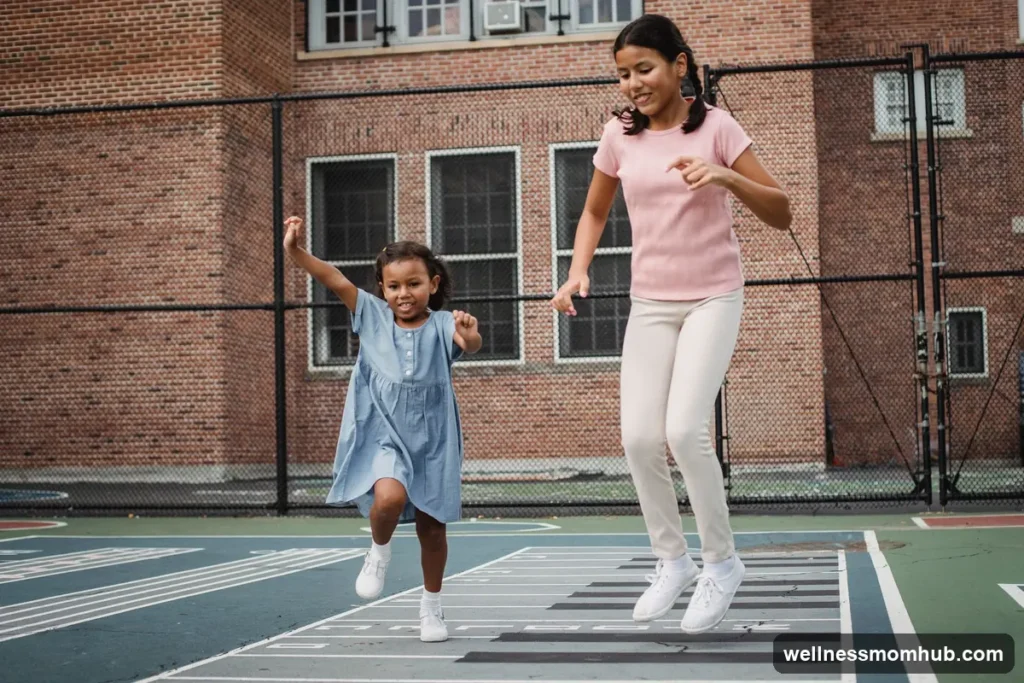
Hopping and jumping · 4+. Chalk outside or tape inside. Toddlers can jump through with two feet, while preschoolers can try one-foot hops on the single squares.
29. Wheelbarrow walk
Strength · 4+. A grown-up holds your child’s legs at the knees or thighs while they walk forward on their hands. Hold low and go slowly. A few steps are plenty at first.
30. Target throw
Throwing · 4+. Throw beanbags into a hoop, a bucket or onto a tape X. Give points for close calls to keep it fun.
Gross motor activities by age
Every child moves at their own pace. This table pairs the CDC’s milestone checklists and play tips for each age with activities that give those skills a workout.
| Age | What most kids can do | Activities to try |
|---|---|---|
| 18 months | Pushing and pulling toys, rolling a ball back and forth (CDC play tips) | Ball roll, bubble chase, chair tunnel, basket push |
| 2 years | Kicks a ball, runs, walks up a few stairs with or without help (CDC) | Kick the ball, tape beam, pillow path, freeze dance, jump the river |
| 3 years | Following 2- or 3-step instructions, active play outside (CDC tips) | Simon says, red light green light, yoga animals, obstacle course |
| 4 years | Catches a large ball most of the time (CDC) | Catch the ball, hop on one foot, hopscotch, wheelbarrow walk |
If your child seems to be far behind, has lost a skill they used to have, or something just doesn’t feel right, talk to your pediatrician. The CDC’s advice is not to wait: your child’s doctor can do a developmental screening, and you can contact your state’s early intervention program directly.
Free printable movement dice and move cards
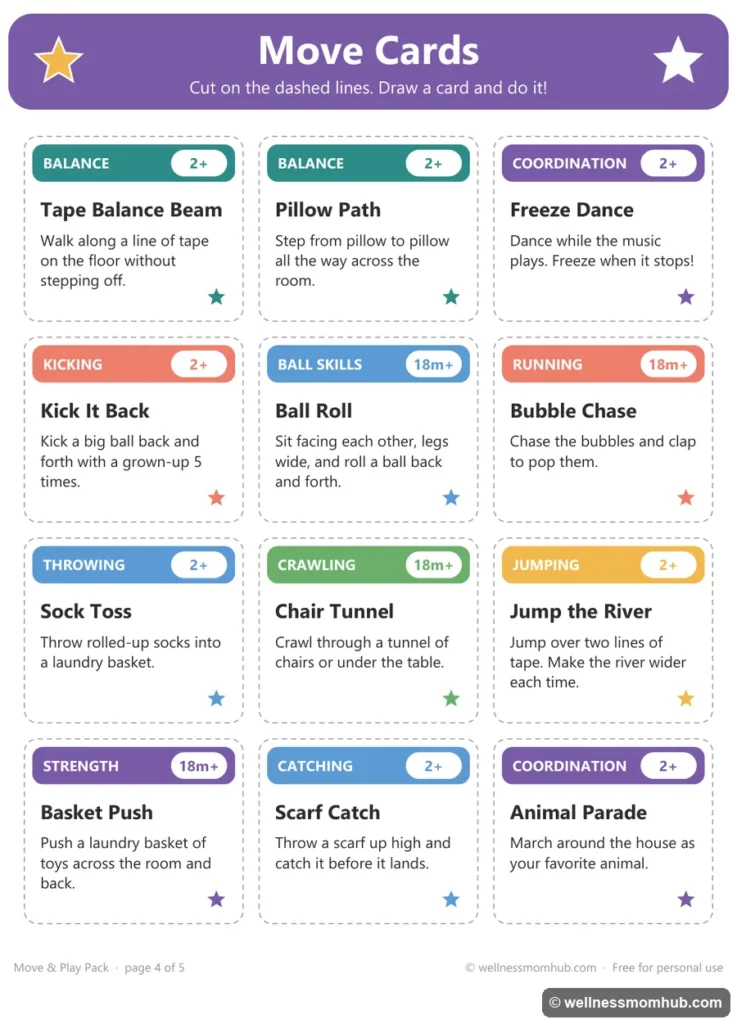
The free Move & Play Pack turns these ideas into games your toddler can pick from. It’s a 5-page PDF:
- Page 1: how to play, which cards fit which age, and play-safe tips.
- Page 2: an action die to cut, fold and glue: jump, march, tiptoe, spin, stomp and reach.
- Page 3: an animal die: bear, frog, crab, bunny, flamingo and snake.
- Pages 4 and 5: 24 move cards, each with the skill it builds and a starting age.
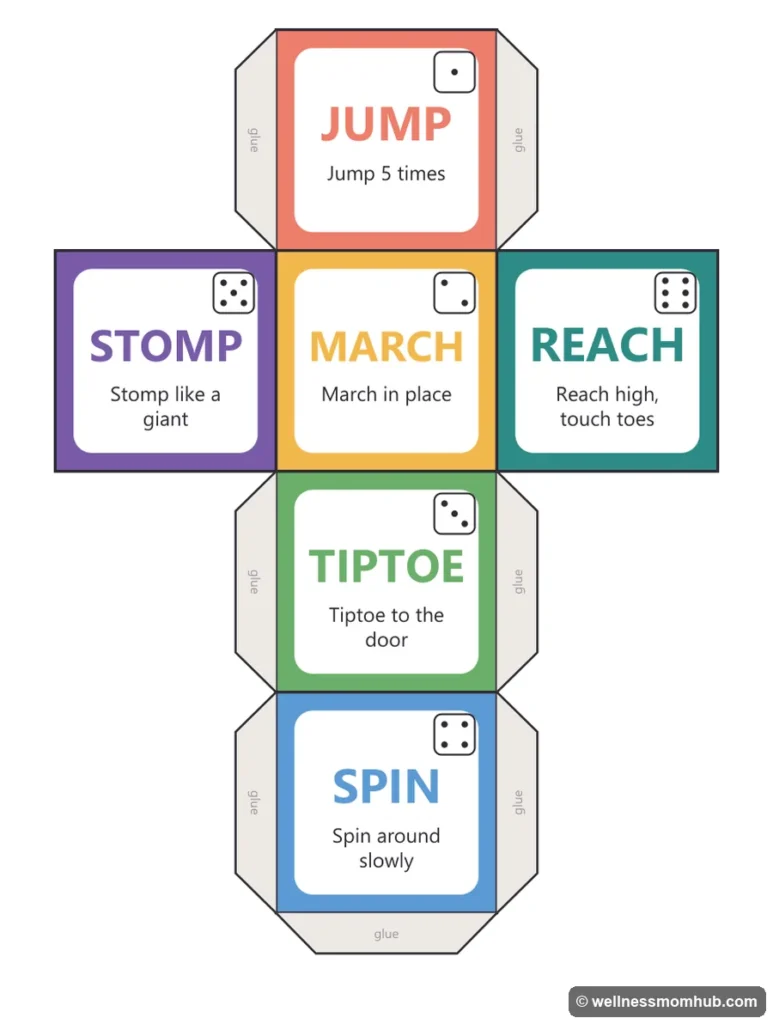
Roll both dice at once for silly combinations (“stomp like a frog!”), or draw three cards for a ten-minute movement break between quiet activities. Print the dice on cardstock so they roll well.
Gross motor safety tips
- Clear the space. Move the coffee table and anything with sharp corners before indoor games.
- Bare feet or grippy socks. Plain socks slide on hardwood and tile.
- Skip the trampoline. The American Academy of Pediatrics says toddlers and preschoolers face the greatest risk of trampoline injuries and that kids under 6 should never jump on one. Jumping on the floor or onto a cushion is plenty.
- Stay close for the tricky ones: stairs, playground climbing, spinning and wheelbarrow walks.
- Keep it short and fun. Stop while they still want more, and come back to it later.
Looking for more ways to fill the day? See our activities for 2-year-olds, activities for 4-year-olds and toddler activities at home, or build one of these fort ideas for kids as a crawl-through finish line.
Gross motor activities FAQ
What are the 5 gross motor skills?
The five groups most often used are locomotor skills (walking, running, jumping), balance, object control (throwing, kicking, catching), coordination, and strength and body awareness. Most good activities, like an obstacle course, work on several at once.
What activities strengthen gross motor skills?
The best gross motor skills activities get the big muscles working: animal walks, climbing, ball games, jumping over lines, balance beams and pushing heavy things like a laundry basket. Short, daily play beats a long weekly session.
What are good gross motor activities for 2-year-olds?
Kicking a big ball, walking a tape line, pillow paths, freeze dance, bubble chasing and jumping over a tape “river.” Two-year-olds also love stomping, tiptoeing and copying animal walks.
What should a 4-year-old be able to do in gross motor skills?
The CDC lists catching a large ball most of the time as a movement milestone by age 4. Many 4-year-olds are also hopping, climbing well at the playground and playing rule games like tag and red light, green light.
What are fun gross motor activities I can do in the classroom?
Freeze dance, Simon says, follow the leader, animal walks and a tape balance beam all work in a classroom with no equipment. The printable movement dice make a quick brain break between lessons.
How much physical activity does a toddler need each day?
The World Health Organization recommends at least 180 minutes a day for children ages 1 to 4, spread through the day. For 3- and 4-year-olds, at least 60 of those minutes should be moderate to vigorous.
Want to string these together? Our obstacle course ideas for kids include five ready-made courses and printable station cards.