Quick answer: a chore chart by age works best with a few specific jobs that have an obvious finish line. Start around 1–3 small jobs for a 3- or 4-year-old and build to 4–6 for kids aged 9–12. Tie each job to something you already do, like clearing plates after dinner, and put the chart where that routine happens.
Without one, reminders in my house turn into me saying “Shoes. Toys. Plate,” over and over until the words stop meaning anything. The goal isn’t a spotless house. It’s everyone handling a few small jobs without a system I have to manage.
| Age | Jobs to start with | Daily examples | Weekly examples | Your role |
|---|---|---|---|---|
| 3–4 | 1–3 | Toys in bin; books on shelf; clothes in hamper | Match socks; gather washcloths | Show them and work nearby |
| 5–6 | 2–4 | Carry dishes; straighten bedding; put shoes away | Sort laundry; water one plant | Give short directions and check the result |
| 7–8 | 3–5 | Clear eating space; put belongings away; tidy one area | Fold towels; empty small trash cans | Explain the finish line and stay available |
| 9–12 | 4–6 | Bedroom and kitchen jobs you’ve agreed on | Change bedding; one laundry step; reset a shared room | Agree on the task and when it’s due |
These are household starting points, not developmental expectations. One three-year-old will happily match socks, and another will treat the laundry basket like it has personally offended them. Adjust the chart to your child.
Chores for each age · Set it up in 10 minutes · Free fillable chore chart pack
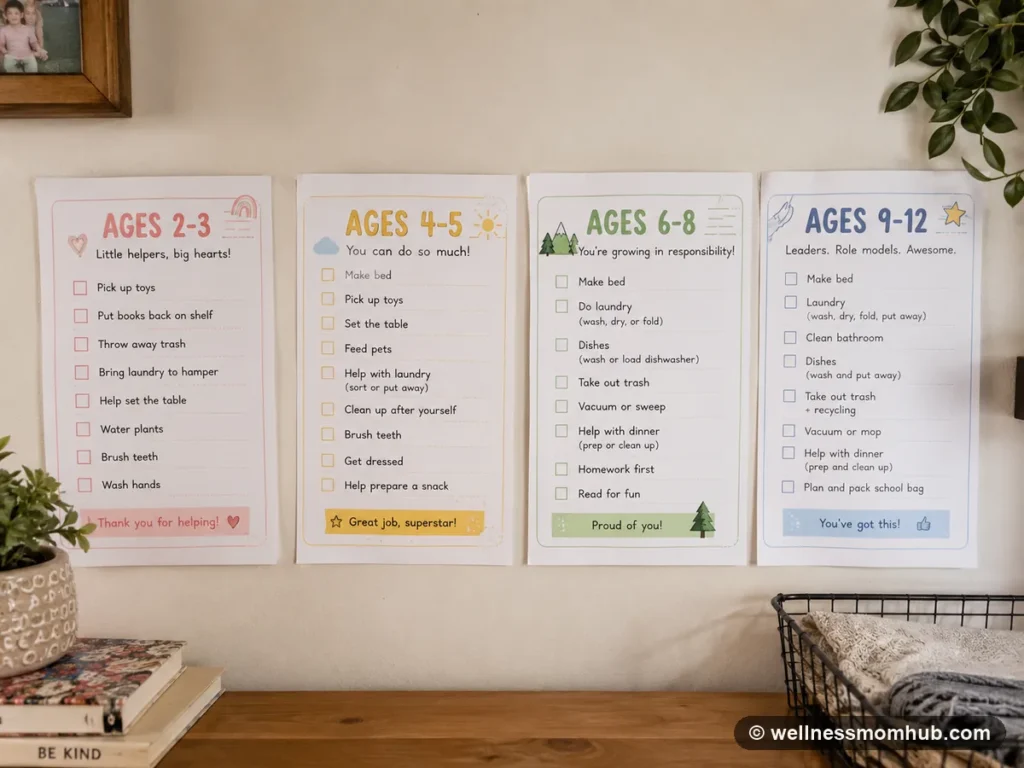
Set up a chore chart that actually gets used
My early charts had too many rows. They looked official and thorough, and nobody used them. This version takes about ten minutes:
- Print one chart for this week. One page is hard to overcomplicate.
- Add your child’s name and the dates, so nobody wonders whether it expired three Tuesdays ago.
- Write three daily jobs and one weekly job. Keep weekly jobs in their own section, so nobody thinks the bathroom trash needs emptying seven days in a row.
- Start every job with an action word: “put,” “carry,” “wipe,” “place.” “Put books on the shelf” causes fewer arguments than “clean your room.”
- Tie each job to a routine. Kitchen jobs after dinner, bedroom pickup before bedtime, morning jobs near the backpack and shoe pile.
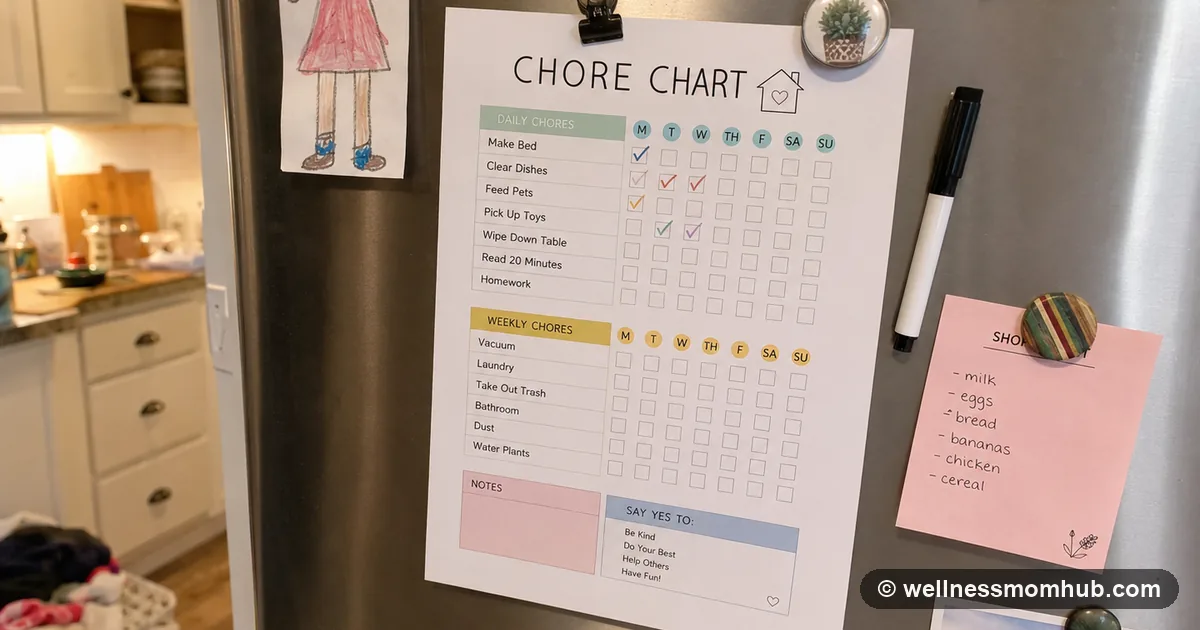
- Put the chart where that routine happens, like the fridge, the mudroom or a clipboard by the door, with a pencil, marker or sticker sheet right beside it.
- Review it at the end of the week. Keep what worked, and cut or rewrite anything that got ignored.
Don’t laminate it on day one. For a reusable version, slide the page into a clear sheet protector and use a dry-erase marker. Once the layout works, keep one filled-in master copy so you’re not rewriting the same jobs every Sunday.
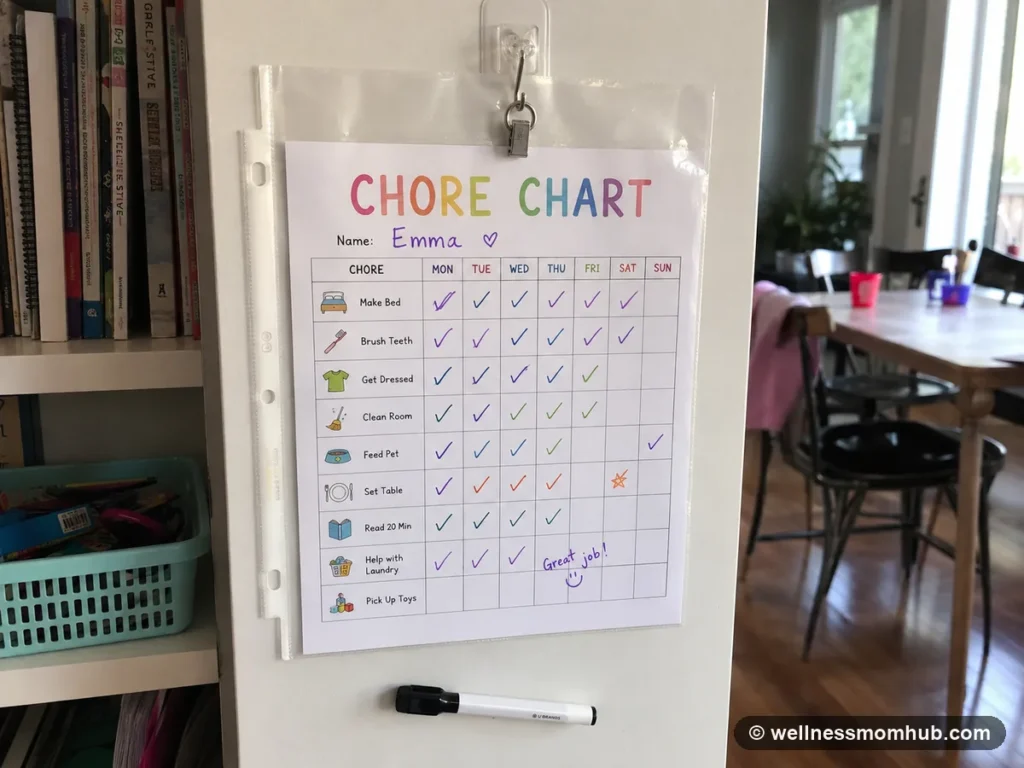
How to choose the jobs
Every chore on the chart should pass these checks:
- Can you explain it in one sentence? If not, it’s probably several chores wearing one name tag. “Put away laundry” can mean sorting, opening drawers, folding and remembering where six things go.
- Can everyone tell when it’s finished? “Toys inside the basket” and “put five books on the shelf” are clear. “Be helpful” leaves you explaining the job after you thought you had.
- Does it fit something you already do? Jobs linked to breakfast, dinner, bedtime or leaving the house are easier to remember.
- How much help will it need? Plan to supervise the job, not assign it while you’re cooking and answering three other questions.
- Are the supplies within reach? A chore stalls the moment the basket or cloth lives in another room.
- Is it safe for this age? For young kids, a damp cloth is enough for wiping. Keep cleaning chemicals, sharp knives and hot surfaces out of their jobs.
Empty rows are allowed. In fact, empty space may be the reason the chart gets used.
Chores by age: what to put on the chart
Pick one or two from the list for your child’s age. You don’t need all of them.
Chores for 3-year-olds
Keep it short, concrete and tied to a routine you’re already supervising. One morning job and one evening job are enough for a first chart.
- Put toys in one basket.
- Place books on a low shelf.
- Put clothes in the hamper when changing into pajamas.
- Carry napkins to the table.
- Match pairs of socks with you.
For the rest of the day, activities for 3-year-olds covers what to do once the jobs are done.
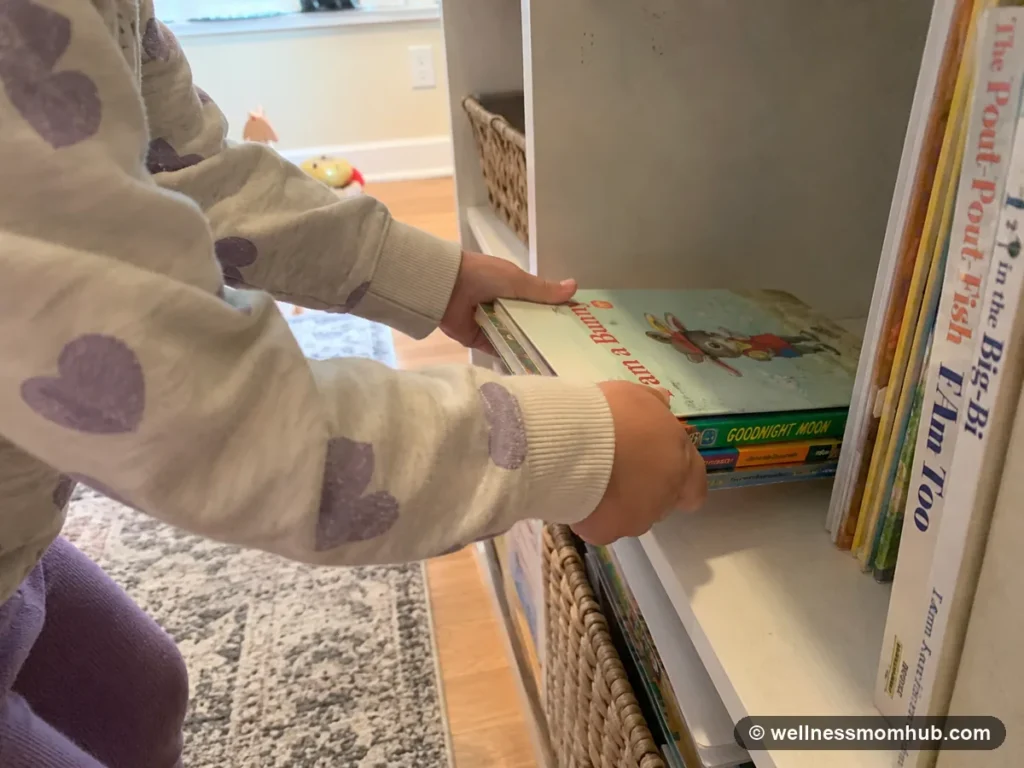
Chores for 4-year-olds
- Put pajamas in a drawer or basket.
- Return shoes to their spot when you come inside.
- Carry a plate and cup to the counter after meals.
- Help sort laundry into simple groups while you handle the load.
- Put stuffed animals back on the bed.
- Collect washcloths or hand towels.
Chores for 5- and 6-year-olds
- Straighten the blanket and pillow. That’s what “make the bed” means at this age.
- Put the backpack and shoes in their spot.
- Clear their own dishes after a meal.
- Wipe their eating area with a damp cloth you hand them.
- Sort socks or small laundry items.
- Water one plant, with help.
- Return five things to their places. A number feels less endless than “clean your room.”
Chores for 7-year-olds
- Fold washcloths or hand towels.
- Empty one small trash can.
- Clear and wipe their eating space.
- Put folded clothes into their drawers.
- Line up shoes by the main door.
- Refill napkins at the table.
- Gather books from shared rooms.
- Reset a homework or craft area. Name the exact supplies on the chart.
Chores for 8-year-olds
- Fold and stack towels.
- Empty the small trash cans into the main bag.
- Sweep crumbs from one eating area.
- Set out plates, cups and napkins.
- Put away non-breakable groceries from one category.
- Put their own clean laundry into drawers.
- Reset the reading or game area.
- Check that tomorrow’s things are by the door.
Don’t pile every weekend job into Saturday morning. A giant chore block makes the day feel heavy before breakfast.
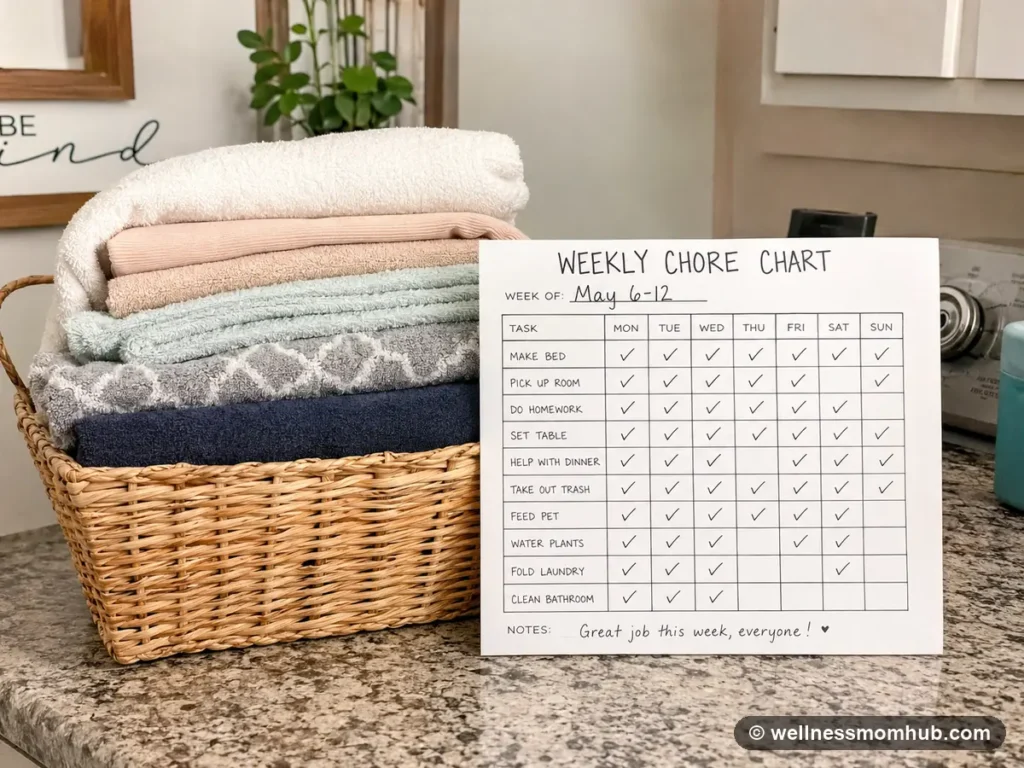
Chores for 9- to 12-year-olds
Kids this age can take on whole parts of family jobs. A blank chart works well here, because the jobs depend on school, activities and your schedule.
- Change their own bedding on a set day.
- Handle one defined laundry step: washing, moving to the dryer, folding, or putting away.
- Reset one shared room. List what belongs in the finished space.
- Set the table before dinner.
- Unload assigned dishwasher sections, such as cups or utensils.
- Restock household supplies like toilet paper or pantry backups from storage.
- Organize school materials once a week.
- Take one rotating family job.
Keep most jobs steady and rotate only one or two. If everything changes every week, everyone has to relearn the page.
Picture chore charts for kids who can’t read yet
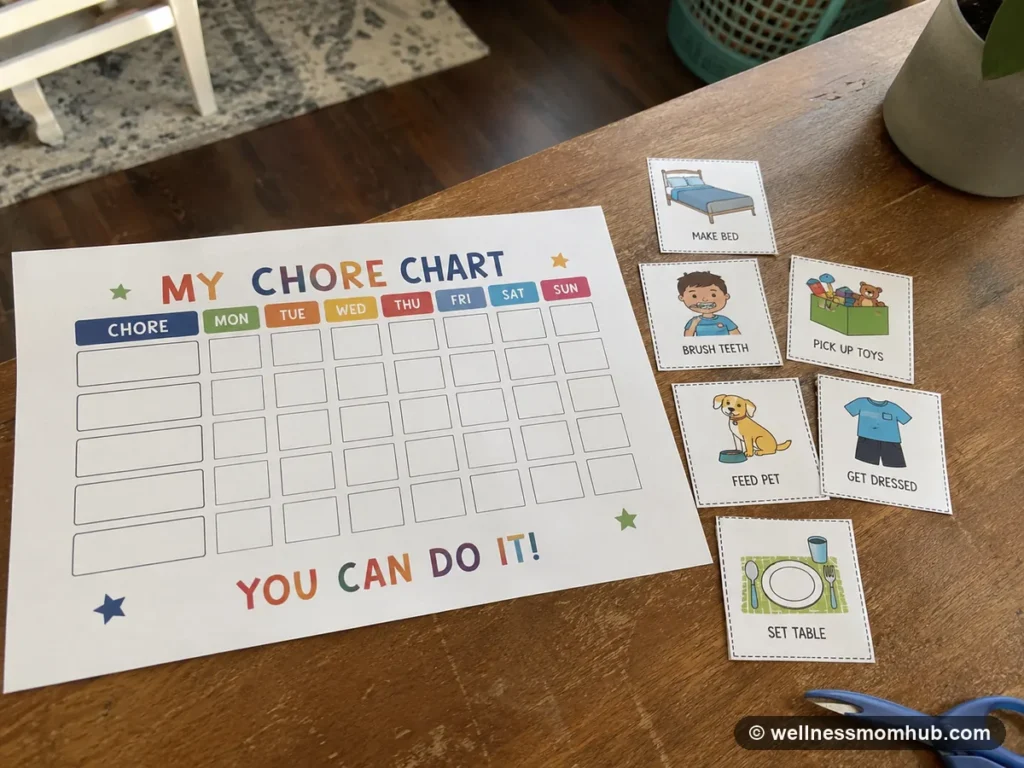
For preschoolers, swap the words for pictures. The clearest cards show one object, one action or one destination: a toy bin, a bookshelf, shoes by the door, a laundry basket, a plate and cup, a pillow. A photo of one laundry basket is enough. It doesn’t need a cartoon laundry room.
Tape the cards onto the chart, attach them with removable hook-and-loop dots, or lay out two or three as a choice board. Skip tiny, detailed icons: if you have to squint to tell a shirt from a dish towel, the card is too fussy.
Chore charts for more than one child
- One chart per child works best when ages are far apart.
- One shared chart with a column per name works when kids share jobs, like table setting.
- A family team board, where everyone gets a row including the grown-ups, helps kids see that the house is everyone’s job.
The kids’ jobs are a small slice of the household load, and it helps not to pretend otherwise. For where the grown-up jobs fit into the day, see the realistic stay-at-home mom schedule.
Chore chart FAQs
What chores can a 3-year-old do?
Small jobs with one action and one destination: putting toys in a bin, returning books to a low shelf, carrying napkins, matching socks, or putting clothes in the hamper. Start with one or two, show where everything goes, and stay nearby while they do it.
How many chores should a child have each day?
Start with one to three daily jobs, depending on how long they take and how busy the day already is. Three tasks that regularly get done beat eight boxes everyone learns to ignore. Keep weekly jobs in a separate section.
What should a chore chart include?
The child’s name and the week, a short list of specific jobs that each start with an action word, a place to mark them done (checkmarks, stickers or dry-erase circles), and separate daily and weekly sections. Picture cues help kids who can’t read yet.
Should kids get an allowance for chores?
That’s up to your family. Some parents pay for extra jobs and treat basic chores as family teamwork. Others tie each completed job to a set amount. For a starting framework, the Consumer Financial Protection Bureau’s Money as You Grow has age-based money conversations that pair well with a chore chart.
Get the free chore chart pack
The Real-Life Chore Chart Pack is an 8-page PDF with fillable fields. Type into it on a phone or laptop, or print it and write by hand. No email is needed. It’s US Letter size.
- Page 1: an overview with a filled-in sample week
- My Week: a weekly chart with daily checkboxes
- My Pick-3 Day: one small job before you go, after you get home, and at the end of the day
- Picture chore cards to cut out
- Age-by-age starter ideas
- Our Family Team Board: a row for everyone
- Roll, Pick, Do: write six quick jobs and roll a die, for the afternoons nobody wants a chart
- Mom’s 5-Minute Weekly Reset: keep what worked, cross out what didn’t
Print only the page you need now and leave the rest in the file until your routine changes. More routines for the toddler and preschool years are in the family routines hub, and bedtime routines for 3-year-olds covers what comes after the evening jobs.