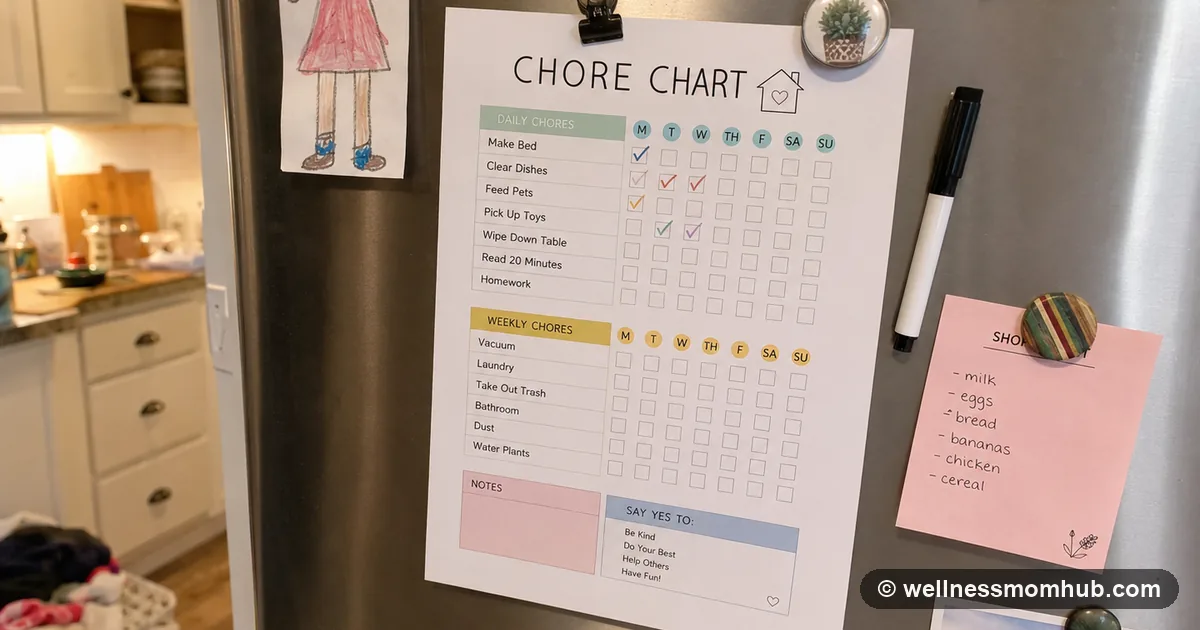
A printable chore chart gives kids a visible list of household jobs and gives parents one less list to carry around in their heads. The easiest charts use a few specific tasks, simple checkboxes, and a daily or weekly reset.
Without one, verbal reminders in my house turn into me saying “Shoes. Toys. Plate,” over and over until the words stop meaning anything.
The goal is not a spotless house. I just want everyone to handle a few small jobs without creating another system that requires me to manage the system.
How I Use a Printable Chore Chart Without Constant Reminders
A printable chore chart works best when it includes three to five chores, uses specific wording, and stays somewhere the family already looks. I connect each job to something we already do, such as clearing plates after dinner or putting shoes away when we come inside.
My early charts had too many rows. They looked official, thorough, and completely exhausting. Nobody used them.
1. Choose three to five chores. A short chore checklist takes seconds to scan and does not make the day look impossible.
2. Use specific action words. “Put books on the shelf” causes fewer arguments than “clean your room.”
3. Connect each job to a routine. Clearing a plate after dinner is easier to remember than doing it at some vague point later.
4. Place the chart where the routine happens. The refrigerator, mudroom, or family command center keeps the list from vanishing into a drawer.
5. Pick one completion method. Checkmarks, stickers, or dry-erase circles are easy to understand without a speech from me.
6. Reset it at the same time each day or week. I am not rebuilding the plan every Monday morning while packing lunches.
In our house, kitchen jobs happen after dinner, bedroom pickup happens before the bedtime routine, and morning tasks stay near the backpack and shoe pile.
That works better than announcing a surprise cleaning session when everyone is already tired and I am already annoyed.
Free Printable Chore Chart: What Is Included in the Pack
The free printable chore chart pack is eight pages, and every page is fillable, so you can type into it on a phone or laptop or print it and write by hand. You can use a ready-made page or fill in a blank one with the jobs that actually matter in your house.
1. My Week, a weekly chart with daily checkboxes. Recurring jobs stay on one page instead of being rewritten every day.
2. My Pick-3 Day, a shorter daily page. It asks for one small job in each part of the day, which is useful when a full week feels too far away or too crowded.
3. Picture chore cards. Cut them out, tape them on, or use them as a choice board. The picture version pairs each job with a familiar object or destination.
4. Age-by-age starter ideas. Somewhere to begin when my brain is done making decisions. The page says plainly that these are household ideas, not developmental expectations.
5. Our Family Team Board. Everyone gets a row, including the grown-ups.
6. Roll, Pick, Do. Write six quick jobs, roll one die, and do the matching number. This is the page that gets used on the afternoons when nobody wants a chart.
7. Mom’s 5-Minute Weekly Reset. Keep what worked, cross out what did not, and skip the guilt meeting.
Skip printing the whole pack at once. Print the page you need now and leave the rest in the file until your routine changes.
How to Set Up a Chore Chart Printable in 10 Minutes
A chore chart printable only needs a printer, something to write with, and a place your family will see it. Laminating, matching markers, and an organized command center are optional.
1. Print one chart for the current week. One page is much harder to overcomplicate.
2. Add your child’s name and the dates. Nobody has to ask whose chart it is or whether it expired three Tuesdays ago.
3. Write three daily jobs and one weekly job. The page looks doable instead of packed.
4. Attach it to the refrigerator, wall, or clipboard. A visible chart is harder to forget than one tucked inside a planner.
5. Leave a pencil, marker, or sticker sheet beside it. The system falls apart quickly when the marker disappears.
6. Review it at the end of the week. You can remove confusing chores and keep the ones that fit your routine.
Skip laminating it on day one. It is easy to spend more time building the system than using it.
For a reusable version, I slide the page into a plastic sheet protector and use a dry-erase marker. The same setup also works for meal plans, packing lists, and anything else I do not want to print twice.
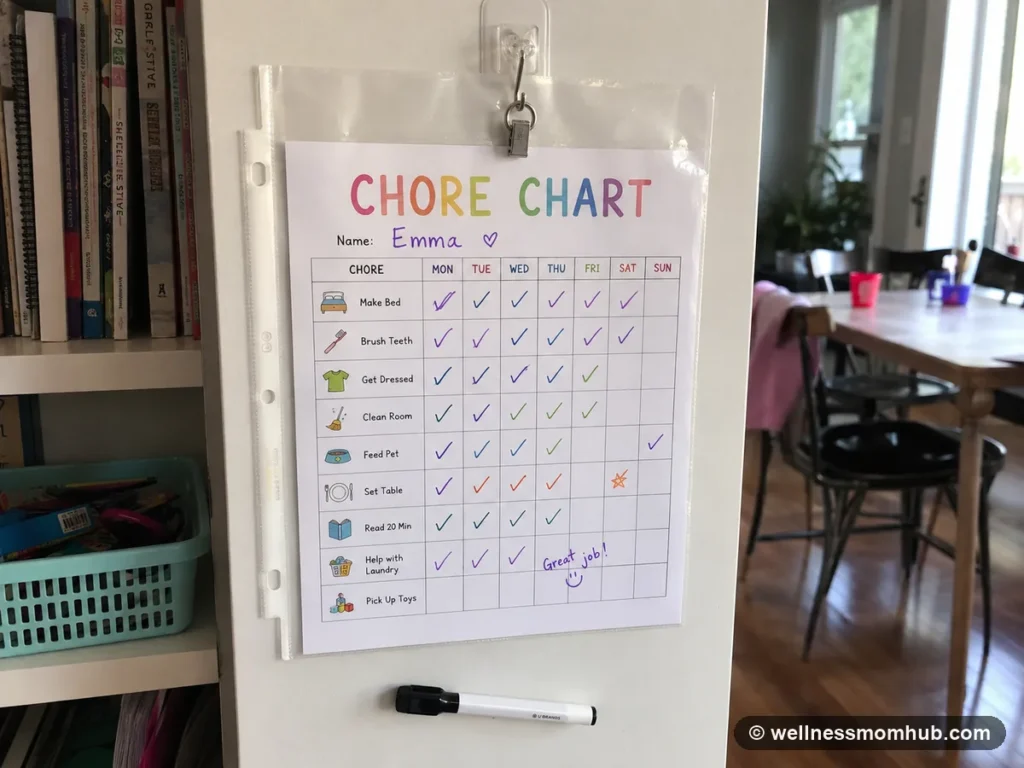
Printable Chore Chart for Kids: Keep It Small and Specific
A printable chore chart for kids should list a small number of jobs with clear, visible endings. Specific directions work better than broad ones, because everyone can tell when the task is finished.
“Help with laundry” is too broad in my house. “Put socks in pairs” works.
1. Start each chore with an action word. “Place,” “carry,” “wipe,” and “put away” say what needs to happen.
2. Keep each chore to one line. Short wording is easier to scan from across the kitchen.
3. Limit the number of daily jobs. The chart still feels possible on preschool, school, and cereal-for-dinner days.
4. Separate daily and weekly tasks. Nobody thinks the bathroom trash needs to be emptied seven days in a row.
5. Write down what “done” means. “Toys inside the basket” gives everyone the same finish line.
6. Change the list when your schedule changes. A summer chart may be useless once back-to-school season starts.
Skip vague chores. “Be helpful” sounds lovely, and it leaves me explaining the job after I already thought I had explained the job.
Kids Chore Chart Printable With Picture Cues
A kids chore chart printable with picture cues gives families a visual alternative to written labels. The clearest cards show one object, one action, or one destination.
A photo of one laundry basket is enough. It does not need a cartoon laundry room with matching jars and absolutely no socks on the floor.
1. Toy bin. Put toys in the bin. The image matches one specific destination.
2. Bookshelf. Return books to the shelf. It shows where the books should end up.
3. Shoes. Place shoes by the door, connecting the item with the same household spot every time.
4. Laundry basket. Put clothes in the hamper. It turns “deal with your clothes” into one visible action.
5. Plate and cup. Carry dishes to the counter. The stopping point is obvious.
6. Pet bowl. Help with the assigned pet task when an adult is available to supervise.
7. Bed pillow. Straighten the blanket and pillow. It keeps the job small instead of expecting a hotel bed.
Skip tiny, detailed icons. If I have to squint to figure out whether a picture is a shirt or a dish towel, the card is too fussy.
You can tape the cards directly onto the chart or attach removable hook-and-loop dots. A sticker chart also works, especially if moving little cards around turns into its own cleanup job.
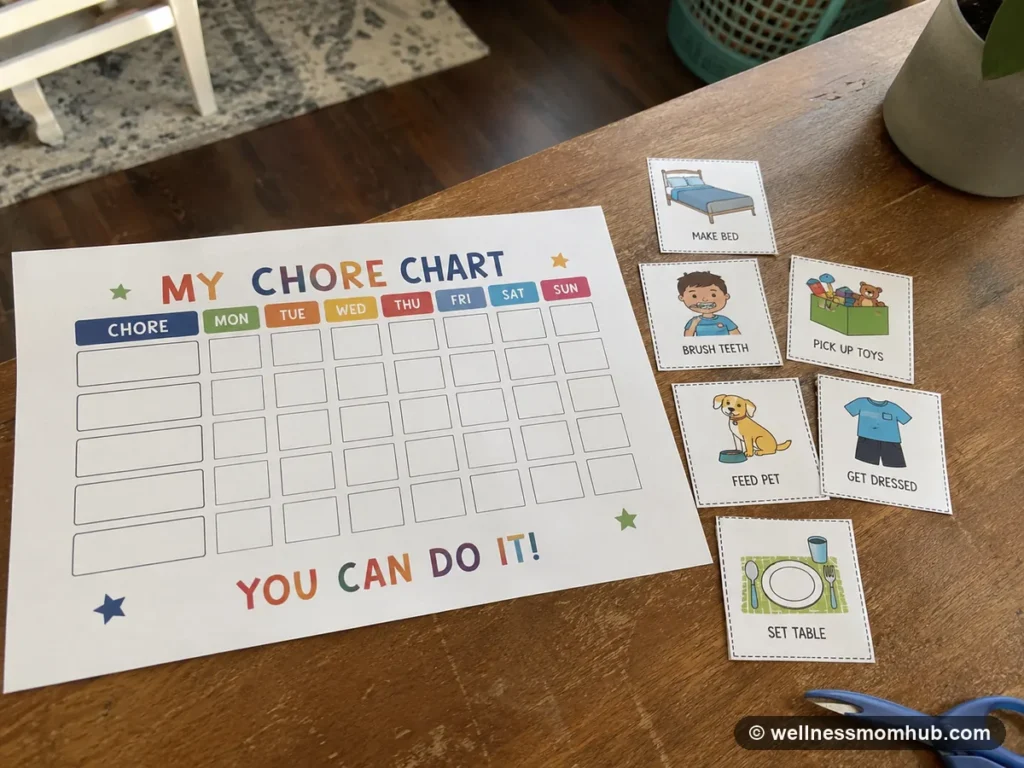
Chore Charts Free Printable: Reuse Them Week After Week
Chore charts free printable pages are easiest to maintain when you reuse the same layout each week. The family learns where to look, and you can change the actual chores as needed.
1. Slide the chart into a clear sheet protector. It is inexpensive and requires no special equipment.
2. Place it on a clipboard. The chart is portable and easy to replace.
3. Put it in a basic document frame. It gives the page a permanent spot in a kitchen or hallway.
4. Laminate the page. A dry-erase marker can reset the chart each week.
5. Print several copies at once. A clean page is ready when the current one gets cereal, marker smears, or a sticky spot nobody will explain.
6. Save one filled-in master copy. You do not have to rewrite the same weekday chores every Sunday night.
Skip expensive chore boards until you know the layout works. I would start with a sheet protector before buying a board with tiny pieces that can disappear under the couch.
I keep our family chart near the rest of the week’s plan. The kids’ quick jobs stay connected to the larger household list, and I do not pretend those workloads are equal. If you want the grown-up version of the same page, the realistic stay-at-home mom schedule covers where the household jobs actually fit.
Age Appropriate Chore Chart: Use It as a Starting Point
An age appropriate chore chart should be a flexible starting point, not a test a child has to pass. Choose jobs based on your home, the task itself, your available time, and how much help you expect to give.
A three-year-old in one family may happily match socks. Another may treat the laundry basket like it has personally offended them. Adjust the chart.
| Age range | Starter jobs | Daily examples | Weekly examples | Adult role |
|---|---|---|---|---|
| 3-4 | 1-3 | Toys in bin; books on shelf; clothes in hamper | Match socks; gather washcloths | Demonstrate and work nearby |
| 5-6 | 2-4 | Carry dishes; straighten bedding; put shoes away | Sort laundry; water one plant | Give short directions and check the result |
| 7-8 | 3-5 | Clear eating space; put belongings away; tidy one area | Fold towels; empty small trash cans | Explain the finish line and remain available |
| 9-12 | 4-6 | Complete assigned bedroom and kitchen jobs | Change bedding; handle one laundry step; reset a shared space | Agree on the task and completion time |
Skip comparing your chart with another family’s chart. Their eight-year-old may unload the dishwasher. Yours may be the person who leaves every cabinet door open. Work with the child and kitchen you have.
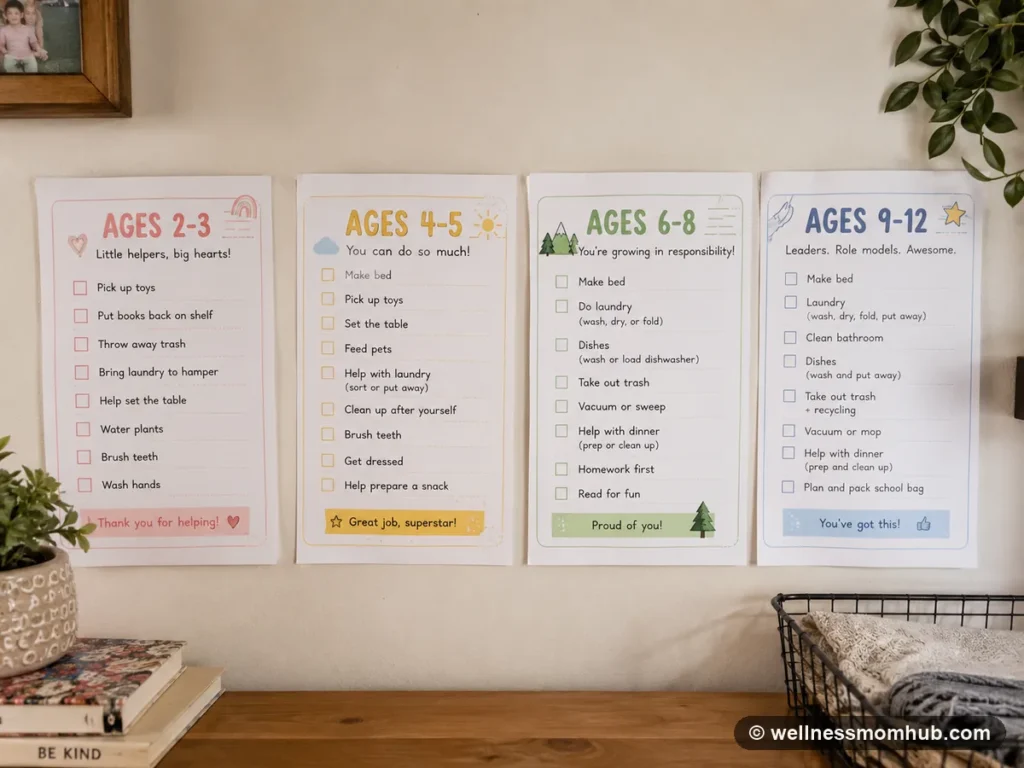
Chore List by Age: How I Choose the Jobs
A chore list by age is most useful when every task has a clear finish line and fits something your family already does. The age label provides ideas, and your house decides which jobs belong on the page.
1. Can I explain it in one sentence? A short direction fits on the chart and is easier to repeat.
2. Can everyone tell when it is finished? “Put five books on the shelf” is clearer than “be more organized.”
3. Does it fit an existing routine? Jobs connected to breakfast, dinner, bedtime, or leaving the house are easier to remember.
4. How much adult help will it require? I can plan to supervise instead of assigning it while cooking and answering three unrelated questions.
5. Are the supplies easy to reach? A chore stalls quickly when the basket, cloth, or marker is stored in another room.
6. Does the household actually need it done? Kids can see that the job belongs to family life instead of a worksheet.
Skip filling every blank row. Empty space is allowed. In fact, empty space may be the reason the chart gets used.
Chores are also not the only thing that fills an afternoon. On the days when nobody is interested in a chart, 45 toddler activities at home buys you the same quiet without the negotiation.
Chores for 3 Year Olds: Five Tiny Helper Jobs
For 3-year-olds, keep chores short, concrete, and connected to a routine an adult is already supervising. Start with one or two jobs rather than filling the page.
1. Put toys in one basket. There is one action and one obvious destination.
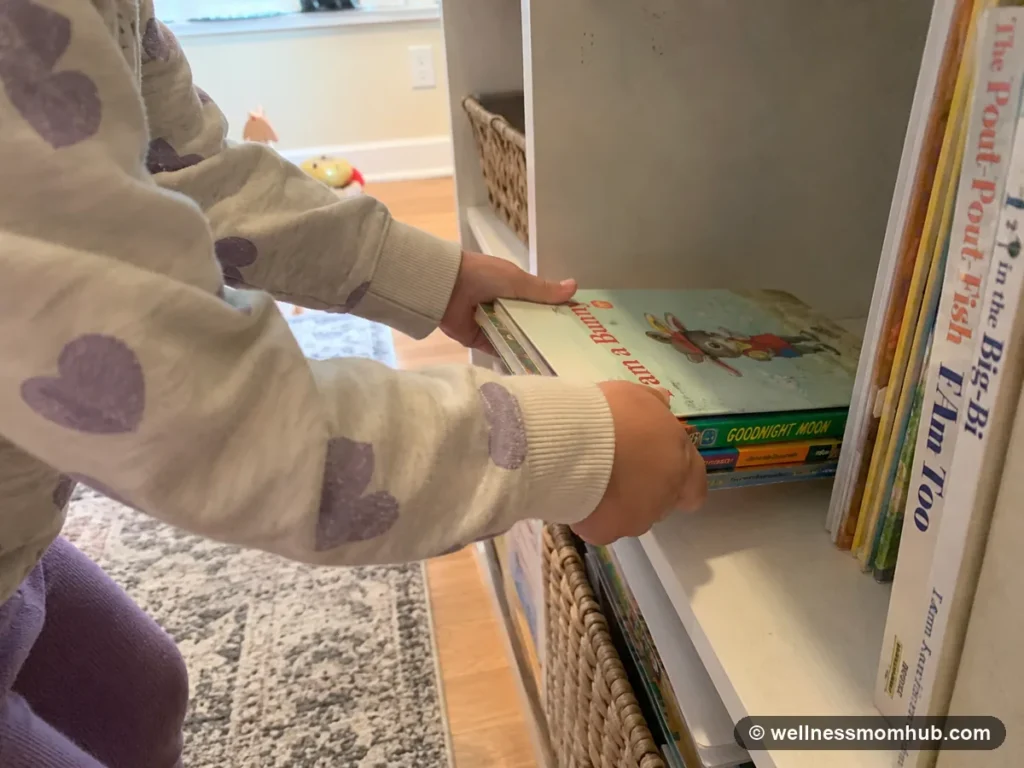
2. Place books on a low shelf. The finished result is easy to see.
3. Put clothes in the hamper. It fits into getting dressed or changing pajamas.
4. Carry napkins to the table. It is one small part of preparing a family meal.
5. Match pairs of socks with an adult. It turns part of a real laundry pile into a short, shared job.
Skip assigning all five at once. One morning job and one evening job are enough for a first chart. For the rest of the day, activities for 3 year olds covers what to do when the chores are done.
Chores for 4 Year Olds: Six Simple Household Jobs
Chores for 4 year olds can include familiar jobs connected to clothing, meals, toys, and shared spaces. Keep the wording specific and show where every item belongs.
1. Put pajamas in a drawer or basket. The job has a consistent item and destination.
2. Return shoes to their spot. It fits into the leaving-the-house routine.
3. Carry a plate and cup to the counter. It happens at the same point after a meal.
4. Help sort laundry into simple groups. The child handles one part while an adult manages the full load.
5. Place stuffed animals on the bed. It gives bedroom pickup a smaller finish line.
6. Help collect washcloths or hand towels. It is more manageable than gathering every piece of laundry in the house.
Skip chores with too many hidden steps. “Put away laundry” may mean sorting, opening drawers, folding, and remembering where six different things belong. That is several chores wearing one name tag.
Chores for 5 Year Olds: Seven Daily and Weekly Jobs
Chores for 5 year olds can combine quick daily resets with one or two weekly household tasks. A short list works better than filling every box simply because the template has space.
1. Straighten the blanket and pillow. It defines “make the bed” in a realistic way.
2. Put a backpack and shoes in their assigned spot. It helps contain the after-school floor pile.
3. Clear personal dishes after a meal. The task has a predictable time and a clear endpoint.
4. Wipe a small eating area with an adult-provided cloth. The cleaning area stays limited and visible.
5. Sort socks or small laundry items. It gives the child one defined part of the laundry routine.
6. Water one household plant with help. Assigning one plant keeps the location and amount consistent.
7. Return five items to their places. A number feels less endless than “clean the whole room.”
Skip “clean your bedroom” as one checkbox. It is too big, and it tends to end with everything pushed under the bed anyway.
Chores for 7 Year Olds: Eight Useful Family Jobs
Chores for 7 year olds can include clearly defined tasks in bedrooms, kitchens, laundry areas, and entryways. The chart should still explain what “done” looks like instead of relying on labels such as “tidy up.”
1. Fold washcloths or hand towels. The items are small and use the same folding pattern.
2. Empty one small trash can. The location and container stay consistent.
3. Clear and wipe a personal eating space. Two connected steps complete one visible area.
4. Put folded clothes into assigned drawers. The job focuses on putting things away rather than managing the whole laundry process.
5. Organize shoes near the main door. It improves one high-traffic household spot.
6. Refill napkins at the table. The need is easy to notice, and the stopping point is clear.
7. Gather books from shared rooms. It turns whole-house pickup into one category.
8. Reset a homework or activity area. The chart can name the exact supplies that belong there.
Skip assigning every weekend job to Saturday morning. A giant chore block can make the day feel heavy before breakfast. I separate everyday tasks from weekend jobs.
Chores for 8 Year Olds: Eight Jobs With Clear Endpoints
Chores for 8 year olds can cover one complete part of a larger family task, such as folding towels or setting the table. Avoid vague assignments like “help more around the house,” because nobody knows when that job is finished.
1. Fold and stack towels. One laundry category keeps the task contained.
2. Empty several small trash cans into the main bag. The route and containers can stay the same every week.
3. Sweep crumbs from one eating area. The chart names a specific part of the floor instead of the whole kitchen.
4. Set out plates, cups, and napkins. The task follows a repeatable checklist.
5. Put away assigned non-breakable groceries. One category is easier to handle while an adult deals with the rest.
6. Sort personal clean laundry into drawers. The job is limited to one person’s clothes and storage spaces.
7. Reset the family reading or game area. Books, blankets, and games have clear places to return.
8. Check that tomorrow’s belongings are by the door. It connects the chore chart to the evening routine.
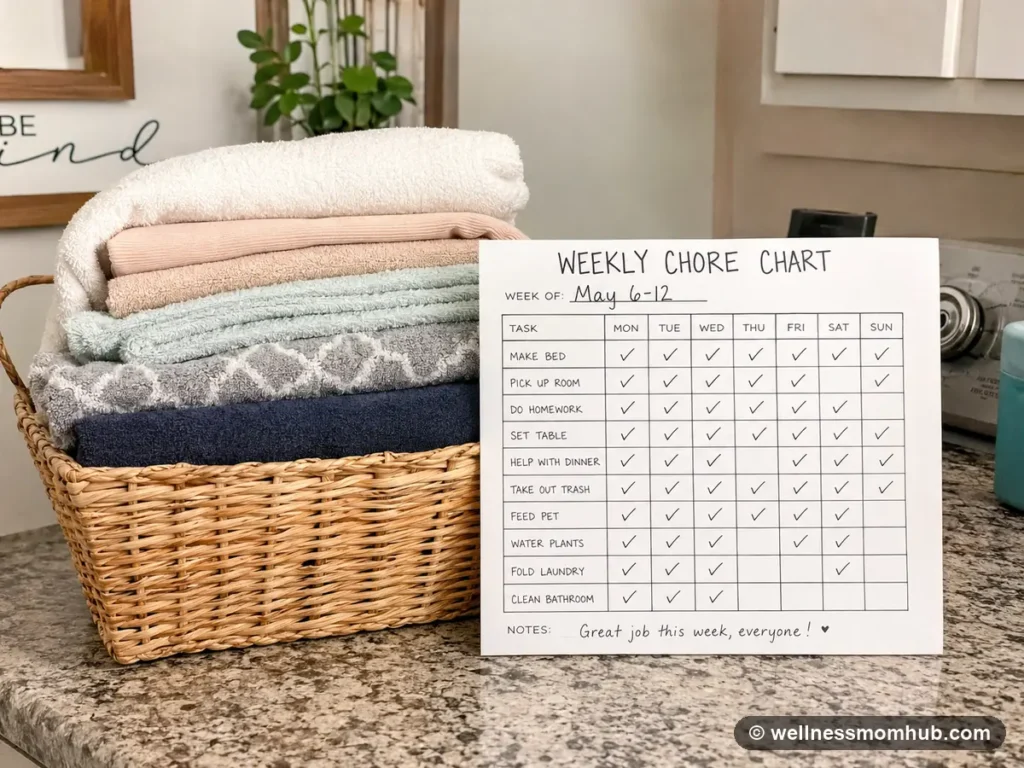
Blank Chore Chart for Ages 9-12 and Custom Family Routines
A blank chore chart works well for ages 9-12, because jobs can be customized around school, activities, shared spaces, and family schedules. Every page in the pack is fillable, so the weekly chart doubles as your blank template: leave the rows empty, type in your own jobs, or print it and write them by hand.
1. Change personal bedding on an assigned day. The task has a schedule instead of being left as “sometime this week.”
2. Complete one defined laundry step. Washing, transferring, folding, and putting away can be assigned separately.
3. Reset one shared room. The chart can list exactly what belongs in the finished space.
4. Help set the table before dinner. The job fits into a routine that already happens.
5. Unload assigned dishwasher sections. Cups, utensils, or non-breakable items give the task boundaries.
6. Restock household supplies from storage. Toilet paper, paper towels, or pantry backups can be moved from a written list.
7. Organize personal school materials once a week. A scheduled reset prevents the task from appearing as a surprise request.
8. Complete one rotating family job. Rotation spreads less-popular chores without changing the whole chart.
Skip rotating every chore every week. Constant changes mean everyone has to relearn the page. I keep most jobs steady and rotate only one or two.
For multiple kids, use a separate column for each name, print one chart per child, or use the family team board page, which gives everyone a row including the adults.
Frequently Asked Questions About Printable Chore Charts
What are chores?
Chores are recurring household jobs that help keep shared spaces and everyday routines moving. Examples include putting belongings away, carrying dishes, folding towels, clearing a table, or resetting a room. For kids, I keep each task specific and tied to a real family need. “Put the books on the shelf” works better on a chart than “be responsible.”
What chores can a 3 year old do?
For a 3 year old chart, choose small household jobs such as putting toys in a bin, returning books to a low shelf, carrying napkins, matching socks, or placing clothes in a hamper. Start with one or two tasks, show where everything belongs, and stay nearby while the job is being done.
How many chores should a child have each day?
I would start with one to three daily chores, depending on how long the jobs take and how busy the day already is. I would rather have three tasks that regularly get finished than eight boxes everyone learns to ignore. Put weekly chores in a separate section so the daily list stays easy to scan.
Should kids get an allowance for chores?
An allowance is optional, and families handle it differently. Some parents pay for extra jobs while treating basic chores as family teamwork. Others connect each completed job to a set amount. If you want a starting framework, the Consumer Financial Protection Bureau’s Money as You Grow has age-based money conversations that pair naturally with a chore chart.
Download the Free Printable Chore Chart Pack
Download the free printable chore chart pack for the picture chore cards, the weekly and daily charts, age-by-age starter ideas, the family team board, the roll-and-pick chore game, and the five-minute weekly reset page. Print the page that comes closest to your routine, add only a few jobs, and try it for one week.
Keeping the evening jobs separate from the chart helps. Bedtime routines for 3 year olds covers what belongs after the chores are done.