The best summer activities for kids are the ones you can start in under five minutes with what’s already in the house: ice excavation, sprinkler games, sidewalk chalk courses, cardboard forts, kitchen science, and your library’s summer reading challenge. Most cost nothing. The 100 ideas below are sorted into free, water and outdoor, at-home, camp-style, and rainy-or-too-hot indoor days, so you can grab one and go.
I made this list the June my kids were 5 and 2. No camps booked. Eleven weeks on the calendar, staring at me.
So I wrote down every idea that had ever bought me twenty quiet minutes, and then over two summers I tested the rest of them, including a lot that flopped so completely I’m still a little annoyed about the cost of the supplies. The duds are still in here. I labeled them. A list of 100 perfect ideas is a list nobody actually ran.
Don’t try to do all 100. Pick five for the week. Write them on the fridge and let the kids choose the order, which sounds like nothing and killed most of the “I’m boooored” negotiation in our house.
Free Summer Activities for Kids (No Spend, No Prep)
The best free summer activities for kids are ice excavation, sidewalk chalk games, nature scavenger hunts, sprinkler play, mud kitchens, and the free summer reading program at your public library. All of them use water, dirt, cardboard, or a library card. These 25 need nothing you’d have to buy, which is the whole point of a list that has to survive until Labor Day.
- Ice excavation. Freeze small toys in a bowl of water overnight, hand it over with a spoon and a cup of warm water. Why it works: the longest-running activity on this list.
- Sidewalk chalk hopscotch, numbered to 50. Why it works: older kids stay in it longer when the counting gets hard.
- Car wash for ride-on toys. Bucket, sponge, hose. Why it works: they get soaked, the trikes get clean, nobody planned anything.
- Nature scavenger hunt on a walk. Something red, something rough, something smaller than your thumb. Why it works: it turns a walk they resist into a game they lead.
- Library summer reading program. Check whether yours runs one, and sign up week one. Why it works: free prizes, air conditioning, and a reason to leave the house on a bad day.
- Cloud watching with a blanket. Why it works: the only thing on this list that also works on the parent.
- Mud kitchen. Old pots, a dirt patch, water. Why it works: two hours, and the cleanup is a hose.
- Puddle jumping after a thunderstorm. Why it works: free, and the “no” you’d usually say is the whole thrill.
- Homemade bubble mix. Dish soap, water, a splash of corn syrup. Why it works: cheaper than store bubbles and the kids never notice.
- Rock painting, then hiding them at the park. Why it works: two activities, two different days.
- Backyard camping with blankets. No tent required. Why it works: novelty without a purchase.
- Leaf and flower pressing in a heavy book. Why it works: it creates a check-on-it-tomorrow hook.
- Shadow tracing on the driveway at 10am, then again at 4pm. Why it works: the 4pm reveal gets a real reaction.
- Bird watching from the window with a tally sheet. Why it works: a rainy-morning save that costs one piece of paper.
- Backyard obstacle course. Why it works: let them build it. Building it takes longer than running it.
- Freeze tag with the sprinkler as base. Why it works: the classic, upgraded.
- Storytelling chain, one sentence each. Why it works: perfect for the car, no supplies.
- Sock puppet show with the couch as the stage. Why it works: they’ll rehearse for an hour and perform for ninety seconds.
- A “treasure box” of yard finds, sorted. Why it works: the sorting is the activity, not a chore.
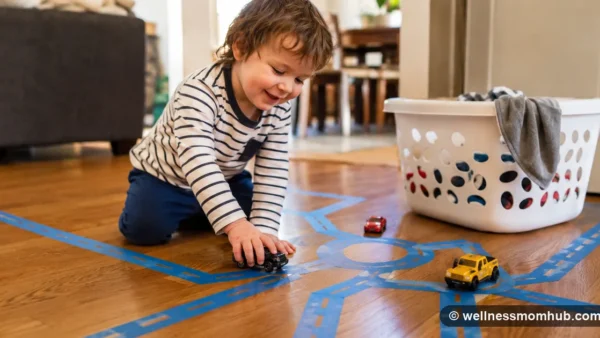
- Chalk road system for toy cars. Why it works: it turns a driveway into a whole world, and it holds toddlers longer than almost anything else here.
- Balloon volleyball over a string. Why it works: works indoors when it’s 98 degrees out.
- Nature paintbrushes (grass, pine needles, a stick) with plain water on the fence. Why it works: painting with no paint means no cleanup.
- Neighborhood letter drop: draw pictures, deliver to neighbors. Why it works: kids love the delivering more than the drawing.
- A one-hour “Yes Day.” Why it works: costs nothing, and they bring it up for weeks.
- Lemonade stand on the driveway. Why it works: the sign-making, the pricing, the counting. The lemonade is beside the point.
What I’d skip: the nature-collage-in-a-jar thing all over Pinterest. We tried it twice. The jar sat on the windowsill until the leaves went brown and I threw it out while they were at the park. Also, be honest about the mud kitchen: it’s two hours of peace and then a bath, so don’t start it at 5pm like I did.
Fun Summer Activities for Kids: Water, Mess, and Backyard Chaos
The most fun summer activities for kids in July are wet ones: sprinkler under the trampoline, water balloon piñatas, frozen sponge bombs, a tarp slip-and-slide, and squirt-bottle target practice. These 25 are what I reach for when it’s too hot to think and everyone has melted down by 2pm.
Our rule, for what it’s worth: an adult is outside the entire time anything has water in it, including the bucket.
- Sprinkler under the trampoline. Why it works: turns a 10-minute trampoline into a 45-minute one.
- Water balloon piñata, hung from a branch. Why it works: even toddlers can hit a target that isn’t moving.
- Frozen sponge bombs. Cut kitchen sponges into strips, tie in the middle, soak, freeze. Why it works: reusable, and they don’t sting like water balloons.
- Slip-and-slide from a tarp and dish soap. Why it works: a hardware-store tarp costs a fraction of a store-bought slide, and ours has lasted multiple summers.
- Car wash for the actual car. Why it works: they think it’s a favor to them.
- Squirt bottle target practice with paper plates. Why it works: cheap, and it doesn’t feel like a worksheet.
- Bucket-and-cup pouring station for toddlers. Why it works: one bucket, one cup, and a toddler who will not move for a surprisingly long time.
- Ice cube color mixing in a shallow tray. Freeze water with a drop of food coloring. Why it works: two colors becoming a third gets a genuine gasp.
- Backyard “beach” from a bag of play sand in a bin. Why it works: one bag lasts all summer.
- Sponge relay races. Why it works: putting siblings on the same team stops the fighting. Briefly.
- Kiddie pool full of dish soap bubbles instead of water. Why it works: novelty, and a dishes-worth of soap costs nothing.
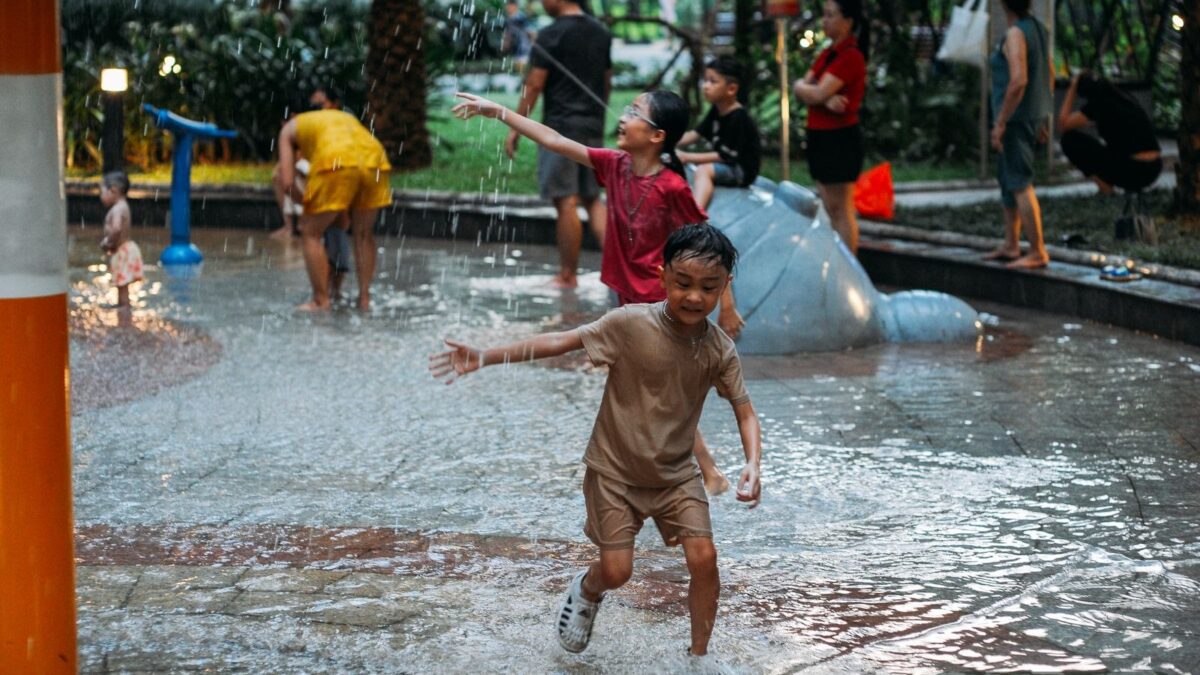
- Splash pad trip. Why it works: free in most towns, and the shade is usually better than at the pool.
- Sponge-and-chalk “wash the driveway” game. Why it works: they erase the chalk they drew, and think they won.
- Homemade popsicles: juice in a mold, in the freezer by 9am. Why it works: the waiting is the activity. Ready right at the afternoon meltdown.
- Pool noodle car-wash arch over the hose. Why it works: for the older kid, the setup IS the activity.
- Bug hunt with a magnifying glass and a jar. Why it works: release them at the end and it turns into a daily ritual.
- Backyard “restaurant” where they take your order (of water). Why it works: they will serve you water for forty minutes.
- Watermelon on the porch. No plates, no rules. Why it works: it’s an event, not a snack.
- Chalk obstacle course: hop, spin, crawl, jump. Why it works: it burns energy inside a 6-foot square.
- Paper-tube bird feeder rolled in birdseed. Peanut butter is the classic glue; plain shortening works the same if you’d rather not. Why it works: the check-on-it-tomorrow payoff again.
- Backyard bowling with water bottles. Why it works: half-fill them and they’re the right weight.
- Fly a dollar-store kite badly. Why it works: the failure is funny, and the failure is the point.
- Freeze-dance in the sprinkler. Why it works: it adds a rule to something they already do.
- Glow stick bath at dusk. Why it works: makes bathtime the reward instead of the fight.
- Driveway drive-in: laptop, blanket, popcorn, s’mores. Why it works: the one Friday night thing my kids ask for by name.
What I’d skip: water balloons. There, I said it. Filling forty of them takes longer than the fight that follows, and I am still finding the little rubber necks in my grass. Frozen sponge bombs are the version I’d buy again.
Grab the printable before you scroll on
I turned the best of these into a free printable summer bucket list you can stick on the fridge and let the kids cross off. It’s the only reason we did any of this instead of scrolling past it in June and doing nothing. There’s a whole free printables library too.
Summer Activities for Kids at Home (When You Can’t Leave the House)
Summer activities for kids at home work best when you give up one surface for the day: the kitchen table, the tub, or a corner of the living room floor. Cardboard box forts, sensory bins, kitchen science, marble runs, and kid-built lunches hold the longest. These 25 survive a nap trap, a heat advisory, or a day with no car.
- Giant cardboard box house. Why it works: two days, minimum. Cut a door, hand over the markers, walk away.
- Blanket fort with fairy lights. Why it works: they’ll eat lunch in there, which buys you a quiet lunch.
- Indoor scavenger hunt with written clues. Why it works: they have to write the clues, which they don’t notice is writing.
- Homemade playdough (flour, salt, water, oil). Why it works: making it is half the activity, and it saves a Play-Doh run.
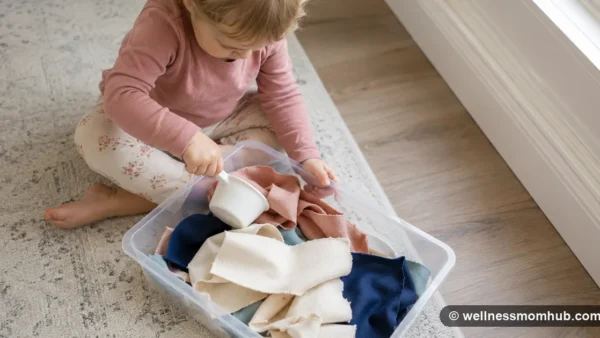
- Sensory bin with dry rice and kitchen scoops. Why it works: put it on a bedsheet. That’s the whole trick.
- Toy wash in the kitchen sink. Why it works: the pouring station, indoors.
- Kitchen science: baking soda and vinegar in a sheet pan. Why it works: they’ll ask to do it again immediately, so buy the big box of baking soda.
- Sink-or-float experiment in a mixing bowl. Why it works: they make the prediction first, which is the good part.
- Paper airplane contest with a taped-down runway. Why it works: measuring the distance adds twenty more minutes.
- Sticker-and-magazine collage. Why it works: zero instruction needed.
- Family talent show with a scorecard. Why it works: the scorecard turns ten minutes into an hour.
- Tallest tower from the recycling bin. Why it works: the recycling bin is a free craft kit.
- Sock basketball into the laundry basket. Why it works: the laundry gets sorted. Sometimes.
- Indoor camping with sleeping bags in the living room. Why it works: save it for the worst weather day of the month.
- Kid-built lunch: they assemble it, you supervise. Why it works: they eat what they built.
- Freeze-dance with a playlist they pick. Why it works: letting them DJ is most of the buy-in.
- Homemade puzzle: draw a picture, cut it into pieces. Why it works: makes and plays in one sitting.
- Painter’s tape road maze on the floor. Why it works: it peels up clean and it lasts a week.
- Graham cracker “cookie” decorating with frosting. Why it works: no baking, no oven, no 95-degree kitchen.
- A kids’ “office” with real paper, tape, and a stapler. Why it works: they want your desk supplies more than any toy you’ve ever bought them.
- Read-aloud chapter book, one chapter after lunch. Why it works: it anchors the dead 1pm hour.
- Dress-up fashion show, filmed on your phone. Why it works: they direct it. Say yes to being the audience.
- Balloon keep-up: don’t let it touch the floor. Why it works: free, and it wears them out indoors. Balloon safety: The U.S. Consumer Product Safety Commission warns that balloons are a choking hazard for children under 8, and uninflated or broken balloons are the most dangerous. Supervise continuously, keep balloons and fragments out of mouths, and throw away damaged balloons immediately.
- Marble run from paper tubes taped to the wall. Why it works: the best minutes-per-supply ratio on this list. Small-parts safety: Marbles are a choking hazard for young children and are not for under-3s. Keep marble runs for older children, or use a ball too big to fit in the mouth.
- Cardboard arcade with games they invent. Why it works: it’s the box house’s sequel. Another two days.
What I’d skip: the giant sensory bin with water beads. I bought them, my 2-year-old had one in her mouth within ninety seconds, and they went in the trash the same afternoon. Dry rice does everything I wanted them to do.
If your youngest is still in the toddler stage, the shorter, sturdier versions of these are in activities for 2-year-olds.
Summer Camp Activities for Kids You Can Run at Home
Summer camp activities for kids work at home when you copy the structure, not the crafts: a theme, a snack, one messy thing, one active thing, and a hard stop. Camp isn’t magic. It’s a schedule with a name and a badge.
Here’s how to run a home camp day:
- Pick a theme the night before (ocean, space, sports, art).
- Open with a two-minute ceremony: camp name, a chant, a paper badge.
- Do one messy activity, then one active one.
- Break for a snack they helped make.
- Close by noon with a talent show or a journal page.
Then pull three ideas from below to fill it. (The Summer Bucket List printable includes a fill-in Home Camp Day page with the schedule and a badge to draw.)
- Camp opening ceremony: a name, a chant, a paper badge. Why it works: the badge alone gets startling levels of compliance.
- Ocean day: blue water bin, plastic sea animals, a beach towel. Why it works: a theme lets you reuse the bin you already own.
- Science day: three simple experiments back to back. Why it works: batching them means one cleanup instead of three.
- Art day: one big shared canvas (a flattened cardboard box). Why it works: no fighting over whose is better.
- Sports day: five stations, a stopwatch, a homemade medal. Why it works: the stopwatch is the entire activity.
- Cooking day: they make one snack start to finish. Why it works: ownership. Also they clean up. Occasionally.
- Nature day: collect, sort, and glue a nature poster. Why it works: it gives the walk a job.
- Space day: cardboard rocket, blackout blanket, flashlight stars. Why it works: the fort and the theme collapse into one build.
- Camp talent show at 4pm to close the day. Why it works: gives the day a shape and an ending.
- Water day: run the whole water section above, but call it camp. Why it works: the label makes it feel new.
- Camp songs in the car on the way to nowhere. Why it works: the drive becomes the activity.
- Friendship bracelets with embroidery floss. Why it works: quiet, portable, and older kids get genuinely absorbed.
- Relay with silly rules: walk backwards, balance a book. Why it works: siblings of different ages can actually compete.
- “Camp store” with tokens earned from chores. Why it works: it’s the chore chart, except they asked for it.
- Camp journal: one drawing and one sentence a day. Why it works: a keepsake by August that costs a notebook.
Where this falls apart: the five-day themed home camp. I planned one. We made it to Wednesday. One camp day a week is sustainable. Five in a row is a job, and you already have one of those.
If you’d rather someone else run it some weeks, check your YMCA, your town rec department, and your public library.
Rainy Day and Too-Hot-to-Move Indoor Ideas
When it’s storming or the heat index is brutal, indoor summer activities for kids need to be low-prep, because you get no warning. A mid-afternoon bath, shaving cream on the shower wall, a movie, or a make-your-own board game will each buy you an hour. These 10 are my emergency drawer.
- Bathtub with cups, no bubbles, 3pm. Why it works: a bath in the afternoon resets the whole day.
- Shaving cream on the shower wall. Why it works: the cleanup is turning on the water.
- Movie afternoon, and no guilt about it. Why it works: because you need one too. More on that in self-care for moms.
- Puzzle marathon with a reward for finishing. Why it works: pull one they haven’t seen in six months.
- Indoor bowling with paper-towel tubes. Why it works: everything is a bowling pin if you’re desperate enough.
- Make a board game, then play it. Why it works: the argument about the rules takes an hour, which is fine, because that hour is the point.
- Sort the toy bins into keep and donate. Why it works: they’re weirdly into it if you call it a mission.
- Video call with grandparents where the kid gives a house tour. Why it works: buys you 25 minutes and makes someone’s week.
- Fort-building competition, one room each. Why it works: separate rooms. That’s it. That’s the reason.
- Do nothing. Let them be bored. Why it works: I fought this for a whole summer. Boredom is what produced the cardboard arcade.
Quick Reference: Best Summer Activities by Age
These ages are rough. Mix up and down freely, because my 2-year-old wanted the marble run and my 5-year-old still wanted the rice bin.
| Age | Best picks from this list | Prep time | Mess level | How long it held |
|---|---|---|---|---|
| Toddlers (2–3) | Pouring station, ice excavation | 2 min | High (do it outside) | 20–40 min |
| Preschool (4–5) | Chalk roads, sensory bin, box house | 5 min | Medium | 30–60 min |
| Elementary (6–8) | Marble run, paper airplanes, make a board game | 10 min | Low | 45–90 min |
| Tweens (9–12) | Friendship bracelets, cardboard arcade, camp store | 5 min | Low | 1–2 hours |
Summer Activities for Kids: FAQs
What are fun free summer activities for kids?
The best free summer activities for kids are ice excavation, sidewalk chalk games, sprinkler freeze tag, nature scavenger hunts, mud kitchens, cardboard forts, and your library’s summer reading program. Each one uses water, dirt, chalk, cardboard, or a library card, so the total cost is zero and setup takes under five minutes.
If you only try one, make it ice excavation:
- Fill a bowl with water and drop in a few small plastic toys.
- Freeze it overnight.
- Hand it over in the morning with a spoon and a cup of warm water.
- Walk away.
How do I keep kids busy in summer without screens?
Give them one open-ended material and a surface they’re allowed to ruin. Cardboard, water, dirt, painter’s tape, or chalk will outlast any structured craft, because the kids invent the rules instead of following yours. A loose weekly rhythm beats a schedule: one water day, one messy day, one out-of-the-house day, one at-home day.
I’m not anti-screen and I’m not going to pretend otherwise. We do one movie afternoon a week, on purpose, usually the hottest day of it.
What can kids do at home during the summer?
At home, the winners are box forts, sensory bins, kitchen science with baking soda and vinegar, marble runs taped to the wall, and letting them build their own lunch. Set the activity up before they’re bored, not after. Do one a day, not three, because I tried three and spent the whole day cleaning up between activities nobody finished. The ones that hold longest are the builds that stay up overnight, so they can come back to them tomorrow.
How do I entertain my kids all summer?
You don’t, and that’s the honest answer. Aim for one planned thing a day and let the rest of the hours go unstructured. Rotate through the five categories in this post so nothing feels stale by week three, and put the printable bucket list on the fridge so the kids drive the choosing instead of you. Boredom is allowed. It’s usually the day before the best thing they build.
Are summer camp activities as good at home?
For a lot of families, yes, as long as you copy camp’s structure and not its crafts: a theme, a start time, one messy activity, one active one, a snack, and a hard stop by noon. What camp is really selling you is a schedule with a name. It’s also selling you childcare, though, and no home version replaces that. Be honest with yourself about which one you actually need this week.
Print the Summer Bucket List
Everything in this post fits on one page. The free printable summer bucket list has the best 40 ideas here with check boxes, plus a boredom-buster jar to cut out, a home camp day planner, and a scoreboard the kids fill in — and a blank section for the ones they invent, which are always better than mine.
Stick it on the fridge, hand a kid a marker, and let them pick tomorrow’s. More ideas by age in kids’ activities, or start from the beginning on the Start Here page.
Got a preschooler in the mix? The age-matched list is activities for 3-year-olds, tagged by prep time and mess level.
If the youngest one is still under two, activities for 1-year-olds sorts 40 ideas by month, so you are not handing a 13-month-old something meant for a four-year-old.
When the weather turns, the indoor version is 45 toddler activities at home using things you already own.