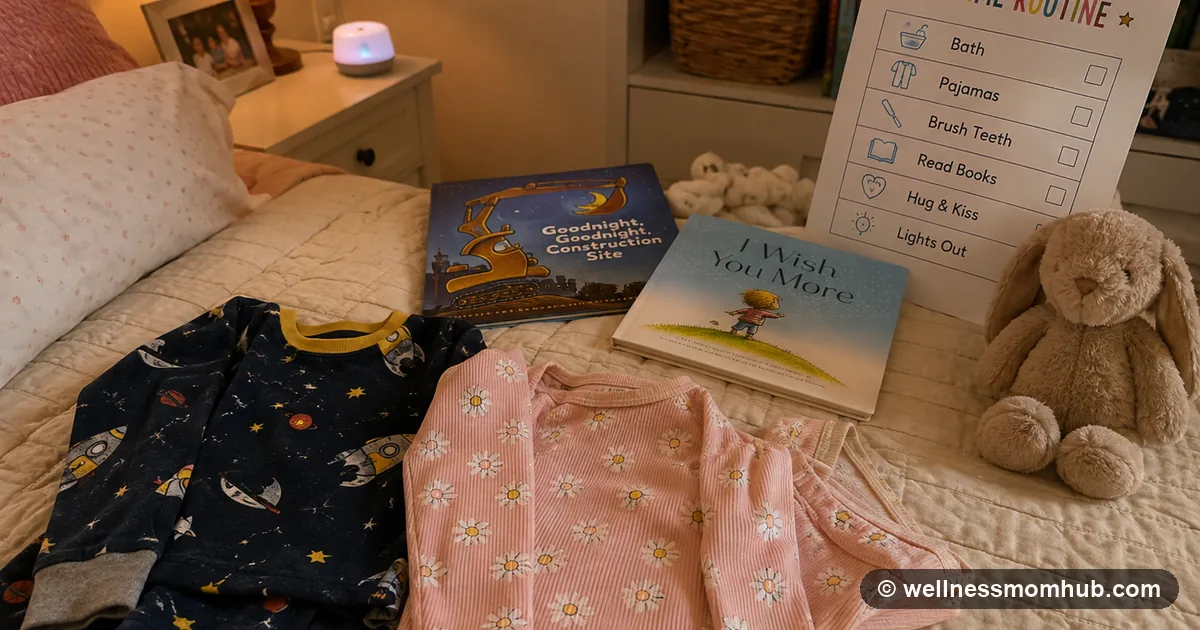
The most practical bedtime routines for 3 year olds use a short, repeatable order: cleanup, bathroom, pajamas, toothbrushing, one or two books, and goodnight. Aim for a routine your family can repeat on an ordinary Tuesday, even when the clock slips.
I learned this after making bedtime far more complicated than it needed to be. We had too many choices, too many books, and a last-minute hunt for whichever stuffed animal had suddenly become essential.
The simpler version worked better in my house. Not perfectly. Just better.
Important: This is a family-routine and logistics guide, not medical advice or sleep-training guidance. Follow your pediatrician if you have concerns about your child’s sleep. The American Academy of Pediatrics sleep pages are a reasonable starting point for questions this post deliberately does not answer.
Bedtime Routines for 3 Year Olds: What Is a Good Step-by-Step Routine?
A good bedtime routine for a 3-year-old is a short, familiar order: quick cleanup, bathroom, wash-up or bath, pajamas, toothbrushing, one or two books, one comfort check, and the same goodnight phrase. Keep the order steady even when the timing changes.
Here is the version I came back to.
1. Do a five-minute cleanup
Put the biggest toys into bins, carry cups to the kitchen, and clear a path through the room.
Why it works: I am giving playtime a clear ending, not trying to clean the whole house.
2. Make one last bathroom trip
Use the bathroom or potty before pajamas, especially if this request usually appears halfway through the first book.
Why it works: It keeps one practical task from restarting the whole routine.
3. Choose a bath or quick wash-up
A full bath does not need to happen every night. On a busy evening I use the shorter wash-up version.
Why it works: One skipped bath does not make the rest of the routine feel off.
4. Put on pajamas
Offer two weather-appropriate choices instead of opening the whole dresser.
Why it works: My child gets a real choice without turning pajamas into a meeting.
5. Brush teeth
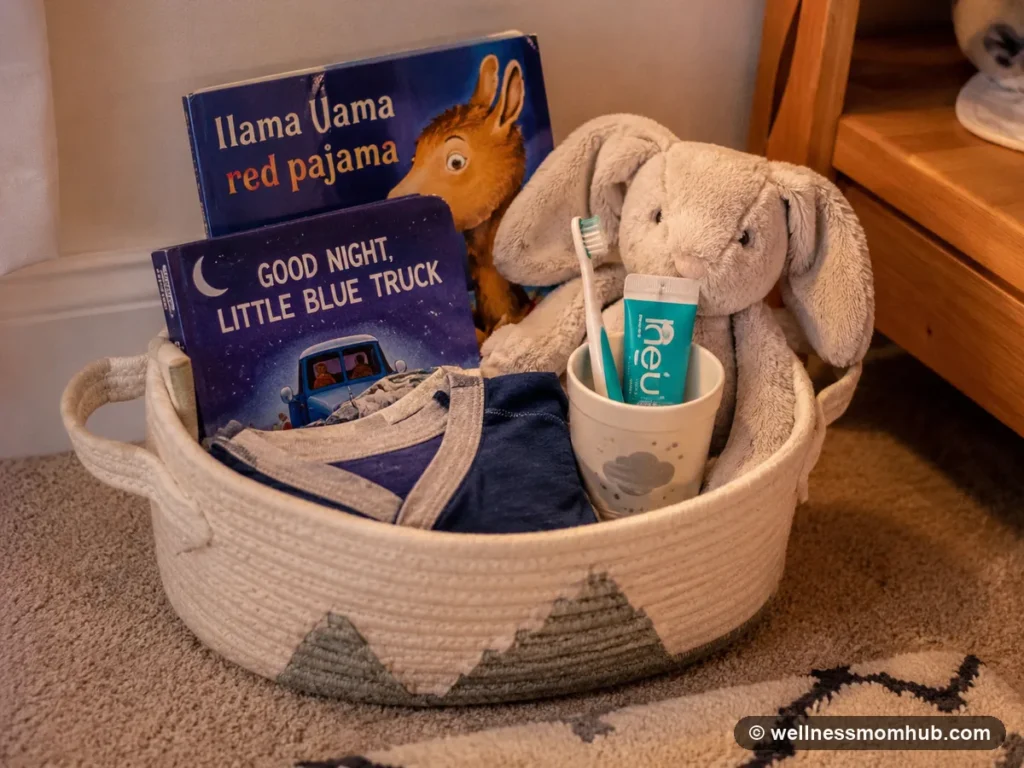
Keep the toothbrush, toothpaste, cup, and stool together so the supplies are ready.
Why it works: I do not have to leave the bathroom and come back to a completely different activity. I follow our dentist’s instructions for the dental details.
6. Choose one or two bedtime stories
Let your child choose from a small book basket instead of the whole shelf.
Why it works: The choice still feels fun, but the number stays fixed.
7. Do one final comfort check
Find the chosen stuffed animal, place the water cup where it normally goes, and set the night-light or hallway light.
Why it works: One clear check gives the routine a stopping point.
8. End with the same short phrase
Use one simple line, prayer, or song each night.
Why it works: The repeated ending makes it clear that the routine is finished.
Skip this: turning the five-minute cleanup into a full-house reset, opening the entire pajama drawer, or adding another book after the final goodnight. Those were the places our routine kept stretching.
These bedtime routines for 3 year olds give me something familiar to return to after the missing pajamas, the spilled water, or the sudden need to discuss dinosaurs.
Toddler Bedtime Routine: Focus on Order, Not Perfection
A toddler bedtime routine works best with a few anchor steps that stay familiar when dinner runs late, bath time gets skipped, or the family is away from home. I focus on the order more than the exact minute.
1. Pick three anchor steps. Choose steps you can use almost anywhere, such as pajamas, teeth, and one book.
Why it works: The routine still looks familiar on travel nights or after a late family dinner.
2. Give limited choices. Ask, “Blue pajamas or green pajamas?”
Why it works: The choice is real, but the whole evening does not stop.
3. Set up before you start. Put pajamas on the bed, check the toothbrush, and set out two books.
Why it works: I stay in the routine instead of leaving the room every two minutes.
4. Keep a five-minute backup. Bathroom, pajamas, teeth, one book, and the usual goodnight phrase.
Why it works: Short still counts.
Skip this: trying to make up every missed step. A late night does not improve when I add more tasks to it.
Bedtime Routine Chart: Quick Reference by Age
A bedtime routine chart should show only the steps your family actually uses. Start with the smallest version that feels useful, then add a card only if it makes the routine easier to follow.
These are starting layouts I would test, not developmental standards. If your child ignores half the chart, make it smaller.
| Age section | Starting layout to test | Child’s part | Keep it realistic |
|---|---|---|---|
| 2 years | Try 4 to 5 clear cards | Point to or carry a card if interested | Use fewer cards if the chart gets ignored |
| 3 years | Try 5 to 7 clear cards | Move or check a finished card | Keep one book choice and one pajama choice |
| 4 years | Try 6 to 8 clear cards | Check a card or do one small job | Do not add chores just to make the chart longer |
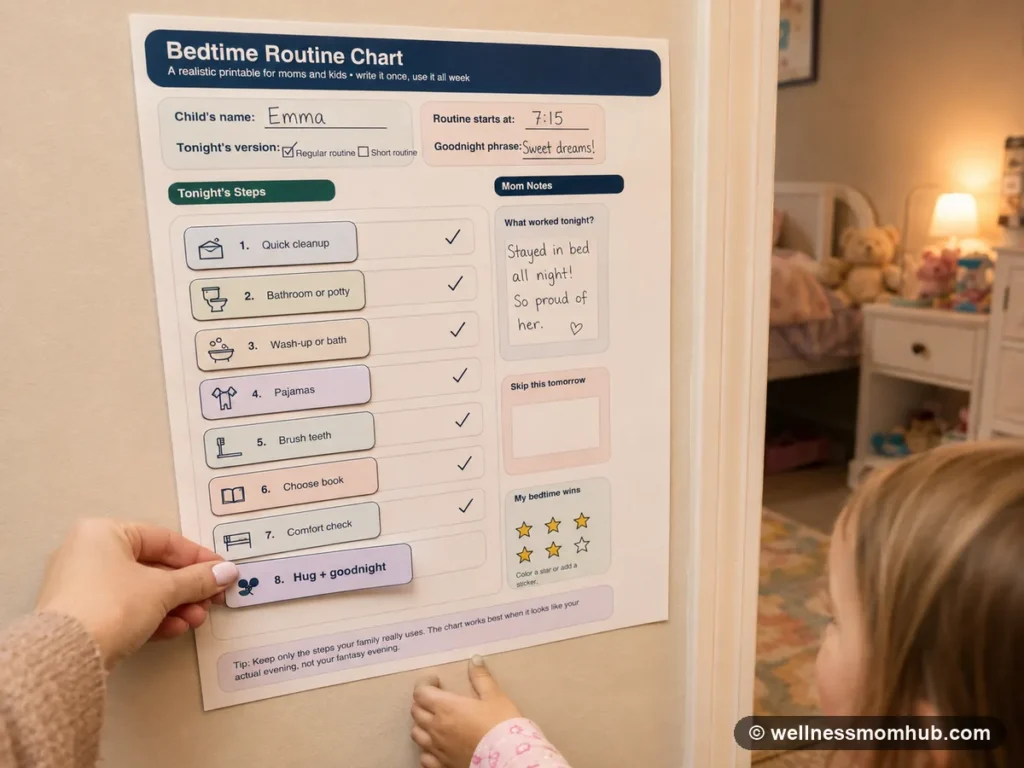
Print the free printable bedtime routine chart, choose the cards that match your real evening, and place them in the order you already use.
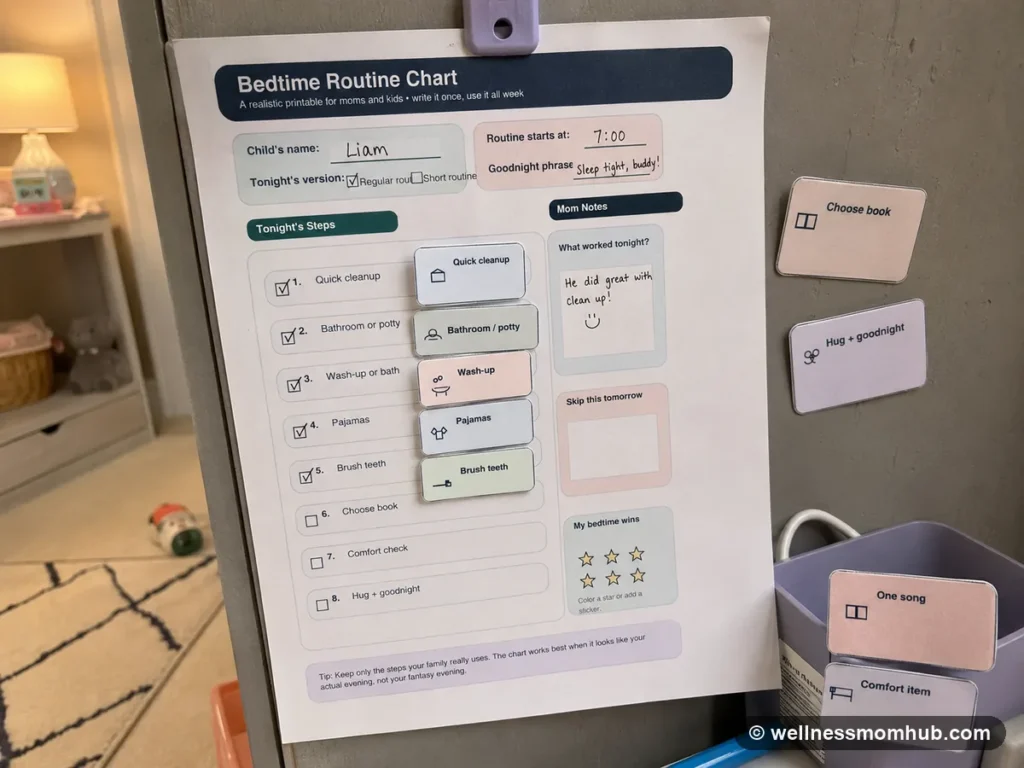
Toddler Bedtime Routine Chart: Which Picture Cards Should You Include?
A toddler bedtime routine chart needs a small set of clear, concrete actions. Make the last card an obvious ending, such as “hug and goodnight.”
1. Put toys away. Cleanup has a clear finish.
2. Use the bathroom. The bathroom trip happens before books.
3. Put on pajamas. The routine moves away from active play.
4. Brush teeth. The picture shows where toothbrushing belongs.
5. Choose a book. There is something enjoyable near the end.
6. Hug and say goodnight. The chart has a final step.
You can also add bath time, washing hands and face, putting clothes in the hamper, or choosing tomorrow’s shirt.
Skip this: cards your family ignores most nights. A shorter chart is easier to use than a complete-looking chart that nobody follows.
Night Time Routine Chart: How to Use It Without Nagging
A night time routine chart should replace repeated reminders, not create another project for you to manage. Keep it where your child can see it, point to the next picture, and let them mark a finished step.
1. Put it at child height. Hang it in the bedroom, hallway, or bathroom so your child can see and reach it.
2. Preview the chart. Point through the steps before you begin, so the order is visible before one activity ends.
3. Let your child move the cards. Use magnets, clips, check marks, or removable cards. The chart does part of the reminding.
4. Reset it. Move everything back after bedtime or the next morning, so it is ready when you need it again.
Skip this: a complicated points-and-prizes system at the beginning. Moving the final card may be enough.
Toddler Routine Chart: Create a Full and Short Version
A toddler routine chart works better with a full version and a short version. Mark the must-do cards so you know what stays on late nights.
1. Always. Bathroom, pajamas, teeth, and goodnight. These steps keep the sequence recognizable.
2. Usually. Cleanup, bath or wash-up, and bedtime stories. They fit on ordinary evenings.
3. Bonus. Tomorrow’s clothes, a bedroom tidy, or an extra song. They can disappear when everyone is tired.
Mark the “always” cards with a small star. On rushed nights, follow those.
Skip this: presenting the short version like a punishment. It is simply the routine for a tired night.
Bedtime Routine for 2 Year Olds: Keep It Short and Visual
For a bedtime routine for 2 year olds, I would start with a short chart and add a step only if the child is actually using it. The adult still runs the routine; the chart is only a prompt.
1. Put three toys in the bin. The cleanup job has a visible limit.
2. Use the bathroom or complete your usual diapering routine. The practical step happens before pajamas.
3. Put on pajamas. The routine moves away from play.
4. Brush teeth with adult help. The step stays in the same place each night.
5. Read one short book. One book is manageable on a busy evening.
6. Hug, say goodnight, and finish. The routine has a clear ending.
Use photos of your child’s own items if those pictures are clearer in your home.
Skip this: expecting the chart to run the evening by itself. It is a reminder, not a tiny household manager.
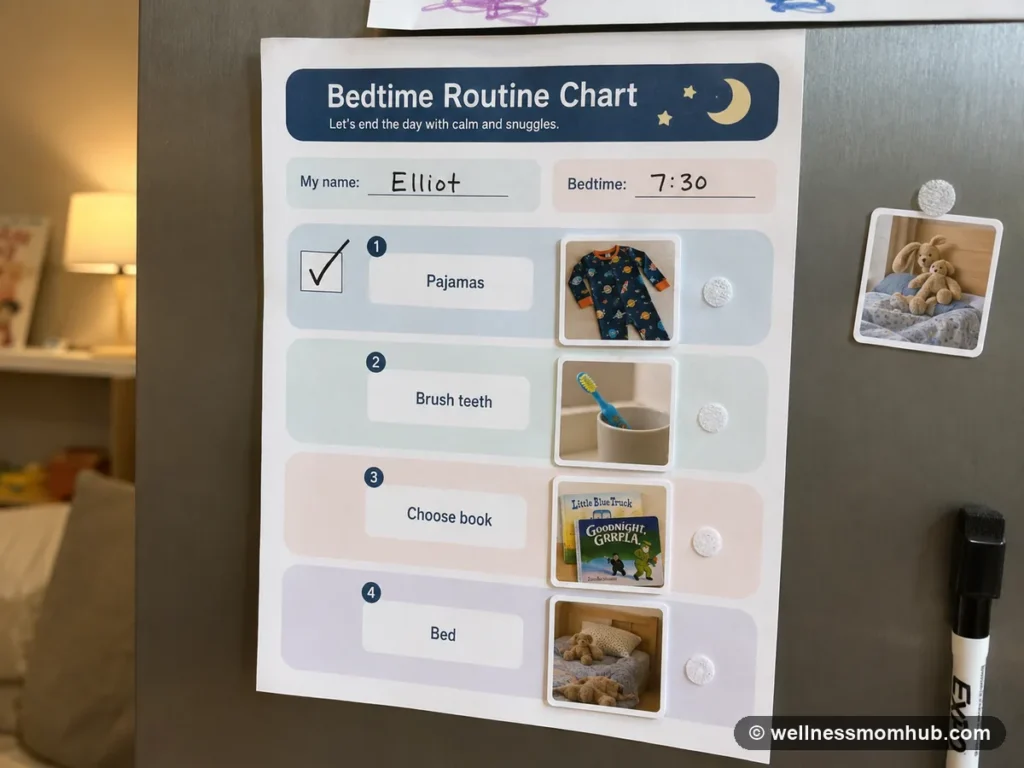
Bedtime Routines for 4 Year Olds: Add Small Responsibilities
Bedtime routines for 4 year olds can include small responsibilities that already belong to family life. Add one at a time and keep the end of the routine clear.
1. Put dirty clothes in the hamper. It is a quick job with an obvious finish.
2. Choose between two pajama options. The choice stays manageable.
3. Check off picture cards. Following the chart becomes part of the routine.
4. Choose one or two books. The number stays fixed.
5. Put a stuffed animal or water cup in place. The room is ready before goodnight.
6. Pick tomorrow’s shirt. One small task can make the morning easier.
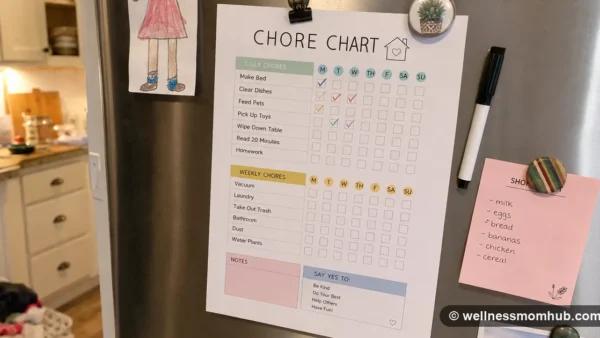
Skip this: adding every job your child can technically do. Bedtime does not need to become a long independence lesson. If you want a separate place for those jobs, an age-by-age printable chore chart keeps them out of the evening.
Bedtime Routine for Preschoolers: Protect the Three Anchors
A bedtime routine for preschoolers stays manageable when a few anchor steps remain the same across ordinary weeknights, weekends, travel, and babysitter nights. The exact timing can move; the order stays familiar.
Preschool evenings have plenty of clutter. There is a backpack to empty, artwork to inspect, and usually one detailed story that cannot possibly wait. I handle those things before the bedtime routine starts.
1. Empty the backpack and put it by the door. School prep does not interrupt bedtime later.
2. Put tablets and active toys away. There are fewer things competing with the routine.
3. Do a short cleanup. Playtime gets a clear ending.
4. Complete bathroom, pajamas, and teeth. The anchor steps stay in the same order.
5. Choose books from a small basket. The number stays fixed.
6. Finish with the same phrase, song, or prayer. The routine has a clear ending.
Skip this: opening a long preschool conversation after the final goodnight. Save the full purple-cup investigation for breakfast.
Bedtime Routine for Toddlers When the Evening Goes Sideways
A bedtime routine for toddlers can shrink to the familiar steps when the evening falls apart. You do not need to restart it or squeeze in every missed activity.
The five-minute version
Bathroom, pajamas, teeth, one quick book, goodnight.
Why it works: The basic order stays familiar. Skip the bath and the extra song. The short version still counts.
The away-from-home version
Bathroom, pajamas, one familiar book, the regular goodnight phrase.
Why it works: Familiar items and words are easy to bring along. Skip packing half the bedroom. One book and one comfort item are enough.
The babysitter or grandparent version
Leave the chart where they can see it, write down the number of books, and note the comfort item and closing phrase.
Why it works: The routine does not depend on one person remembering everything.
Common Bedtime-Routine Mistakes That Made Our Evenings Harder
The biggest mistakes in our house were making the routine too long, offering too many choices, and changing the limit halfway through. Simpler works better.
1. Starting with too many picture cards. I tried a long chart because it looked organized. We simply had more places to get distracted.
2. Giving unlimited choices. Any pajamas, any book, any cup, and any stuffed animal turned every decision into a meeting.
3. Changing the rule halfway through. When I said “one book” and then agreed to more, the first answer stopped meaning much.
4. Saving practical tasks until after goodnight. The bathroom, water cup, and missing stuffed animal all restarted the routine.
5. Treating one messy night like a failure. A late night does not erase the routine. I use the short version and move on.
Skip this: making a new chart every time bedtime gets messy. Sometimes the chart is fine. Everyone is just tired.
If the evening keeps unravelling before you reach bedtime at all, the fix may be earlier in the day. A realistic stay-at-home mom schedule puts the pre-dinner hour somewhere on purpose instead of leaving it to chance, and activities for 3 year olds covers what to put in it.
Frequently Asked Questions
These answers cover routine logistics only. They do not provide individual sleep timing or sleep-training advice.
What time should 3 year olds go to bed?
Ask your pediatrician about a clock time that fits your child. Keep the routine itself simple and repeatable.
What is a good bedtime for a 2 year old?
For the routine itself, a useful household start time leaves enough room to complete the same short sequence without rushing. For guidance about the actual sleep timing your child needs, ask your pediatrician.
How long should a 3-year-old bedtime routine take?
There is no required length for a 3-year-old bedtime routine. Keep it short enough to repeat on a busy weeknight, and use the five-minute backup when the full routine is not realistic.
How do I make a bedtime routine chart for a toddler?
Choose the fewest clear steps that cover your real routine, pair each one with a simple picture, and place the cards in order. Hang the chart at child height and let your toddler move or check each card. Start plain. You can make it cute later.
Download the Free Printable Bedtime Routine Chart
The free printable bedtime routine chart is three pages. Page one is the chart itself, with space for your child’s name, tonight’s goodnight phrase, and a box to mark whether you are running the regular routine or the short one. Page two holds the cut-out picture cards, and the pack suggests picking five to eight and leaving out anything your family does not use. Page three is a weekly tracker for the nights you want to keep an eye on.
Download it, choose the picture cards that match your real evening, and leave out the ones you do not use. Put the chart where your child can reach it. Mark the must-do steps. Use the short version on rough nights.
That is what keeps bedtime routines for 3 year olds usable when the dishes are still in the sink, the favourite pajamas are missing, and nobody has much patience left.