The best toy storage ideas are the ones your kids can use on their own: low open shelves, one kind of toy per bin, picture labels and fewer toys out at once. Pair a cube shelf or baskets with a simple toy rotation system, anchor anything tall to the wall, and clean-up gets faster in any room.
Free printable Toy Storage Labels Printable
Quick picks: no playroom? Use baskets on a low console and one big “closing time” basket. Got a playroom? A cube shelf with fabric bins and picture labels does most of the work. Too many toys? Box up half and rotate them every week or two. Print our free toy storage labels so even pre-readers know where things go.
5 rules for toy storage kids can actually use
- Low and open. If a 3-year-old can’t reach it or open it, a grown-up will be the one putting it away.
- One kind of toy per bin. Cars with cars, blocks with blocks. Mixed bins get dumped out to find one thing.
- Picture labels. A drawing of a car beats the word “cars” until your child can read.
- Fewer toys out. If the bins overflow, the problem is the number of toys, not the storage.
- Everything has a home. A toy without a spot ends up on the floor. When something new comes in, decide where it lives.
 Save
25 toy storage ideas at a glance
| Idea | Best room | Kids can clean up alone? |
|---|---|---|
| Baskets on a low console or shelf | Living room | Yes |
| Storage ottoman with a lift-off lid | Living room | Yes |
| TV stand cabinet with doors | Living room | With help |
| Rolling cart behind the sofa | Living room | Yes |
| Flat bins under the sofa | Living room | Yes |
| One “closing time” basket | Living room | Yes |
| Cube shelf with fabric bins | Playroom | Yes |
| Low open shelves with a few toys | Playroom | Yes |
| Angled bin organizer | Playroom | Yes |
| Pegboard for art supplies | Playroom | With help |
| Front-facing book ledges | Playroom or bedroom | Yes |
| Play zones on a rug | Playroom | Yes |
| Under-bed rolling drawers | Bedroom | Yes |
| Hanging closet organizer | Bedroom | Yes |
| Over-the-door pocket organizer | Bedroom | Older kids |
| Stuffed animal bin or bean bag cover | Bedroom | Yes |
| Bookcase laid on its side | Bedroom or playroom | Yes |
| Clear lidded boxes for sets | Any | Older kids |
| Zip pouches for puzzles | Any | Yes |
| Divided organizer for tiny pieces | Any (up high) | Older kids |
| Mesh bag for bath toys | Bathroom | Yes |
| Outdoor bin for balls | Garage or porch | Yes |
| Dress-up hooks or a low rail | Bedroom or playroom | Yes |
| Art caddy with handles | Kitchen or playroom | Yes |
| Toy rotation bins in a closet | Any | Grown-up job |
Toy storage ideas for the living room
Most families don’t have a playroom, so the toys live where the grown-ups also want to sit. The trick is storage that looks like furniture.
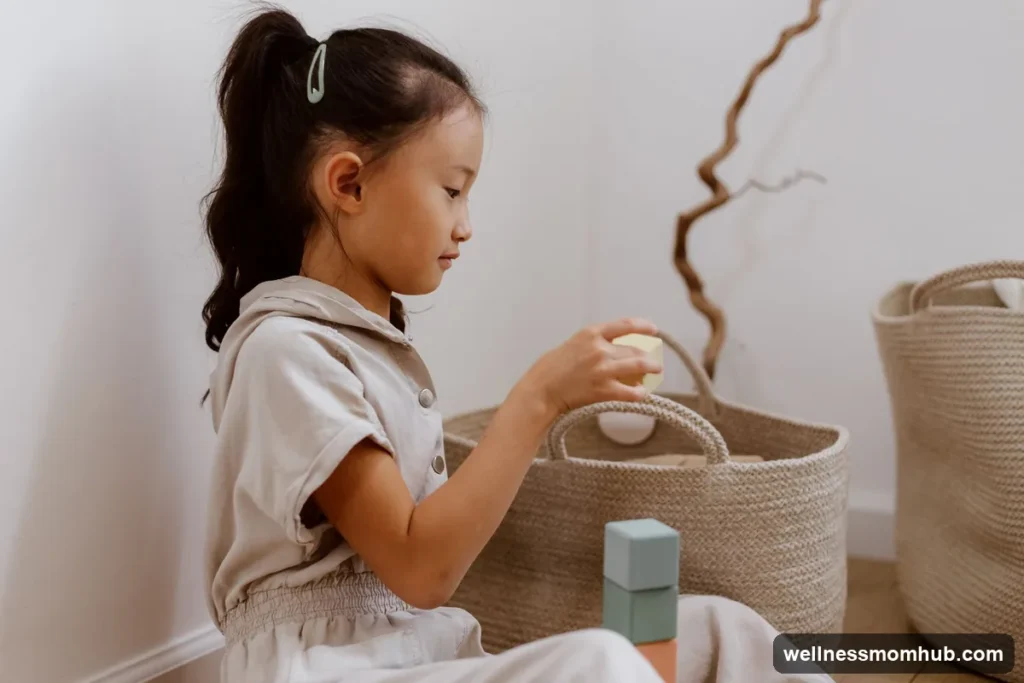
- Baskets on a low console or shelf. Woven baskets look calm, slide out easily and hold a surprising amount.
- Storage ottoman. Choose one with a lift-off lid rather than a hinged one that can drop on small fingers.
- TV stand cabinet. Doors hide the mess; keep the heaviest things low and anchor the unit to the wall.
- Rolling cart behind the sofa. Three tiers: books, art, small toys. Roll it out to play, back to hide.
- Flat bins under the sofa. Perfect for train tracks and car sets that need to stay flat.
- One “closing time” basket. At the end of the day everything goes in one big basket, sorted tomorrow.
 Save
Playroom storage ideas
A playroom gives you room for a system. Keep it simple enough that it still works on a tired Thursday.
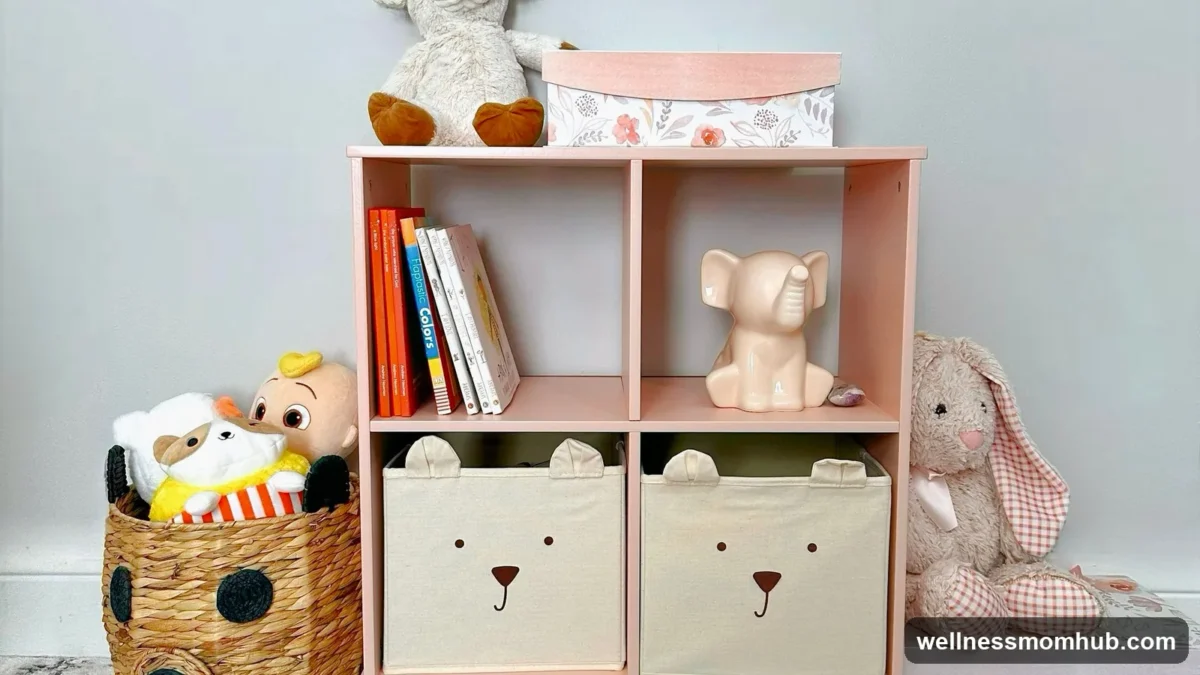
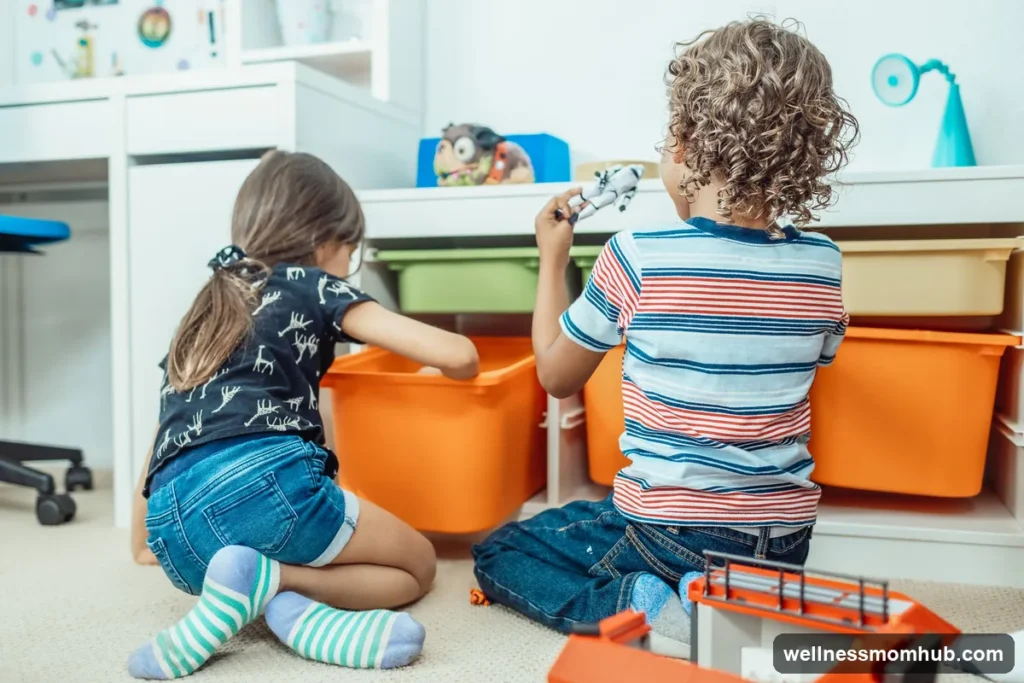
- Cube shelf with fabric bins. The workhorse: one category per bin, a picture label on each.
- Low open shelves. Put out 6 to 10 toys at a time, each on a tray or in a shallow basket, so kids can see everything.
- Angled bin organizer. Tilted bins let little ones see inside without pulling them out.
- Pegboard for art supplies. Cups and hooks keep markers, scissors and paper in sight. Hang anything sharp out of reach.
- Front-facing book ledges. Kids pick books by the cover, not the spine.
- Play zones on a rug. A reading corner, a building corner, an art table. Toys go back to their zone.
 Save
Toy storage for bedrooms and small spaces
- Under-bed rolling drawers for blocks, dress-up or out-of-rotation toys.
- Hanging closet organizer with fabric shelves for stuffed animals and books.
- Over-the-door pocket organizer for small figures and doll clothes. Fine for older kids; skip it for toddlers if the pockets hold small parts.
- Stuffed animal bin or bean bag cover. A zippered bean bag cover filled with stuffed animals is a seat and storage in one.
- Bookcase laid on its side. A low, long shelf a toddler can reach. Even low furniture should be secured if it can tip.
Toy organization ideas by type of toy
- Building bricks: one big shallow bin to play from, plus small lidded boxes for kits older kids want to keep together.
- Puzzles: zip pouches, one puzzle each, with the box picture cut out and tucked inside.
- Tiny pieces (beads, figures, doll shoes): a divided organizer on a high shelf.
- Cars and trains: a flat under-sofa bin or a wall shelf “parking lot.”
- Bath toys: a mesh bag that lets them drain and dry.
- Balls and outdoor toys: one bin by the back door or in the garage.
- Dress-up: low hooks or a short rail so kids can hang costumes themselves.
- Art supplies: a caddy with handles that moves to the kitchen table and back.
 Save
How to set up a toy rotation system
Toy rotation means keeping only some toys out and swapping them every week or two. Fewer toys out is easier to tidy, and the boxed-up ones feel new when they come back.
- Sort everything into 4 groups with a mix in each: something to build, something to pretend with, a puzzle or game, books and a cuddly toy.
- Put each group in a bin labeled A, B, C and D.
- Keep one bin out, plus a few favorites that always stay (the beloved stuffed animal is not up for rotation).
- Store the other bins in a closet, under a bed or in the garage.
- Swap every 1 to 2 weeks, or sooner if a bin stops getting played with. Note what’s in each bin on the printable inventory.
Toy organization in 20 minutes: the quick declutter
- Set a timer and grab three bags: keep, rotate, donate.
- Toss anything broken or missing pieces first.
- Duplicates and outgrown baby toys go to donate.
- Keep what gets played with this month; the rest goes to rotate.
- Give every kept toy a home and a label before you stop.
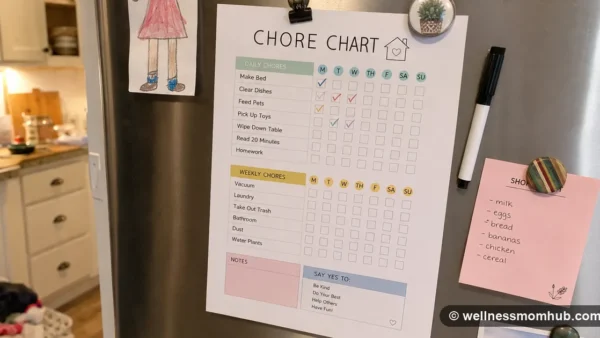
Kids can help from about age 3, and putting toys away is one of the easiest first chores. See our chore chart by age for more jobs they can own, and build a clean-up song into your toddler schedule.
Toy storage safety
- Anchor tall furniture. The CPSC’s Anchor It campaign asks parents to secure TVs and furniture such as bookcases and dressers to the wall. Kids climb shelves to reach toys.
- Watch toy chest lids. The CPSC warns about toy chests with lids that can fall freely. Open bins, lightweight removable lids or sliding doors avoid the problem, and toy chests should have ventilation holes that aren’t blocked.
- Small parts up high. If a child under 3 lives in the house, keep beads, bricks and figures on a high shelf or in a lidded box they can’t open.
- Heavy toys low. Store the heavy wooden sets on the bottom shelf, never above a child’s head.
 Save
Free toy storage labels and rotation inventory
The free toy storage labels are a 4-page PDF:
- Page 1: how to use the labels, plus the safety checklist.
- Page 2: 12 picture bin labels: blocks, cars, trains, stuffed animals, books, puzzles, art supplies, balls, dress-up, music, building bricks and bath toys.
- Page 3: 8 blank labels to draw your own.
- Page 4: a toy rotation inventory for bins A to D, with out and back-in dates.
Print on cardstock and cover the labels with clear packing tape. Free for personal use, no email required. For bins of a different kind, see our sensory bin ideas, and for rainy days with all those organized toys, toddler activities at home.
Toy storage FAQ
How do I store toys in a living room?
Use storage that looks like furniture: baskets on a low shelf, a storage ottoman with a lift-off lid, a rolling cart behind the sofa and flat bins under it. Add one “closing time” basket for the end of the day.
How many toys should be out at once?
There’s no exact number, but fewer is easier. Many families keep 6 to 10 toys or one rotation bin out and store the rest, then swap every week or two.
What is a toy rotation system?
It’s a way of keeping only part of your child’s toys out. Split them into bins, keep one bin out, store the others, and swap every week or two so toys feel new again.
How do I get my toddler to clean up toys?
Make it easy: low open bins, one kind of toy per bin, picture labels, and a short clean-up song at the same time each day. Clean up together at first, then let them do more on their own.
Are toy chests safe?
Choose carefully. The CPSC warns about lids that can fall freely on a child. Open bins, chests with lightweight removable lids or sliding doors are safer, and any chest should have unblocked ventilation holes.
What is the best toy storage for small spaces?
Go vertical and hidden: under-bed drawers, a hanging closet organizer, a bookcase laid on its side and a bean bag cover stuffed with soft toys. Anchor anything tall.