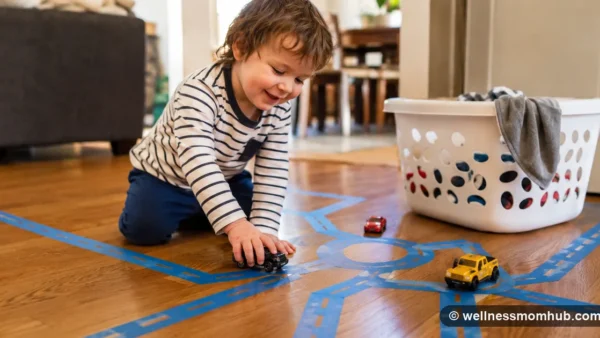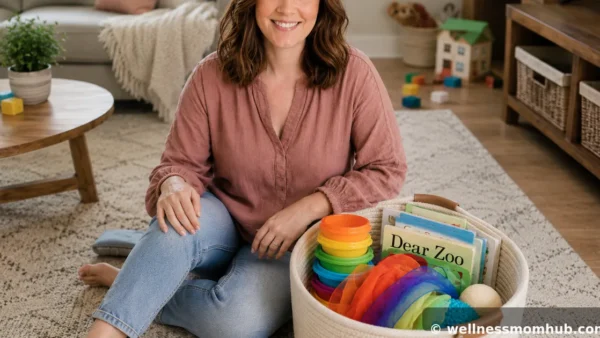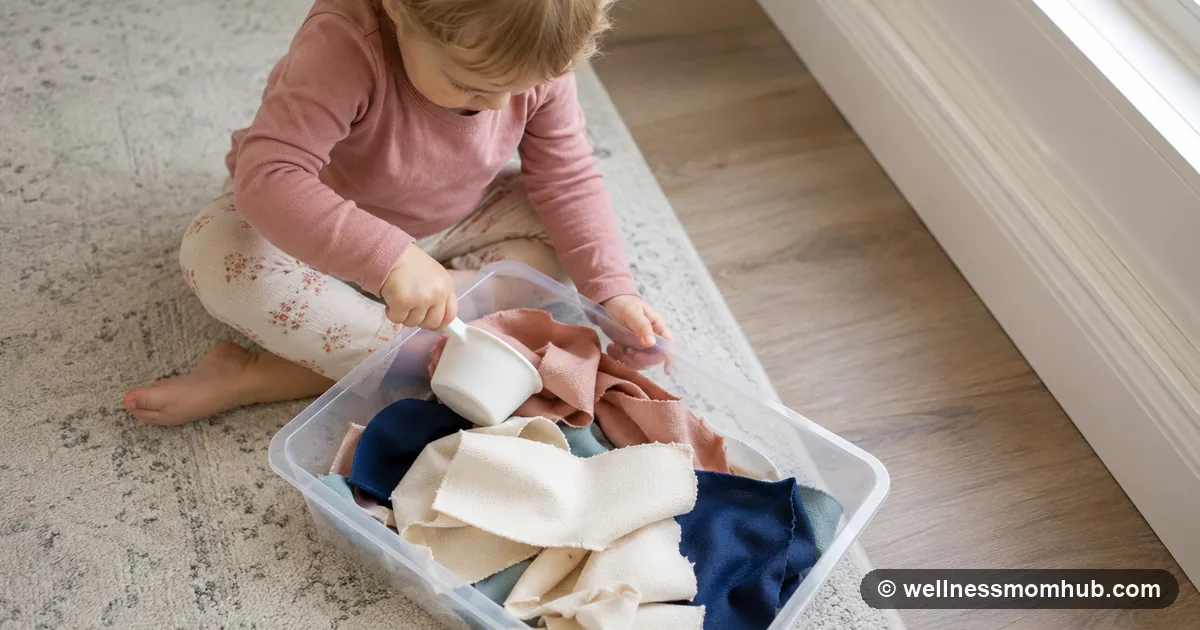
Sensory bin ideas can be as simple as putting one easy filler in a shallow container, adding one or two tools, and giving your toddler one clear job such as pouring, finding, washing, or matching.
My first sensory bin was nothing to photograph: a dry filler in a shallow container with two small scoops. Setup took about as long as making a cup of tea. It held long enough for me to empty the dishwasher, and it ended on its own when snack time arrived, which made both the cleanup and the move away from the bin much easier.
These sensory bin ideas are deliberately realistic. Not one of them requires matching wooden tools, six shades of dyed rice, or a label maker.
A plastic storage bin, dishpan, roasting pan, or sensory table can all work. Choose materials based on how your child actually uses them, stay within reach, and skip loose pieces if objects go into the mouth.
Important: This article shares general play ideas and personal experience. It is not medical advice. Follow product age labels, current CPSC toy safety guidance, and your provider’s advice for individual concerns.
Sensory Bin Ideas for Toddlers: Start With a Simple Setup
These toddler sensory bin setups work best when the container is shallow, the materials are easy to handle, and the activity has one obvious purpose. Start smaller than Pinterest by choosing a filler, adding one or two tools, and deciding what your child will do with them.
Here is the formula I use:
- Choose a shallow container.
- Add one main sensory bin filler.
- Include one or two tools.
- Pick one job for the activity.
- Put a towel or mat underneath.
| Setup style | Main material | Add one or two tools | Cleanup level |
|---|---|---|---|
| Scoop and pour | Large blocks, fabric, or jumbo pasta | Measuring cup and scoop | Low |
| Find and rescue | Crumpled or shredded paper | Large toys and a bowl | Medium |
| Sort and match | Large lids, blocks, or felt shapes | Muffin tin or colored bowls | Low |
| Wash and scrub | Shallow water and washable toys | Sponge and small brush | Medium |
| Seasonal play | Paper leaves, gift bows, or felt shapes | Tongs and cups | Low |
Skip this: starting with a giant under-bed bin. More space usually means more filler, and more filler means a longer cleanup.
1. Crumpled Paper Treasure Dig
Loosely crumple scrap paper and put it in the bin. Hide several large toy animals or blocks underneath, then ask your toddler to find each one and drop it into a bowl.
Why it works in real life: It feels like a treasure hunt, but the filler can go straight into the recycling afterward.
2. Large Block Color Transfer
Place large building blocks in the bin with two or three colored bowls. Your toddler can transfer the blocks with their hands, a large spoon, or easy-grip tongs.
Why it works in real life: The sorting job gives the activity a point without requiring a long explanation.
3. Fabric Texture Bin
Fill the bin with clean washcloths, felt squares, ribbon lengths, and large fabric scraps. Let your toddler pull, pile, fold, and move the pieces between containers.
Why it works in real life: Fabric is quiet, reusable, and much easier to collect than hundreds of grains of rice.
4. Plastic Lid Posting Bin
Collect large, clean plastic container lids. Add an empty tissue box or cardboard box with a wide slot, then let your toddler post each lid through the opening.
Why it works in real life: The repeated posting action gives the bin a clear job.
5. Cardboard Tube Drop
Stand several cardboard tubes inside the bin and provide large blocks, chunky balls, or fabric bundles that fit through them.
Use pieces that match the product age labels you follow at home, and skip the activity if the pieces go into your child’s mouth.
Why it works in real life: Dropping the same object through a tube over and over can be far more interesting than playing with it the way the box intended.
What If My Toddler Puts Play Materials in Their Mouth?
If your child puts play materials in their mouth, skip rice, dried beans, beads, tiny pasta, and other loose fillers. Use large fabric pieces, washcloths, crumpled paper, rolled socks, or an empty bin with large kitchen tools instead.
These bigger alternatives are easier to see and collect. Stay close, follow product age labels and current choking prevention guidance from the American Academy of Pediatrics, and contact your provider for individual concerns.
Use the free Sensory Bin Play Pack printable to match lower-mess fillers with scooping, sorting, washing, and transfer activities before you start.
Easy Sensory Activities for Toddlers With Almost No Prep
Easy sensory activities for toddlers can be made with socks, kitchen tools, tissue paper, cardboard, and painter’s tape. Use ordinary household items when you need an activity now and do not want another craft-supply order showing up on the porch.
Skip anything that takes longer to set up than your child is likely to use it.
6. Kitchen Utensil Discovery Bin
Place a silicone whisk, wooden spoon, measuring cup, spatula, and plastic funnel in an empty container. Add a few large fabric pieces if your toddler wants something to scoop or move.
Why it works in real life: The utensils already feel familiar because toddlers see adults using them every day.
7. Tissue Paper Pull Bin
Loosely layer reused tissue paper in a bin and hide a few large toys between the sheets. Your toddler can pull, crumple, and search.
Why it works in real life: It makes plenty of noise and movement without leaving tiny filler pieces all over the floor.
8. Painter’s Tape Rescue Bin
Use painter’s tape to attach large toy animals, cars, or blocks to the bottom and sides of an empty bin. Your toddler’s job is to peel the tape and rescue each toy.
Why it works in real life: Setup takes only a few minutes, and the activity has an obvious finish line.
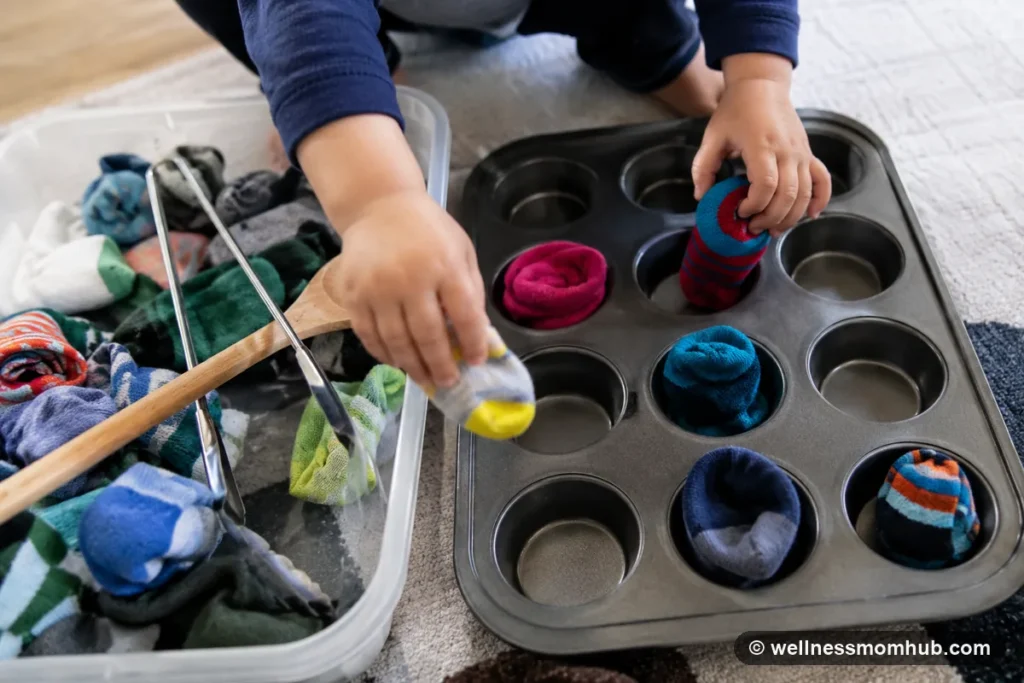
9. Muffin Tin Transfer
Place several large blocks, plastic lids, or fabric balls in a bin beside an empty muffin tin. Invite your toddler to put one object in each compartment.
Why it works in real life: The separate spaces turn an ordinary transfer activity into a simple sorting game.
10. Sock Matching Bin
Place several pairs of clean, brightly colored socks in the bin. Your toddler can find pairs, stuff smaller socks inside larger ones, or transfer them with a kitchen spoon.
Why it works in real life: Cleanup means putting the socks back in the laundry basket.
Skip this: nearly identical socks. That turns the activity into plain laundry.
Sensory Activities for Toddlers Using Dry Fillers
Sensory activities for toddlers using dry fillers are easy to store and bring back another day. Choose fillers you can contain and reuse, and switch to paper, fabric, or large toys when loose fillers are not a good fit for your child.
Skip dry rice for the first attempt unless you already know it will stay mostly inside the bin.
11. Jumbo Pasta Scoop Bin
Add uncooked jumbo pasta, a measuring cup, and a small bowl. Skip this idea if your child puts play materials in their mouth.
Large blocks or fabric pieces can replace the pasta.
Why it works in real life: The pasta makes a noticeable sound while pouring, and the whole setup fits in one storage bag afterward.
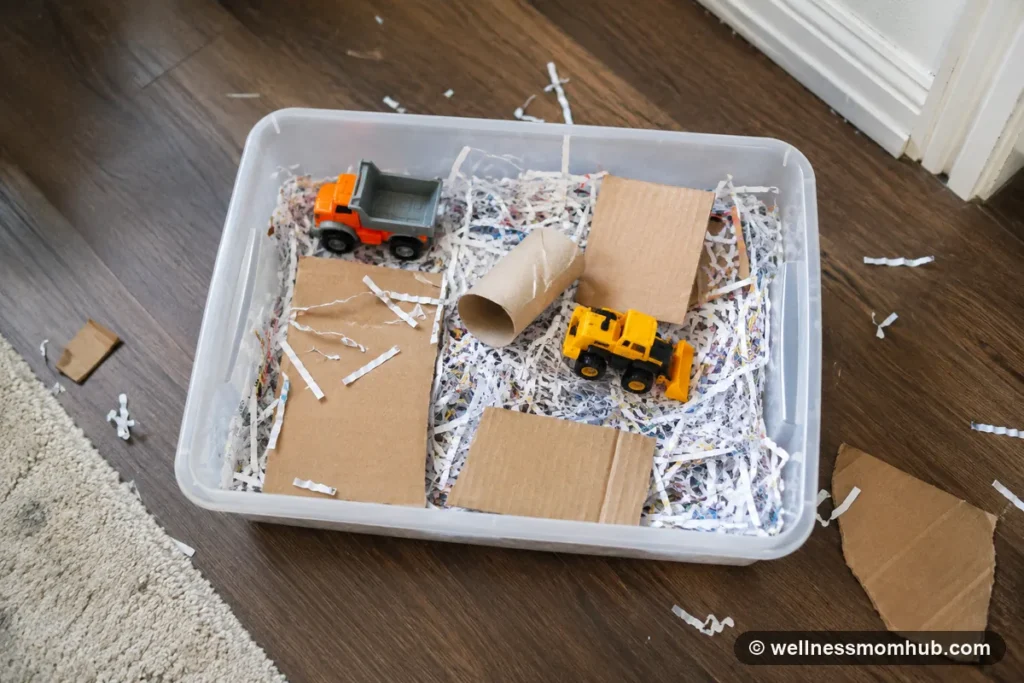
12. Shredded Paper Animal Rescue
Fill the bin with reused shredded paper and hide several large plastic animals inside. Add a bowl so your toddler can collect each animal.
Why it works in real life: Searching gives the filler a purpose without requiring a themed sensory kit.
13. Oversized Craft-Stick Sort
Place oversized craft sticks in a bin with several cups or cardboard tubes. Your toddler can post, stack, or move the sticks between containers.
Why it works in real life: The sticks are easy to grip and do not roll away as quickly as round fillers.
14. Felt Shape Search
Cut large circles, squares, stars, and triangles from felt, or use large premade felt shapes. Hide them under washcloths and ask your toddler to find a certain color or shape.
Why it works in real life: Felt is quiet, washable, and easy to reuse for another theme.
15. Toy Construction Site
Place large toy trucks in a bin filled with crumpled brown paper, cardboard strips, or large foam blocks. Add a paper cup for loading and dumping.
Why it works in real life: The trucks give the filler a job, so the activity becomes more than random scooping.
16. Sewing Basket Without Small Pieces
Fill the bin with ribbon lengths, fabric squares, large empty thread spools, and a clean measuring tape.
Do not include buttons, beads, pins, or other small sewing items.
Why it works in real life: The different textures keep the bin interesting, but the pieces are still easy to gather.
17. Cardboard Shape-Matching Bin
Cut large shapes from delivery boxes and draw matching outlines on another piece of cardboard. Your toddler can place each shape over its outline.
Why it works in real life: It turns packaging into an activity, and you can recycle it when the pieces get bent.
Toddler Sensory Activities With Water and Washing
Toddler sensory activities with water are easiest to manage when the water is shallow, the bin sits on a towel, and the child has one job. Keep the water shallow and the job specific by choosing washing, pouring, squeezing, or melting.
Skip handing over every cup, spoon, funnel, pitcher, and watering can at once. Two tools are plenty.
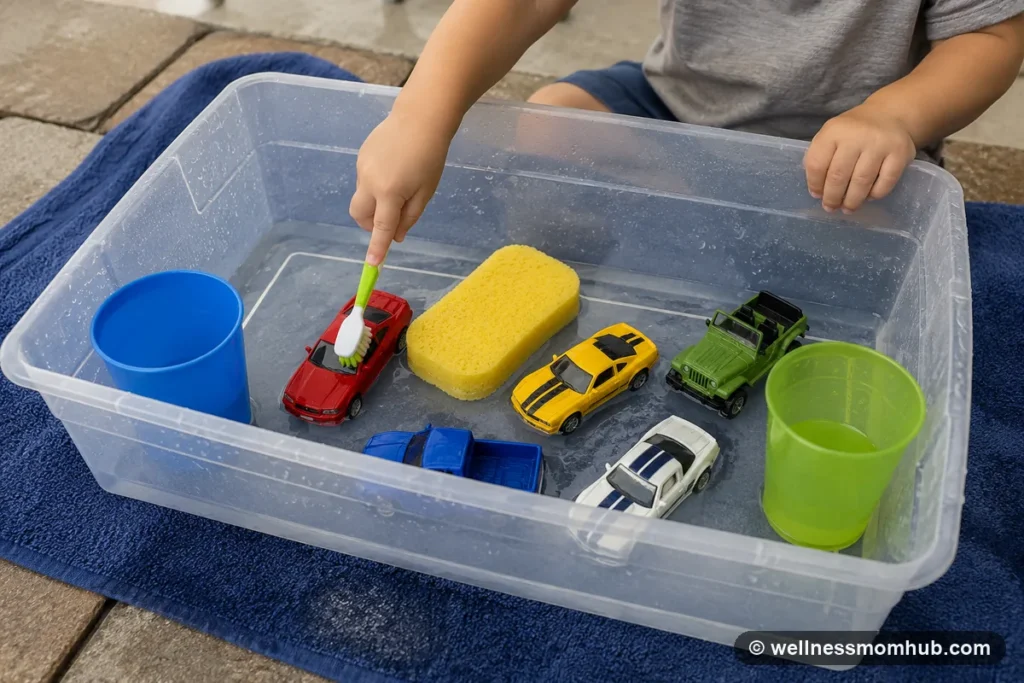
18. Toy Car Wash
Add shallow water, several washable toy cars, a sponge, and an old toothbrush. Put a towel under the container before calling your toddler over.
Why it works in real life: Washing gives familiar cars a new job, and cleanup is part of the activity.
19. Farm Animal Wash
Make a dry pretend-mud area with crumpled brown paper and place large washable farm animals inside it. Add a shallow wash area, sponge, and brush beside it.
Why it works in real life: The activity has a clear before-and-after job. The animals move from the paper mud to the wash area.
20. Sponge Squeeze Station
Place shallow water in the bin with two large sponges and an empty bowl. Show your toddler how to soak a sponge and squeeze the water into the second container.
Why it works in real life: It repeats one easy action and requires almost no special equipment.
21. Cup-to-Cup Pouring Bin
Provide two sturdy cups, one small plastic pitcher, and shallow water. Set the bin on the floor, patio, or another stable surface instead of balancing it on a table.
Why it works in real life: Pouring is easy to understand, and the larger container catches some of the overflow.
22. Artificial Flower Washing Bin
Place sturdy artificial flowers in shallow water with a soft brush and a drying towel. Skip flowers with loose glitter, exposed wire, or detachable pieces.
Why it works in real life: The petals and stems make it feel different from washing cars without requiring a complicated garden scene.
23. Large Ice Rescue
Freeze one or two large washable toys partly inside a shallow container of water. Place the ice block in the bin with warm water and a large spoon.
Do not freeze small objects inside the ice, and stay beside your child throughout the activity.
Why it works in real life: The melting ice gives the activity a clear stopping point.
Fall Sensory Bin Ideas Using Simple Seasonal Materials
A fall sensory bin does not need tiny acorns, plastic confetti, or half the seasonal aisle at the store. Use large seasonal materials such as paper leaves, full-size mini pumpkins, washable apples, and sturdy nature items.
The seasonal sensory bin ideas below can come back each fall without rebuilding the entire setup.
Skip outdoor materials if checking them for bugs, dirt, and loose pieces sounds like one job too many that day. Paper leaves are fine.
24. Paper Leaf Scoop
Cut large leaves from red, orange, yellow, and brown construction paper. Add a cup, spoon, and two bowls for scooping or color sorting.
Why it works in real life: It looks like fall without bringing damp leaves into the house.
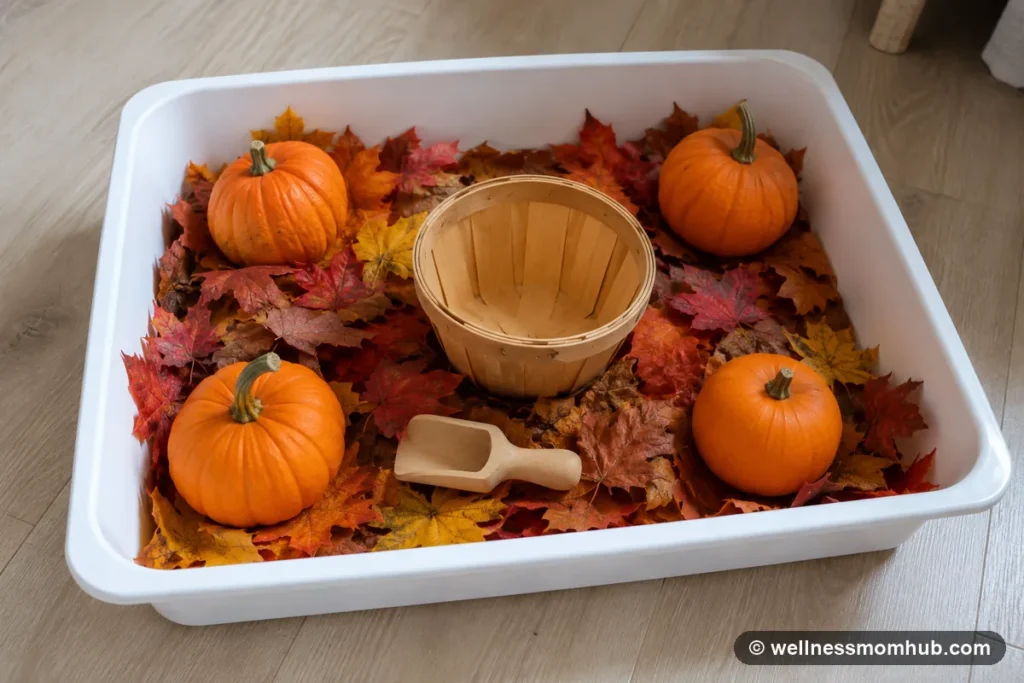
25. Pumpkin Patch Bin
Place two or three full-size mini pumpkins in a bin with crumpled brown paper and a small basket. Avoid miniature decorations with loose stems or detachable pieces.
Why it works in real life: The pumpkins can be moved, rolled, and reused as ordinary fall decor afterward.
26. Apple Washing Station
Place several whole apples in shallow water with a sponge and towel. Wash the apples again before returning them to the kitchen.
Why it works in real life: It uses something you may already have and gives your toddler one practical job.
27. Pinecone and Leaf Nature Bin
Collect large pinecones and sturdy leaves. Check them for dirt, insects, sharp spots, and loose pieces before bringing them inside.
Skip acorns and other small natural objects.
Why it works in real life: It brings the fall theme indoors without turning into a separate craft project.
Winter Sensory Bin Ideas That Do Not Need Real Snow
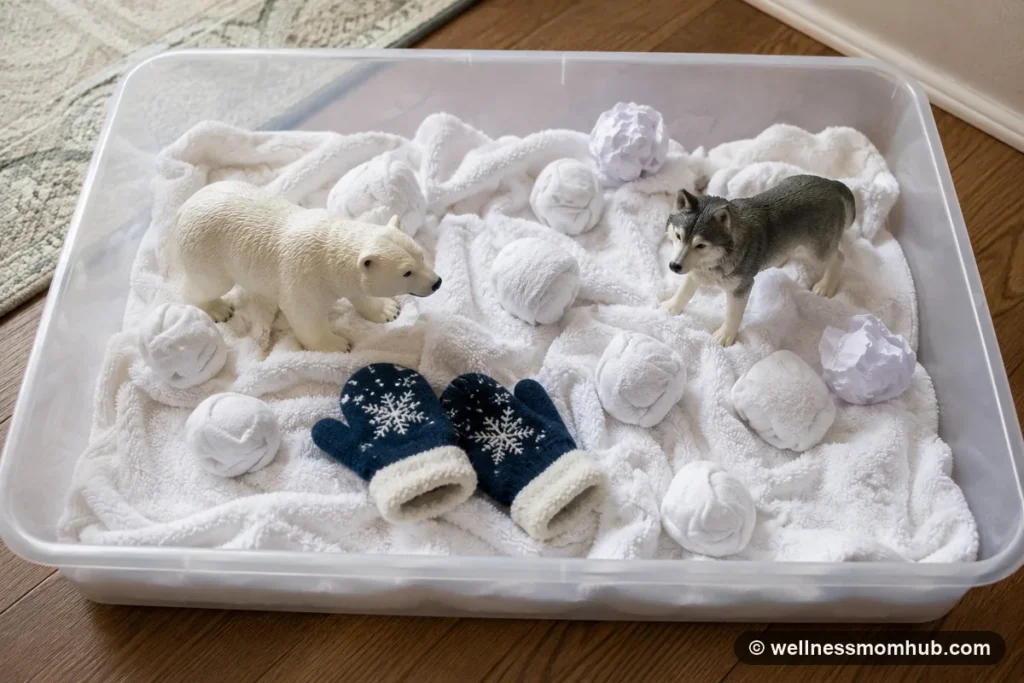
A winter sensory bin can create a snow-and-ice theme with white fabric, paper, mittens, toy animals, and reusable ice activities. Choose reusable materials when you want easier cleanup and fewer supplies to store.
Skip instant artificial snow indoors unless you already know you want that cleanup. White socks are not glamorous, but they do not cling to the baseboards.
28. White Fabric Snow Bin
Fill the container with white washcloths, felt pieces, and rolled white socks. Add large toy animals or vehicles for moving through the pretend snow.
Why it works in real life: It looks seasonal but packs away without requiring a vacuum.
29. Paper Snowball Transfer
Crumple white paper into large balls and provide a basket, plastic cup, or cardboard tube. Your toddler can scoop, toss, or move the snowballs between containers.
Why it works in real life: The paper is light, reusable, and unlikely to damage anything when the activity leaves the bin.
30. Mitten Matching Bin
Place several pairs of clean mittens or gloves inside the bin. Mix them up and invite your toddler to find pairs or stuff one mitten inside another.
Why it works in real life: It combines seasonal play with a household job you already need to do.
31. Frozen Animal Rescue
Freeze one or two large washable animals partly inside a shallow ice block. Place the block in a bin with warm water and a large spoon.
Why it works in real life: The melting ice keeps changing, so the activity has a clear finish.
Christmas Sensory Bin Ideas for Low-Stress Holiday Play
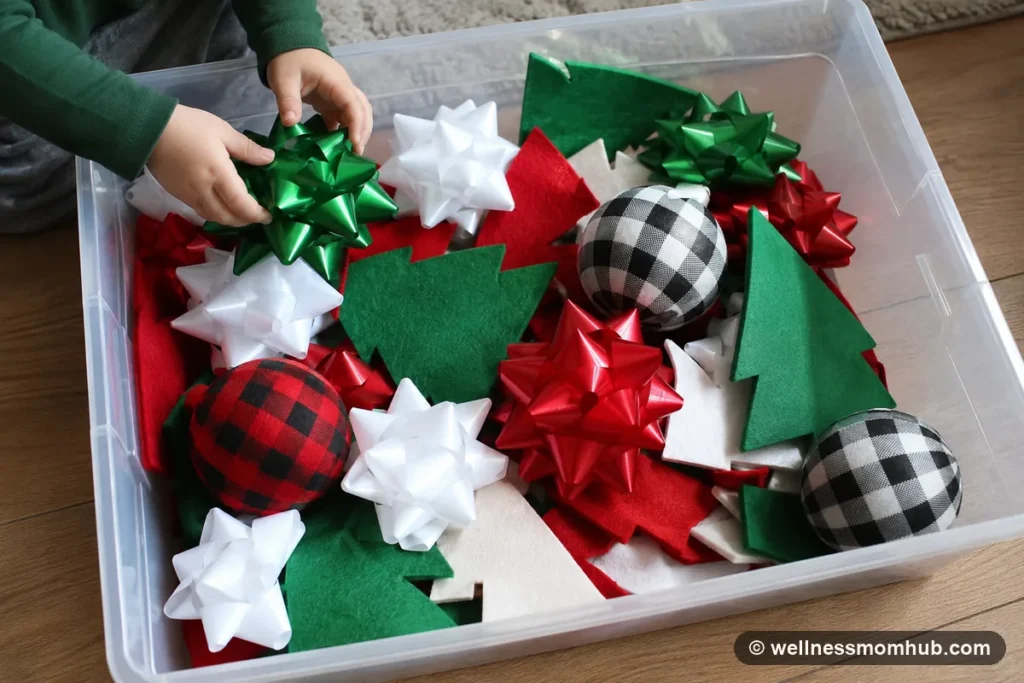
A Christmas sensory bin is easiest to manage when it uses large gift bows, leftover wrapping paper, felt pieces, and carefully checked shatterproof ornaments. Use large holiday items and skip glitter, tiny bells, hooks, and miniature decorations.
December is already messy. The sensory bin does not need to contribute.
32. Gift Bow Sorting Bin
Fill the bin with large gift bows in several colors and add matching paper plates or bowls. Your toddler can sort, stack, and move the bows.
Why it works in real life: It uses wrapping supplies you may already have and takes less than a minute to reset.
33. Wrapping Paper Rescue
Loosely wrap several large toy animals or blocks in leftover wrapping paper and place them in the bin. Your toddler can tear the paper and find what is inside.
Why it works in real life: Unwrapping is usually the favorite part of a present anyway, so the toys do not need to be new.
34. Shatterproof Ornament Transfer
Use large, shatterproof ornaments only after checking for loose caps, hooks, cracks, glitter, and detachable pieces. Stay beside your child.
Add a muffin tin or sturdy cups for sorting and transferring.
Why it works in real life: The ornaments make the Christmas theme obvious without requiring an elaborate setup.
35. Felt Christmas Tree Bin
Place a large felt tree shape in the bottom of the container. Add oversized felt circles, stars, and strips as decorations.
Your toddler can decorate the tree, remove everything, and start again.
Why it works in real life: It is quiet, reusable, and does not involve anyone rearranging the actual Christmas tree.
Skip real ornaments. If you would be upset to see one dropped or chewed, it does not belong in the bin.
Where Sensory Bins Fit Alongside Everything Else
A sensory bin is one option in a much longer list, and it is not always the right one. On days when your toddler needs to move rather than sit, an obstacle course will do more for both of you.
If you want ideas sorted by age rather than by material, these lists pick up where this one stops:
- Activities for 1 year olds, for the newest walkers and the mouthing stage.
- Activities for 2 year olds, including the low-mess wins.
- Activities for 3 year olds, sorted by prep time and mess level.
Frequently Asked Questions About Sensory Bins
The most common questions about sensory bins involve fillers, setup, cleanup, supervision, and choosing materials for toddlers. Here are the practical answers.
What do you put in a sensory bin?
Put one main filler in a shallow bin, add one or two tools, and give your child a simple action. Good choices include large blocks, fabric pieces, crumpled paper, water, washable toys, cups, scoops, tongs, or a muffin tin. Keep every material consistent with the product age labels you follow and stay close during play.
Are sensory bins safe for 1 year olds?
There is no one-size-fits-all sensory bin setup for every 1-year-old. Base the materials on what your child does during play, avoid loose pieces if objects go into the mouth, stay within reach, and follow product age labels and current CPSC guidance.
This is general play information, not medical advice. Contact your provider for individual concerns.
What are fun sensory activities for toddlers?
Fun sensory activities for toddlers include scooping large objects, washing toy cars, tearing paper, matching socks, squeezing sponges, finding hidden toys, and pouring water between cups.
The activity usually works better when your child has one clear job instead of a pile of unrelated tools.
How do you make a sensory box for toddlers?
Choose a shallow plastic container, add one filler that matches how your child plays, and include one or two tools such as a cup, scoop, sponge, or bowl. Then give the activity a clear purpose: find the animals, wash the cars, move the blocks, or sort the colors.
Put a towel underneath first. In the future you will be grateful.
What is the cheapest sensory bin filler?
Crumpled scrap paper is usually my cheapest sensory bin filler because it uses something already in the recycling pile. Fabric scraps, clean socks, cardboard pieces, shredded delivery paper, and water are other low-cost options.
Use what is already in the house before buying packaged filler.
What are some creative sensory bin themes?
Creative sensory bin themes include a toy car wash, construction site, paper leaf pile, pumpkin patch, winter snow scene, Christmas gift bin, flower wash, and animal rescue.
Pick a theme that gives the toys something to do. A pretty bin with no clear activity usually gets dumped faster.
What can you do in a sensory bin?
Toddlers can scoop, pour, wash, match, hide, find, post, stack, sort, squeeze, and transfer items in a sensory bin. Choose one or two actions for each setup.
Too many tools create clutter. That is how a simple activity turns into a full-floor cleanup.
What makes a good sensory bin?
A good sensory bin is easy to understand, matched to how your child uses materials, closely supervised, and manageable to clean. It usually has one main filler, a small number of tools, and a clear play prompt.
The best bin is the one you are willing to bring out again.
How do I make my own sensory bin?
- Choose a shallow plastic storage bin, dishpan, roasting pan, or sensory table.
- Add one filler that matches how your child plays.
- Include one scoop, cup, sponge, or pair of tongs.
- Give your toddler one action such as pouring, sorting, finding, or washing.
- Stay close and put the materials away when play ends.
Keep the first attempt small. You can add another tool later, but removing three cups of filler from the rug is considerably less fun.
How do you keep a sensory bin from getting messy?
Use less filler than you think you need, limit the tools, and put the bin on a washable mat or towel. A shower curtain liner, fitted sheet, or patio can create a clear play area.
I end the activity once throwing the filler becomes more interesting than using it.
What size bin is best for sensory play?
I find a shallow container with enough room to move a scoop or cup easier to use than a deep bucket. Plastic storage bins, dishpans, roasting pans, and under-bed containers can all work.
Choose one you can lift and empty without regretting every decision that led you there.
For more sensory bin ideas without scrolling through the whole article again, download the free Sensory Bin Play Pack printable. It covers lower-mess fillers, common tools, seasonal themes, and quick prompts for scooping, sorting, washing, and transferring.