Halloween with a toddler is pure magic — right up until the neighbor’s life-size skeleton starts howling. If your little one is between 1 and 4, you don’t need haunted houses, jump scares, or a single spooky thing. You need sweet, silly, gloriously low-prep fun that ends well before bedtime.
I’m Hailey, mom of two, and this is exactly how we do Halloween in our house: pumpkins to wash instead of carve, ghosts made of cotton balls, and a “trick or treat” route that lasts about twenty minutes. Every one of these 25 Halloween activities for toddlers takes 10 minutes or less to set up, uses things you probably already own, and keeps the vibe firmly on the cute side of October.
Quick picks: the 5 easiest Halloween activities for toddlers
Short on time? Start here. These five are my most-repeated, lowest-effort wins — the ones I set up while the kettle boils.
| Activity | Prep time | Mess level | Best for |
|---|---|---|---|
| Pumpkin washing station | 5 min | Medium | Water-loving 1–2 year olds |
| Cotton-ball ghosts | 3 min | Low | Rainy afternoons |
| Monster freeze dance | 0 min | None | Burning off wiggles |
| Banana “ghosts” | 5 min | Low | Snack time |
| Ghost hunt with soft toys | 5 min | None | Pre-bedtime play |
Want everyday ideas beyond October? These pair beautifully with our toddler activities at home — most of them work year-round with a seasonal swap.
Hosting a party or a playdate? Our Halloween games for kids are sorted by age, from not-scary toddler games to big-kid party games, with free picture bingo cards.
Sensory play: squishy, splashy Halloween fun
Sensory play is where toddlers shine — and Halloween is basically a sensory holiday. Think orange, bumpy, cold, and squishy. If your little one is in a full sensory era, my sensory bin ideas list has 35 more setups to rotate through after October.
1. Pumpkin washing station. Prep: 5 min · Mess: medium
Fill a shallow bin with warm soapy water, drop in a few mini pumpkins, and hand over a sponge or an old toothbrush. Toddlers will scrub, dunk, and pour for a solid twenty minutes. Add a towel underneath and call it a life-skills lesson.
Why it works in real life: it’s water play with a purpose, and the pumpkins double as décor afterwards. Safety note: always supervise water play closely and empty the bin when you’re done.
2. “Potion” water play. Prep: 5 min · Mess: medium
A bin of water, a few drops of food coloring, scoops, funnels, and plastic cups. Tell your toddler they’re mixing magic potions. Add a pinch of baking soda and a squeeze of lemon for fizz if you’re feeling fancy.
Why it works in real life: pouring and scooping build fine motor skills, and the “magic” framing keeps them engaged far longer than plain water.
3. Spider-web sticky wall. Prep: 5 min · Mess: low
Stretch strips of painter’s tape across a doorway in a rough web pattern, sticky side out, and let your toddler stick pom-poms, cotton balls, and paper spiders onto it. Peel it all off together at the end — deeply satisfying.
Why it works in real life: zero drying time, zero cleanup beyond peeling tape. Safety note: pom-poms are a choking hazard for under-3s who still mouth everything — use large pom-poms and stay close, or swap in scrunched tissue paper.
4. Pumpkin guts sensory bin. Prep: 10 min · Mess: high
Scoop the seeds and stringy insides from a real pumpkin into a bin and let little hands explore. Add scoops and bowls for transferring. Lay a shower curtain underneath and embrace it.
Why it works in real life: it’s the ultimate texture experience — slimy, stringy, seedy — and most toddlers are fascinated rather than grossed out. Safety note: wash hands well afterwards and skip this one if your toddler still puts everything in their mouth.
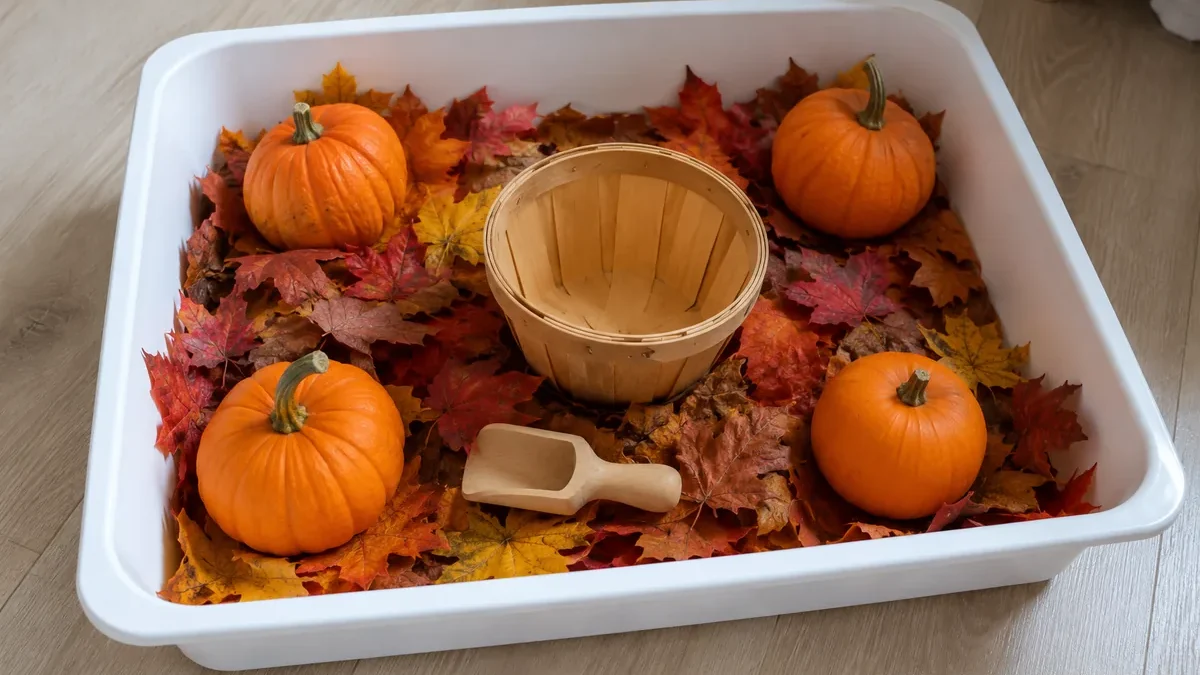
5. Corn kernel “harvest” bin. Prep: 3 min · Mess: medium
Fill a bin with dried corn kernels (or dried black beans), bury some plastic spiders and mini pumpkins, and hand over scoops and small buckets. Instant harvest dig.
Why it works in real life: the kernels make the most satisfying pouring sound, and hunting for hidden treasures keeps them busy. Safety note: dried corn and beans are choking hazards — this one is for toddlers who no longer mouth objects, with close supervision.
6. Playdough pumpkin faces. Prep: 5 min · Mess: low
Roll orange playdough into pumpkin balls and let your toddler press on triangle eyes, smiles, and stems cut from black and green paper. Way less mess than carving, and endlessly redoable.
Why it works in real life: pressing and placing builds hand strength for later writing. Safety note: skip the googly eyes for under-3s — they’re a classic choking hazard. Paper shapes do the job just as well.
7. Melt the frozen “monsters”. Prep: 5 min + freezing time · Mess: medium
Freeze small plastic spiders or Halloween erasers in a muffin tin with water overnight. Pop the ice discs into a bin with warm water, droppers, and toy hammers, and let your toddler rescue the monsters.
Why it works in real life: it’s basically a science lesson disguised as play, and the “rescue” storyline is irresistible. Safety note: supervise with the water droppers and skip small freezable items for mouthing toddlers.
Process art: cute-not-creepy Halloween crafts
Process art is about the making, not the masterpiece — which is perfect, because toddler Halloween art is gloriously abstract. Tape these to the fridge and watch grandparents melt.
8. Pumpkin stamping with apple halves. Prep: 5 min · Mess: medium
Cut an apple in half, pat it dry, and let your toddler dip it in orange washable paint and stamp away. Add a green stem with a thumbprint and you’ve got a pumpkin patch.
Why it works in real life: stamping is deeply satisfying for little hands, and the apple shape does the hard work for them. Safety note: use washable, non-toxic paint and an old shirt or smock — apple halves are slippery, so hold the paper steady for under-2s.
9. Cotton-ball ghosts. Prep: 3 min · Mess: low
Draw a simple ghost outline on black or dark purple card, squeeze out glue, and let your toddler stick cotton balls all over it. Add googly eyes if they’re old enough — or draw the face on yourself.
Why it works in real life: peeling and sticking is brilliant pincer-grasp practice, and the fluffy result looks adorable. Safety note: cotton balls can be a choking hazard for mouthing toddlers — use large ones and supervise, or swap in white tissue paper scrunched into balls.
10. Halloween sticker scenes. Prep: 2 min · Mess: none
Hand over a sheet of Halloween stickers and a piece of dark card. That’s it. That’s the activity. Toddlers will peel, place, reposition, and narrate the whole thing.
Why it works in real life: peeling stickers builds finger strength like nothing else, and it’s the ultimate handbag activity for restaurants or waiting rooms. Pair it with our free printables library — a blank scene page makes stickers feel brand new.
11. Footprint ghosts and handprint pumpkins. Prep: 5 min · Mess: medium
Paint the sole of a little foot white and stamp it on dark paper for a ghost; paint a palm orange for a pumpkin. Add faces once dry. Yes, there will be paint on the table. It’s fine.
Why it works in real life: the sensory surprise of paint on skin is half the fun, and you get a keepsake you’ll actually want to keep. Safety note: use washable, non-toxic finger paint and do this near a sink — ticklish feet plus paint equals wiggles.
12. Tape-resist pumpkin art. Prep: 5 min · Mess: low
Use painter’s tape to make a big pumpkin outline (or triangle eyes and a zigzag smile) on white card. Let your toddler paint or dot-marker all over it, then peel the tape to reveal the design.
Why it works in real life: the big reveal is pure magic for a 2 or 3 year old, and the tape keeps the “canvas” contained. Dot markers make this nearly mess-free.
13. Pumpkin suncatchers. Prep: 5 min · Mess: low
Cut a pumpkin shape from orange tissue paper (or let them tear it — even better for fine motor skills), and stick the pieces onto contact paper. Hang in the window and admire the glow.
Why it works in real life: tearing tissue paper is a workout for little fingers, and the finished suncatcher actually looks beautiful. Safety note: cut the contact paper to size yourself — the sticky sheet is frustrating for toddlers to handle solo.
Movement and active play: burn off the wiggles
Halloween energy is real. These get little legs moving — perfect for the witching hour before dinner when everyone is feral.
14. Monster freeze dance. Prep: 0 min · Mess: none
Play some music, stomp around like monsters, and freeze when the music stops. Call out silly freeze poses: “freeze like a sleepy bat!” No supplies, no setup, endless rounds.
Why it works in real life: it’s the fastest way to burn energy indoors, and toddlers find freeze poses hilarious. Many of my go-to movement games come from our activities for 2-year-olds roundup — this one’s the Halloween remix.
15. Pumpkin bowling with soft balls. Prep: 5 min · Mess: none
Line up empty plastic bottles or toilet-roll tubes as pins, draw pumpkin faces on them if you like, and let your toddler roll a soft ball to knock them down. Re-stack, repeat, repeat, repeat.
Why it works in real life: rolling, aiming, and celebrating the crash covers gross motor skills and cause-and-effect. Safety note: use soft balls only and keep the “lane” clear of furniture corners.
16. Ghost hunt with soft toys. Prep: 5 min · Mess: none
Drape white muslin cloths or pillowcases over a few soft toys to make “ghosts” and hide them around one room. Give your toddler a torch and send them hunting. Shriek with delight at every find.
Why it works in real life: it’s hide-and-seek with training wheels — thrilling but never scary, because they know what’s under the sheet. Safety note: keep the hunt to one well-lit room and move trip hazards out of the way first.
17. Spider-web hallway walk. Prep: 10 min · Mess: none
Criss-cross painter’s tape across a hallway at toddler height to make a giant web, then challenge them to step over, crawl under, and wiggle through without “waking the spider” (a stuffed toy at the end).
Why it works in real life: it’s an obstacle course that builds balance and body awareness. Painter’s tape peels off cleanly, so there’s no damage control afterwards.
18. Leaf stomp and scoop. Prep: 0 min · Mess: low
If you have autumn leaves nearby, rake a pile and let them stomp, throw, and bury themselves. Hand over a bucket and ask them to collect “the ten orangest leaves” for bonus focus.
Why it works in real life: it’s free, it’s outside, and crunching leaves is a core childhood memory. Safety note: check the pile for sticks, litter, or anything sharp before the stomping begins.
19. Witch hat ring toss. Prep: 5 min · Mess: none
Pop a witch hat (party shop, a couple of pounds) point-up on the floor and toss soft rings, hair scrunchies, or rolled-up socks at it. Move closer for little ones; celebrate every landing like it’s the Olympics.
Why it works in real life: throwing and aiming practice disguised as a party game. Scrunchies and socks mean nobody gets hurt and nothing gets broken.
Simple treats and snacks: spooky-cute fuel
No baking marathons here — just assembly-style snacks that look festive and take minutes. A few house rules I follow for every toddler snack: wash all fruit well, sit little ones down to eat (no wandering with food), cut round foods like grapes and cherry tomatoes lengthwise, and always check for allergies before sharing with friends.
20. Banana “ghosts”. Prep: 5 min · Mess: low
Peel bananas, cut in half, and press in mini chocolate chips or raisin “eyes”. Stand them upright on a plate and watch them disappear. Pop them in the freezer for 20 minutes first if you want ghost-pops.
Why it works in real life: it’s fruit disguised as a treat, and toddlers can press the faces on themselves. Safety note: chocolate chips are a choking hazard for under-2s — draw faces with a food-safe marker or use soft raisins instead.
21. Mandarin “pumpkins”. Prep: 3 min · Mess: none
Peel mandarins or clementines and poke a small piece of celery or a pretzel stick into the top as the stalk. Instant pumpkin patch.
Why it works in real life: peeling practice, vitamin C, and zero cooking. This is my go-to for nursery Halloween parties. Safety note: remove the stalk before serving to very young toddlers, and segment the fruit for under-2s.
22. Pumpkin-face toast. Prep: 5 min · Mess: low
Spread toast with cream cheese or peanut butter, then let your toddler decorate a pumpkin face with banana slices, raisin eyes, and a strawberry smile.
Why it works in real life: breakfast becomes an activity, and they’re more likely to eat it when they built it. Safety note: peanut butter should be spread thinly (never spoonfuls) for under-4s, and skip it entirely around nut allergies.
23. Apple “monster mouths”. Prep: 5 min · Mess: low
Cut apple slices, spread with cream cheese, and sandwich mini marshmallows between two slices like teeth. Silly, crunchy, and gone in seconds.
Why it works in real life: the “teeth” make toddlers giggle every single time. Safety note: apples must be cut into thin, manageable slices — never whole or large chunks for toddlers — and always supervise while eating.
24. Yoghurt “ghost” bark. Prep: 10 min + freezing · Mess: low
Spread Greek yoghurt on a lined tray, dot with blueberries for ghost faces, and freeze for two hours. Break into shards for a cold, creamy treat.
Why it works in real life: protein-rich, naturally sweet, and the ghost faces are effortless. Safety note: break bark into small, thin pieces for toddlers and serve immediately before it melts into a puddle.
25. Pumpkin smoothie cups. Prep: 5 min · Mess: low
Blend tinned pumpkin purée with banana, milk, and a pinch of cinnamon. Pour into clear cups and draw a jack-o’-lantern face on the outside with a marker.
Why it works in real life: hidden veg, five minutes, and the face on the cup makes it feel special. Safety note: serve in a spill-proof cup with a straw for under-2s — orange smoothies stain everything.
Your first Halloween with a toddler: 5 gentle tips
If this is your first Halloween with a little one, here’s what I’ve learned across two toddlers and four Octobers:
- Costume comfort beats costume cute. If the costume itches, restricts arms, or covers their face, it lasts ten minutes. Soft pyjama-style costumes or just a themed T-shirt with ears win every time. Do a trial run the day before.
- Go early, finish early. Head out right after an early dinner — around 5:30 or 6 — when it’s dusky but not dark, and plan to be home well before bedtime. Twenty minutes of trick-or-treating is plenty for a toddler.
- Preview the route. Walk past the houses with the giant animatronics in daylight first, and have a calm detour ready. A single scary decoration can end the night, so you get to choose which streets count.
- Bring the comfort kit. Torch, warm layer, the buggy for tired legs, and a snack. A tired, cold toddler in a costume is a recipe for tears — a warm, snacked one is a recipe for core memories.
- It’s okay to skip trick-or-treating entirely. A pumpkin hunt in the garden, one of the activities above, and an early night is a perfect Halloween for a 1 or 2 year old. They won’t remember the sweets; they’ll remember feeling safe and happy.
Frequently asked questions
Plenty! Two year olds love pumpkin washing stations, cotton-ball ghosts, sticker scenes, monster freeze dance, and banana “ghosts”. The sweet spot is short, hands-on activities with no scary elements — anything involving water, sticking, stamping, or dancing is a hit. Skip haunted houses, masks, and anything with jump scares entirely at this age.
Keep everything cute and silly rather than spooky: smiling pumpkins instead of carved faces, friendly ghosts made of cotton balls, and daylight or early-evening timing. Preview decorations on your street in advance and steer clear of houses with animatronics or loud sound effects. Let your toddler control the pace — if something feels too much, it’s always okay to walk the other way. Framing everything as “silly” rather than “scary” makes a huge difference.
For 1 year olds, stick to big, mouth-safe sensory play: a pumpkin washing station with close supervision, water “potion” play with cups and scoops, and sticker scenes with large stickers. Avoid small items like pom-poms, googly eyes, dried beans, and chocolate chips, which are choking hazards at this age. Keep activities short — ten to fifteen minutes is a full session for a one year old — and always supervise water play within arm’s reach.
So many things! A ghost hunt with soft toys around the living room, a pumpkin hunt in the garden, decorating banana “ghosts” for a snack, or a mini Halloween party at home with two or three friends. Many toddlers genuinely prefer these to trick-or-treating — there’s no walking between houses in the dark, no strangers, and no scary doorsteps. You can also do a “reverse trick or treat” and deliver little treats to neighbors you know.
Aim to head out right after an early dinner, around 5:30 to 6 pm, when it’s dusky but not fully dark — you’ll catch the friendly houses and skip the late-night scarier crowds. For most toddlers, twenty to thirty minutes and a handful of houses is plenty. Watch for the signs it’s time to head home: rubbing eyes, clinginess, or costume fussing. Protecting bedtime matters more than the sweet haul — an overtired toddler won’t enjoy the evening anyway.
However you celebrate, I hope these Halloween activities for toddlers bring your house the same giggles ours gets every October. Sweet, silly, and done before bedtime — that’s the toddler Halloween formula. Happy haunting!
For more seasonal fun, I have posts on fall activities for toddlers and Christmas activities for toddlers.