Postpartum essentials are the supplies that help your body heal in the first weeks after birth: overnight pads and stretchy underwear for the bleeding, a peri bottle, ice pads and witch hazel for a sore perineum, incision-friendly underwear after a C-section, and nipple cream, nursing pads and a big water bottle for feeding.
Quick answer: build your postpartum recovery kit in four places. A bathroom basket for bleeding and healing, a few C-section extras if you need them, a feeding station by your chair, and a comfort and medicine shelf. The 19 essentials below are sorted that way, each tagged with who it’s for.
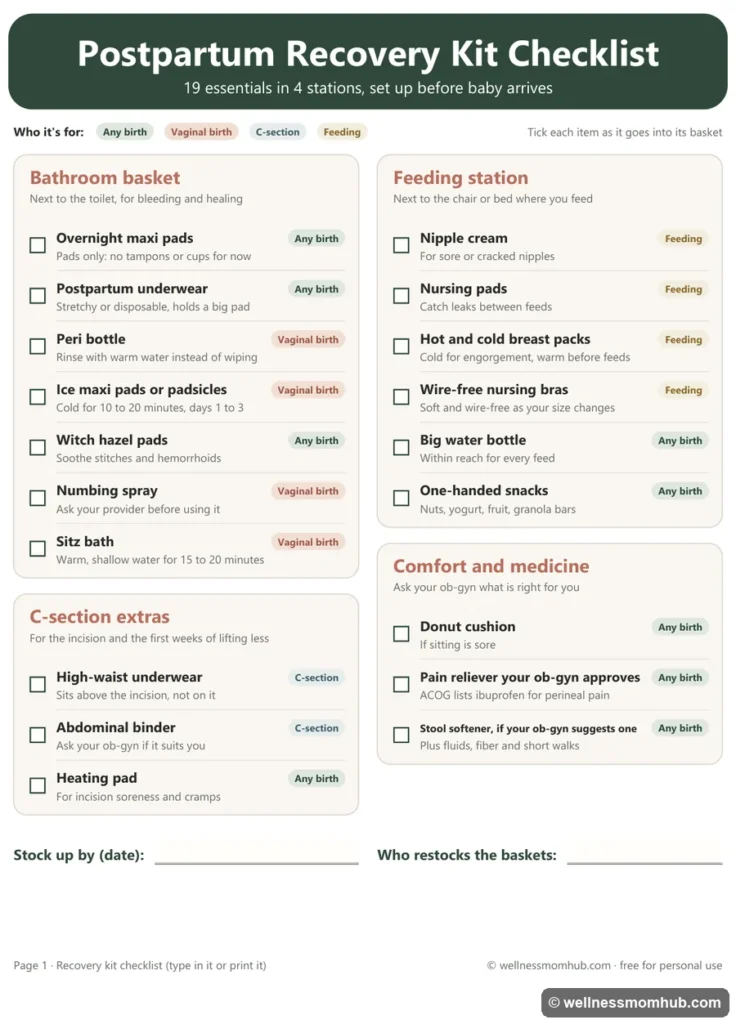
Free printable Postpartum Recovery Kit Checklist Printable
Short on time? Start with the Frida Mom ice maxi pads, the Frida upside-down peri bottle and a pack of Always overnight pads. Those three cover the first days home after a vaginal birth.
Postpartum essentials at a glance
Every postpartum must-have on this page, by where it lives in your house. The price bands are what we found on Amazon US; check today’s price before you buy.
| Station | What goes in it | Who needs it | Price band |
|---|---|---|---|
| Bathroom basket | Overnight pads, postpartum underwear, peri bottle, ice pads, witch hazel pads, numbing spray, sitz bath | Pads and underwear: everyone. Most of the rest: vaginal birth | Under $10 to under $20 |
| C-section extras | High-waist underwear, abdominal binder, heating pad | C-section (the heating pad helps anyone with cramps) | Under $15 to under $35 |
| Feeding station | Nipple cream, nursing pads, breast packs, wire-free bras, water bottle, snacks | Mostly breastfeeding and pumping | Under $10 to under $35 |
| Comfort and medicine | Donut cushion, a pain reliever and stool softener your ob-gyn approves | Everyone | Under $35 |
How to set up a postpartum recovery kit
A recovery kit works best when it’s already where you’ll need it, because nobody wants to hunt for ice pads at 3 a.m. Set it up in the last weeks of pregnancy, in four spots:
- The bathroom basket sits next to the toilet you’ll use most. Bleeding, rinsing and cooling all happen there.
- C-section extras go by the bed, where you’ll get dressed and rest.
- The feeding station is a small basket beside the chair or side of the bed where you feed the baby, with a water bottle and snacks within one arm’s reach.
- The comfort and medicine shelf holds whatever your ob-gyn tells you to take, so the plan is made before you’re tired.
Before you buy, ask your hospital or birth center what they send home. Many give you mesh underwear, pads and a peri bottle, so you may only need to top up.
The free postpartum recovery kit checklist turns this list into tick boxes, tagged by birth type, so you can see at a glance what you still need. Page 2 is a fridge sheet with the CDC’s urgent warning signs and space for your care team’s phone numbers.
Bathroom basket: postpartum essentials for bleeding and healing
After any birth, vaginal or C-section, you’ll bleed for weeks. This bleeding, called lochia, is the uterus healing where the placenta was attached, and The Mother Baby Center says it can last four to six weeks. After a vaginal birth, the perineum (the area between the vagina and anus) is swollen and sore on top of that, especially with a tear or stitches.
Always Maxi Overnight Pads, Size 5
Frida Mom Postpartum Underwear, 8 Pack
Frida Mom Upside Down Peri Bottle
Frida Mom 2-in-1 Instant Ice Maxi Pads
TUCKS Witch Hazel Cooling Pads, 100 Count
Dermoplast Pain Relief First Aid Spray
Fivona Sitz Bath for Toilet Seat
How to use them safely
How to use them, from ACOG. The American College of Obstetricians and Gynecologists’ postpartum pain guide suggests:
- An ice pack or cold gel pack on the perineum for 10 to 20 minutes at a time, which works best in the first 24 to 72 hours.
- Witch hazel pads on the perineal area.
- A sitz bath: sitting in warm, shallow water.
- Warm water from a squeeze bottle when you’re on the toilet, then patting dry.
- Sitting on a pillow or a special cushion if sitting hurts.

C-section recovery must-haves
After a cesarean birth you heal from surgery and from birth at the same time: the incision is sore for the first few weeks, and you’ll still bleed, so the pads and underwear above are on your list too. These three extras are for the incision.
Frida Mom High-Waist C-Section Underwear
NYOrtho Abdominal Binder
Sunbeam XL Heating Pad
ACOG also suggests choosing a feeding position that puts less pressure on the incision, so a pillow on your lap, or feeding while lying on your side, can help in the first weeks.
Feeding station: breastfeeding essentials
Breastfeeding takes a lot of sitting still. When your milk comes in, your breasts can feel very full, hard and tender, which ACOG calls engorgement. Set up one spot with everything for a feed, so you’re not calling for help mid-latch.
Lansinoh Lanolin Nipple Cream
Lansinoh Stay Dry Nursing Pads, 100 Count
Lansinoh Hot and Cold Breast Therapy Packs
Suekaphin Wireless Nursing Bras, 5 Pack
Owala FreeSip 40 oz Water Bottle
Water and snacks. Franciscan Health’s ob-gyn Dr. Eva Welch suggests 2 to 3 liters of fluid a day while breastfeeding, and a small basket of one-handed snacks (nuts, yogurt, fruit) so you can eat while the baby does.
Not breastfeeding? Your breasts can still fill with milk. ACOG says a tight-fitting bra may help, and cold packs ease the discomfort while milk production stops.

Comfort and medicine
The last station is the one people forget until the first bathroom trip. ACOG notes it can be hard to have a bowel movement for a few days after delivery, and sitting can hurt for a while after a vaginal birth.
PT Endorsed Donut Seat Cushion
- A pain reliever your ob-gyn approves. ACOG lists ibuprofen for perineal pain and says there are pain medicines you can take while breastfeeding. Ask your ob-gyn which one, and how much, before the birth.
- A stool softener, if your ob-gyn suggests one. ACOG’s advice is to drink plenty of fluids, take short walks as soon as you can, eat high-fiber foods, and ask your ob-gyn about a stool softener or laxative if you need it.
All-in-one postpartum kits
A ready-made kit is a good shortcut if you don’t want to shop item by item, and it makes a thoughtful gift. Check what’s inside, then fill the gaps from the lists above.
Frida Mom Postpartum Essentials Kit
Packing for the hospital as well? Our hospital bag list covers what to bring for you and the baby, and the newborn checklist covers the baby’s side of the first weeks at home.
What to skip, or ask about first
| Skip or check | Why | Instead |
|---|---|---|
| Tampons and menstrual cups | The Mother Baby Center says they can raise the risk of infection after birth | Overnight pads until your provider clears you |
| Epsom salt in the sitz bath | The Mother Baby Center advises skipping it unless your provider says otherwise | Plain warm water |
| Numbing sprays and creams | They’re medicines | Ask your provider first, especially with stitches |
| An abdominal binder by default | Not right for everyone | Ask your ob-gyn whether and when to wear one |
| Buying what the hospital already gives you | Many send you home with pads, mesh underwear and a peri bottle | Ask your hospital what’s in their take-home bag |
Postpartum warning signs to keep on the fridge
Most of recovery is slow and normal. Some symptoms are not, and they can show up up to a year after birth. The CDC’s Hear Her campaign says to get medical care right away if you have:
- A headache that won’t go away or gets worse over time
- Dizziness or fainting
- Changes in your vision
- A fever of 100.4°F or higher
- Extreme swelling of your hands or face
- Thoughts about harming yourself or your baby
- Trouble breathing
- Chest pain or a fast-beating heart
- Severe nausea and throwing up
- Severe belly pain that doesn’t go away
- Vaginal bleeding or discharge after pregnancy
- Severe swelling, redness or pain of your leg or arm
- Overwhelming tiredness
In an emergency, call 911 and tell them you recently gave birth. If you’re struggling emotionally, the free, 24/7 National Maternal Mental Health Hotline takes calls and texts at 1-833-TLC-MAMA (1-833-852-6262). In a crisis, call or text 988.
Your postpartum checkups
ACOG recommends talking with your ob-gyn or midwife within the first 3 weeks after birth, then a full postpartum visit no later than 12 weeks. Put both on the calendar before the baby comes; the printable has spaces for the dates. Looking after yourself after that matters too, and our guide to self-care for moms has small, realistic places to start.
Postpartum essentials FAQ
What do you actually need for postpartum?
You need overnight pads and postpartum underwear for the bleeding, a peri bottle, ice pads and witch hazel pads if you had a vaginal birth, high-waist underwear after a C-section, nipple cream and nursing pads if you breastfeed, a big water bottle, and a pain reliever your ob-gyn approves. Everything else is nice to have.
What do I need for C-section recovery?
High-waist underwear that sits above the incision, overnight pads (you still bleed after a C-section), a heating pad, and whatever pain medicine your ob-gyn prescribes or recommends. Ask your ob-gyn before using an abdominal binder.
How long does postpartum bleeding last?
Postpartum bleeding, called lochia, can last four to six weeks after a vaginal or C-section birth. It’s heaviest in the first days. Bleeding that soaks through a pad in less than an hour, or that comes with fever or a bad smell, needs a call to your provider.
When should I put together a postpartum kit?
In the last weeks of pregnancy, so it’s ready before you go to the hospital. Set the bathroom basket and the feeding station up in the rooms where you’ll use them, and ask your hospital what they send home so you don’t buy it twice.
Is a postpartum kit worth buying?
A ready-made kit saves you shopping for each item and makes a good gift, but most don’t include overnight pads, a sitz bath or feeding supplies. Treat a kit as the start of your bathroom basket and add the rest.
What should a postpartum care package for a new mom include?
The most useful care packages hold things she’ll use daily in the first weeks: ice maxi pads, witch hazel pads, a peri bottle, nursing pads, nipple cream, a big water bottle and one-handed snacks. Add a note offering a meal or an hour of help.
Building your baby list too?
Our baby registry must-haves cover the baby’s gear by room and price, with six items safety experts say to skip. Registering on Amazon? Here’s how to create an Amazon baby registry and get its welcome box.