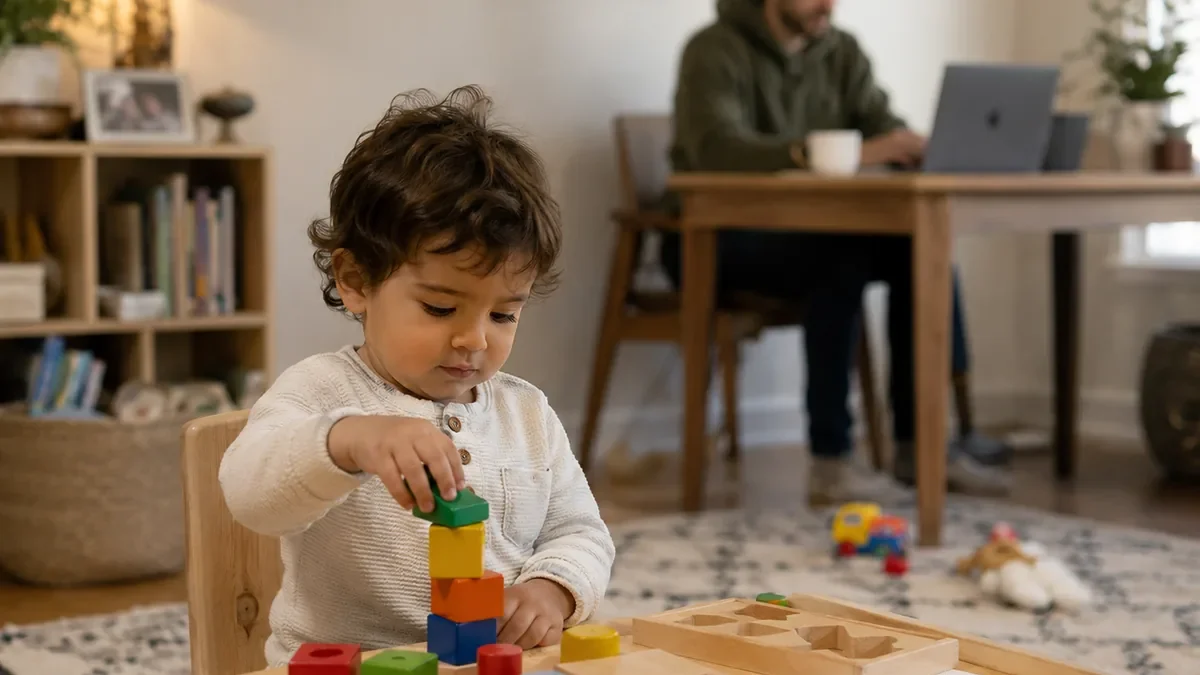
Here is the truth about preschool activities at home: your child does not need worksheets, flashcards, or a curriculum shipped in a box to be ready for kindergarten. The skills that actually matter at this age, early literacy, early math thinking, fine motor control, and curiosity about how the world works, grow through play. I have watched my own kids learn more about volume from pouring water between two cups than from any workbook page, and that is not an accident. Play is how young brains practice, repeat, and make sense of things.
These 35 preschool activities at home are built for real life: low-prep ideas you can set up in minutes, mostly with things you already own. Each one tells you the prep and mess level up front, why it genuinely helps, and my honest note from our house. Want to turn this list into a weekly plan? Grab the free weekly activity planner printable in our free printables library. Ten quiet minutes on Sunday night and your week is planned.
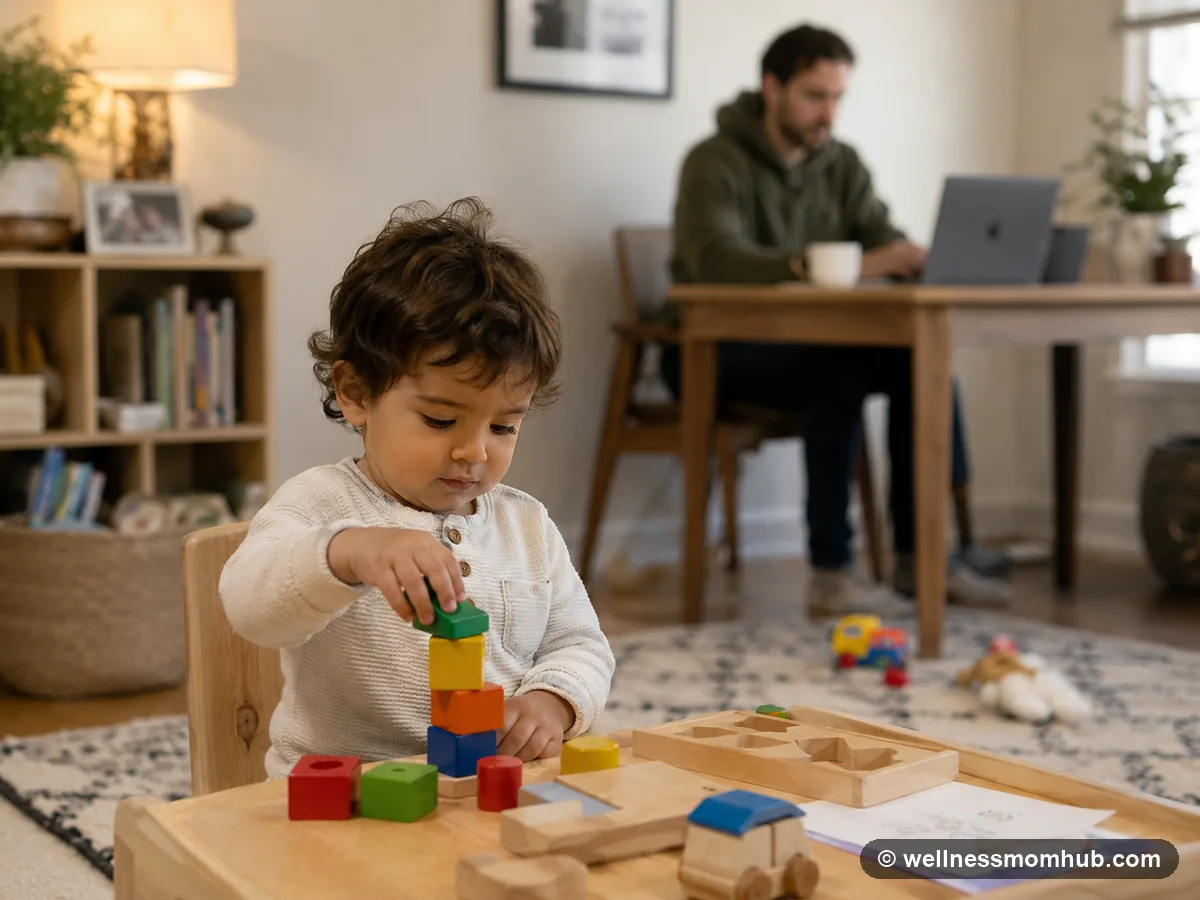
If you need one fast answer
| If you want | Try this |
|---|---|
| Zero prep, do it right now | Counting Snack or Freeze Dance |
| Letters without drilling | Alphabet Scavenger Hunt |
| Pre-writing practice | Playdough Letters |
| A rainy-day energy burner | Living Room Obstacle Course |
| A gentle first science moment | Sink-or-Float |
| Something they can do beside you | Pouring Station |
| Big feelings, need calm | Music Painting |
Pick two or three ideas a week. That is honestly plenty. And when your preschooler is ready for more of a challenge, our activities for 4-year-olds list has 50 ideas for slightly older kids.
Letters and Sounds Through Play
Preschool literacy is not reading yet. It is playing with sounds, noticing letters everywhere, and falling in love with stories.
1. Alphabet Scavenger Hunt
Prep: 2 min, Mess: None
Write letters on sticky notes and hide them around one room. Call out a letter sound and let your preschooler hunt it down.
Why it works: Moving to find letters wires sounds and shapes together better than staring at a page.
Hailey’s honest note: Mine hid the notes from me instead. Still matching letters, so I called it a win.
2. Letter Soup
Prep: 5 min, Mess: Low
Fill a big bowl with water, toss in foam letters, and hand over a ladle to fish out the letters you name.
Why it works: Sensory play plus letter naming builds memory through touch, sight, and movement.
Hailey’s honest note: Do it on a towel. Or outside. Ask me how I know.
3. Rhyming Basket
Prep: 3 min, Mess: None
Toss rhyming pairs into a basket, a toy cat and a hat, a block and a sock, and let your child find the matches.
Why it works: Rhyming builds phonological awareness, a top predictor of reading success.
Hailey’s honest note: Nonsense rhymes count. Giggles mean it is working.
4. Name Puzzle
Prep: 5 min, Mess: None
Write your child’s name big on card, cut between the letters, and let them reassemble it like a puzzle.
Why it works: Their own name is the most meaningful word they own, and often their first real reading.
Hailey’s honest note: First name only. First-plus-middle ended in tears. Mine.
5. Sound of the Day
Prep: None, Mess: None
Pick one letter sound in the morning and spot it all day: ball, banana, blanket, bus.
Why it works: Tiny real-world moments build phonemic awareness without sit-down lessons.
Hailey’s honest note: Turned grocery shopping into a game. Ten out of ten.
Numbers and Early Math
Preschool math is counting real things, comparing sizes, and spotting patterns. No number lines required.
6. Counting Snack
Prep: None, Mess: Low
Count out crackers or grapes before eating, then count again when sharing.
Why it works: Touching each object while counting builds one-to-one correspondence, the base of number sense.
Hailey’s honest note: Counting goes faster when they are hungry.
7. Number Parking Lot
Prep: 5 min, Mess: None
Draw numbered spots on paper and have toy cars park in the matching spot.
Why it works: Matching numerals to order makes abstract symbols hands-on.
Hailey’s honest note: Start 1 to 5. We rushed to 10 and the cars went on strike.
8. Pour and Measure
Prep: 5 min, Mess: Medium
Rice or beans plus cups of different sizes: how many small scoops fill the big cup?
Why it works: Measuring teaches volume, estimation, and comparison through scooping.
Hailey’s honest note: Use a tray with edges. The rice will still escape.
9. Pattern Bracelets
Prep: 3 min, Mess: Low
String pasta or big beads in repeating patterns and let your child continue or invent one.
Why it works: Extending patterns is early algebraic thinking.
Hailey’s honest note: Mine made a random-color pattern and declared it perfect. Correct.
10. Stair Counting
Prep: None, Mess: None
Count stairs, jumps, and hops everywhere you go.
Why it works: Counting in motion cements number order as daily rhythm.
Hailey’s honest note: We use a silly voice. Two years running. I am not allowed to stop.
Fine Motor for Pre-Writing
Handwriting starts in the shoulders and fingers, not with a pencil. These build the strength writing needs later.
11. Playdough Letters
Prep: 5 min, Mess: Low
Roll playdough snakes into letters, starting with their name.
Why it works: Rolling builds hand muscles for pencil grip; shaping builds letter memory.
Hailey’s honest note: Homemade dough is cheap and earns superstar status for one afternoon.
12. Sticker Lines
Prep: 3 min, Mess: None
Draw wavy lines and have your child place stickers along each path.
Why it works: Peeling stickers trains the precision and control writing needs.
Hailey’s honest note: Buy dot stickers in bulk. You will burn through them.
13. Pom-Pom Tweezers
Prep: 5 min, Mess: Low
Move pom-poms into a muffin tin with tongs or big tweezers.
Why it works: This pincer grip is the exact grip a pencil needs.
Hailey’s honest note: Use big pom-poms if your child still mouths things.
14. Hole-Punch Confetti
Prep: 2 min, Mess: Medium
Punch shapes from scrap paper. Weirdly satisfying.
Why it works: Squeezing the punch builds grip strength fast.
Hailey’s honest note: Confetti will surface for weeks. The glitter of paper. Worth it.
15. Clothespin Count
Prep: 3 min, Mess: None
Clip clothespins around a paper plate to match written numbers.
Why it works: Pinching builds finger strength while linking numerals to quantities.
Hailey’s honest note: Kept mine busy twenty minutes. Twenty.
Science and Curiosity
Preschool science is one good question and a chance to test it. Stay close for these. Every experiment below needs an adult nearby, and I have marked the messy ones honestly.
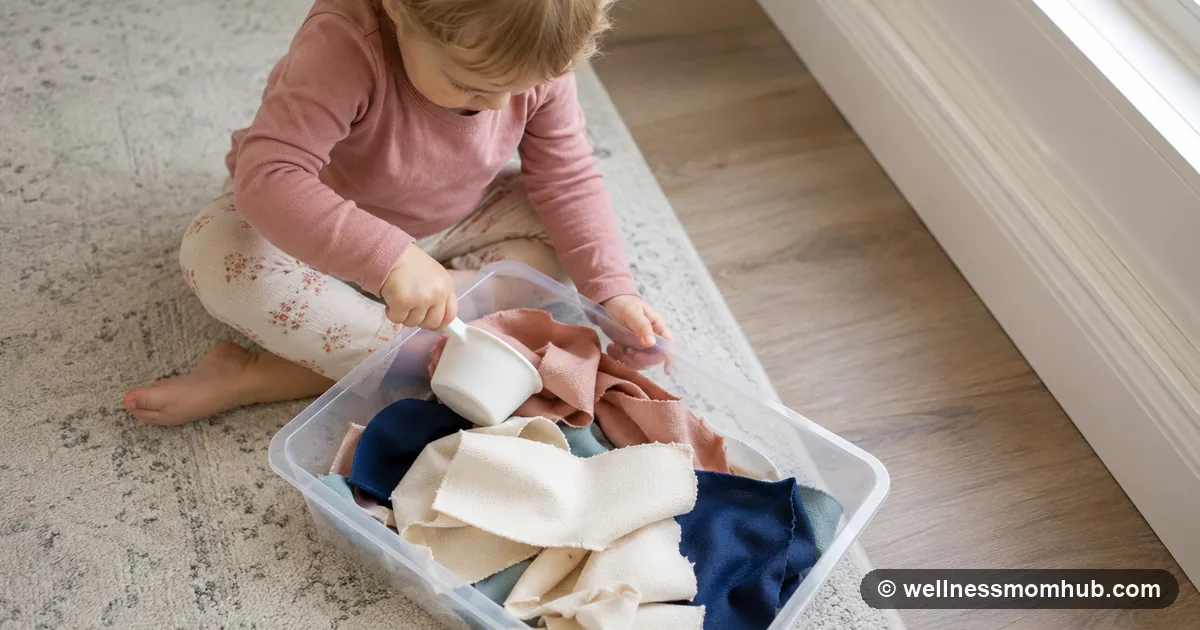
16. Sink-or-Float
Prep: 5 min, Mess: Medium
Predict, then test: which household objects sink or float in a tub of water?
Why it works: Predicting and testing is the scientific method in pure form.
Hailey’s honest note: The apple floats. Every child is shocked. Every time.
17. Baking Soda Volcano
Prep: 10 min, Mess: High
Baking soda in a cup, vinegar poured in, fizz everywhere.
Why it works: Cause and effect at its most dramatic, plus pouring practice.
Hailey’s honest note: Do it outside or in the tub. The fizz has ambitions beyond the tray.
18. Ice Excavation
Prep: 10 min plus overnight freeze, Mess: Medium
Freeze toys in ice overnight, then melt and chip them free with warm water.
Why it works: Melting teaches states of matter; the slow reveal builds patience.
Hailey’s honest note: Salt speeds melting and feels like magic. Keep it out of eyes.
19. Shadow Drawing
Prep: 2 min, Mess: None
Trace toy and hand shadows with chalk on a sunny day.
Why it works: Shadows teach that objects block light, a big idea through drawing.
Hailey’s honest note: Late afternoon gives the longest, most dramatic shadows.
20. Nature Collection Walk
Prep: 2 min, Mess: Low
Collect leaves and rocks, then sort by size, color, or type.
Why it works: Sorting collections is classification, the same thinking scientists use.
Hailey’s honest note: Bring a bigger bag. Every rock is a special one.
If your child cannot get enough of scooping, pouring, and mixing, our sensory bin ideas turn that same curiosity into 35 themed setups for toddlers and preschoolers.
Art and Creativity
Process over product, every time. The painting on the fridge matters less than the forty focused minutes behind it.
21. Watercolor Resist
Prep: 5 min, Mess: Low
Draw with white crayon, paint over with watercolor, watch it appear.
Why it works: The reveal teaches material resistance and feels like magic.
Hailey’s honest note: Press hard with the crayon or it will not show.
22. Sticker Collage
Prep: 2 min, Mess: None
Big paper, pile of stickers, zero rules.
Why it works: Open-ended art builds creative confidence. No wrong answers.
Hailey’s honest note: My emergency activity for phone calls. Zero prep, zero mess.
23. Cardboard Box Studio
Prep: 5 min, Mess: Low
A big box plus crayons becomes the canvas.
Why it works: Large-scale art builds the shoulder stability writing needs.
Hailey’s honest note: It will become a house, car, and rocket by Friday.
24. Nature Paintbrushes
Prep: 10 min, Mess: Medium
Tie leaves to sticks and paint with them.
Why it works: Different tools make different marks, a first lesson in variables.
Hailey’s honest note: Aprons on. Leaf prints are permanent on clothing.
25. Music Painting
Prep: 3 min, Mess: Low
Paint what each song sounds like: fast scribbles, slow swirls.
Why it works: Translating sound to image builds abstract thinking.
Hailey’s honest note: Mine painted heavy metal as angry spaghetti. Proudest moment.
Movement
Big bodies need big movement, and movement feeds focus. A child who has jumped and climbed concentrates better after.
26. Living Room Obstacle Course
Prep: 5 min, Mess: None
Cushions to climb, a blanket tunnel to crawl through, a tape line to balance on.
Why it works: Climbing and balancing build coordination and body awareness.
Hailey’s honest note: Change one element daily and it feels brand new.
27. Animal Walks
Prep: None, Mess: None
Bear crawl, frog hop, crab walk across the room.
Why it works: Each animal challenges different muscles through silliness.
Hailey’s honest note: Join in. Your hamstrings will remind you tomorrow.
28. Freeze Dance
Prep: None, Mess: None
Dance wildly, freeze when the music stops.
Why it works: Stopping on cue practices impulse control and listening.
Hailey’s honest note: Dramatic slow-motion freezes are mandatory here.
29. Balloon Volleyball
Prep: 2 min, Mess: None
Bat a balloon over a couch net and count the hits.
Why it works: Tracking a slow balloon trains hand-eye coordination gently.
Hailey’s honest note: Keep a spare balloon. They pop mid-rally.
30. Beanbag Toss
Prep: 5 min, Mess: None
Toss rolled socks into a laundry basket, moving it back as they improve.
Why it works: Aiming and adjusting builds spatial awareness and persistence.
Hailey’s honest note: Rolled socks work perfectly. No purchase needed.
Practical Life Skills
Pouring, buttoning, and helping around the house build concentration, coordination, and real confidence. These count as learning too.
31. Pouring Station
Prep: 5 min, Mess: Medium
Two small pitchers, water, cups. Pour back and forth.
Why it works: Pouring builds hand control, focus, and independence.
Hailey’s honest note: Start with a little water in a tray. Spills are learning.
32. Button and Zipper Board
Prep: 10 min, Mess: None
Old shirts pinned to a pillow for fastening practice.
Why it works: Dressing skills are fine motor milestones, easier off the morning rush.
Hailey’s honest note: Big buttons first. Tiny ones can wait.
33. Sock Sorting
Prep: 2 min, Mess: None
Match and roll pairs from the clean laundry.
Why it works: Matching by size and pattern is classification work.
Hailey’s honest note: Rolled together counts. We are a team.
34. Table Wiping
Prep: 2 min, Mess: Low
Spray bottle of water plus a cloth. Wipe everything.
Why it works: Builds arm strength and pride in caring for their space.
Hailey’s honest note: The table will need a second pass. Let them have the win.
35. Chore Chart Helper
Prep: 5 min, Mess: None
Two or three real jobs tracked on a chart: feeding the pet, napkins on the table, watering plants.
Why it works: Contributing builds belonging and responsibility.
Hailey’s honest note: Our chore chart by age post has free printable charts for preschoolers. Start there.
Quick safety notes
- Supervise water play, science experiments, and anything with scissors or small tools. These are together activities.
- If your child still mouths objects, use bigger pieces and skip small beads, buttons, and pom-poms.
- Check for allergies before flour-based doughs, and skip latex balloons with a latex sensitivity in the family.
- For outdoor play, sun protection and a quick hazard scan first, same as any park trip.
- You know your child best. Skip or adapt anything that does not feel right today.
Frequently Asked Questions
What activities should preschoolers do at home?
Aim for a mix, not a marathon: some literacy play with rhymes and letters, some math play with counting and sorting, fine motor work like playdough and stickers, simple science, open-ended art, big movement, and practical life skills like pouring and helping. Variety matters far more than any single activity, and free unstructured play counts too.
How do I teach my preschooler at home without a curriculum?
You genuinely do not need one. Narrate daily life, read aloud every day, offer open-ended play materials, and follow your child’s interests. Consistent routines plus playful learning plus lots of books is a complete preschool education. If you want light structure, a free weekly activity planner printable turns ideas like these into a simple weekly rhythm.
How much structured activity does a preschooler need each day?
Less than you think. Ten to twenty minutes of guided activity, a few times a day, is plenty. The rest should be free play, outdoor time, and rest. If an activity stops being fun, stop. Attention spans at this age are short by design.
What skills should a child have before kindergarten?
Helpful milestones include recognizing their own name, counting to ten, holding a crayon, following two-step directions, taking turns, and managing bathroom and snack basics independently. But every child develops at their own pace. Think of this as a map, not a test, and talk to your pediatrician with real concerns.
What are the best free preschool printables?
Pick printables you will actually use: a weekly activity planner to organize ideas like these, simple chore charts that build responsibility, and easy learning pages for letters and numbers. Many family sites offer these as free PDFs with no email required.
Get the free weekly planner
Want to actually use this list instead of just admiring it? Grab the free weekly activity planner printable from our printables library. Ten quiet minutes on Sunday night, and your whole week of preschool activities at home is planned. No more 4 p.m. panic.
As a mom sharing what works for our family, I am not a medical or educational professional, just sharing honest, real-life ideas. Always supervise little ones during activities, and adapt anything here to your child’s age and stage.