The oil and water experiment is the easiest science you can do at the kitchen table: pour oil into colored water, shake the jar, and watch the two separate again all by themselves. It takes five minutes, uses things you already have, and gives preschoolers their first taste of real science: guess, try, look. Below are the steps, a kid-sized answer to “why?”, three more ways to play (including a salt lava lamp that skips the fizzing tablets), and free observation sheets.
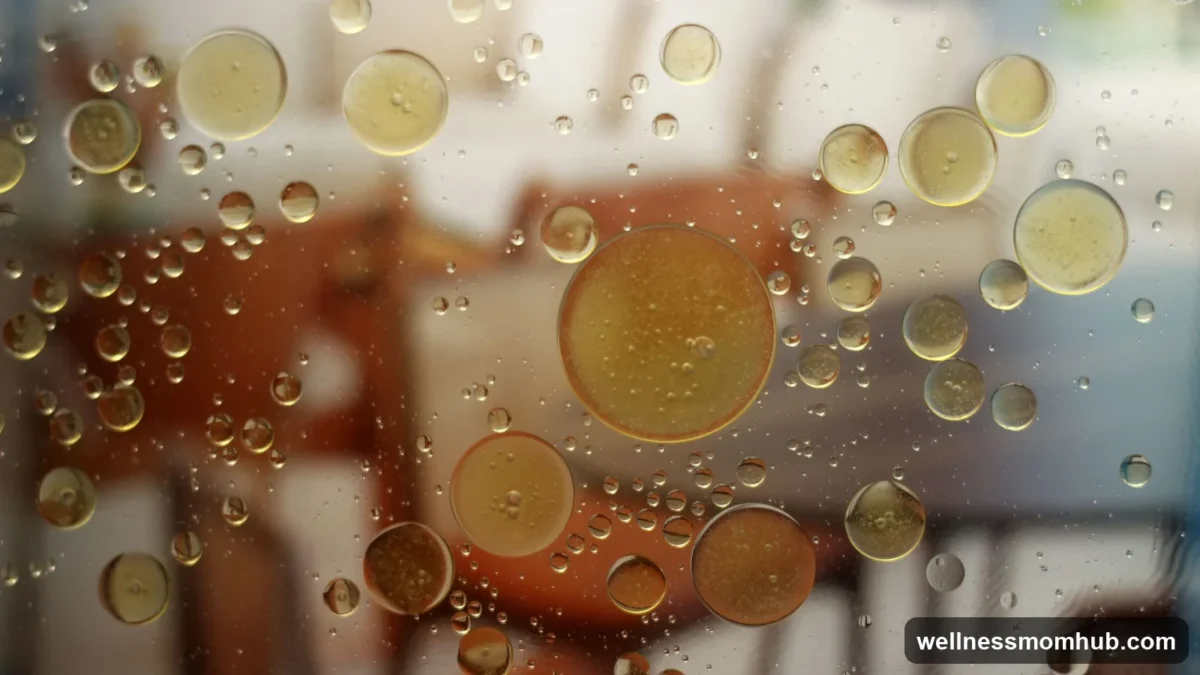
Quick answer: fill a clear jar halfway with water, add food coloring, then pour in cooking oil. The oil floats on top. Shake it and the oil breaks into bubbles, then rises and separates again. Oil and water don’t mix because water sticks to water and oil sticks to oil, and oil is lighter, so it floats.
Free printable Oil and Water Experiment Printable
 Save
What you need
- A clear jar with a tight lid (plastic is safest for little hands)
- Water
- Cooking oil: vegetable, canola, olive or baby oil all work
- Food coloring
- Salt and dish soap for the extra experiments
- A towel, because oil spills make floors slippery
How to do the oil and water experiment
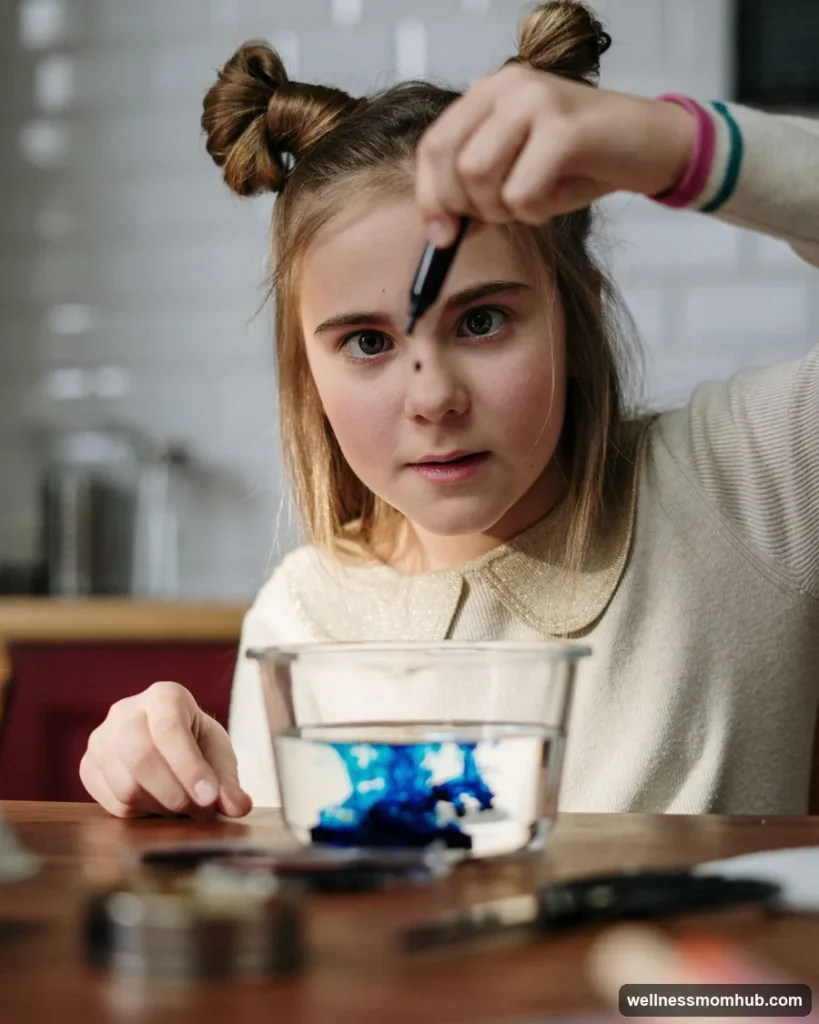
- Color the water. Fill the jar halfway with water, add 2 or 3 drops of food coloring and stir.
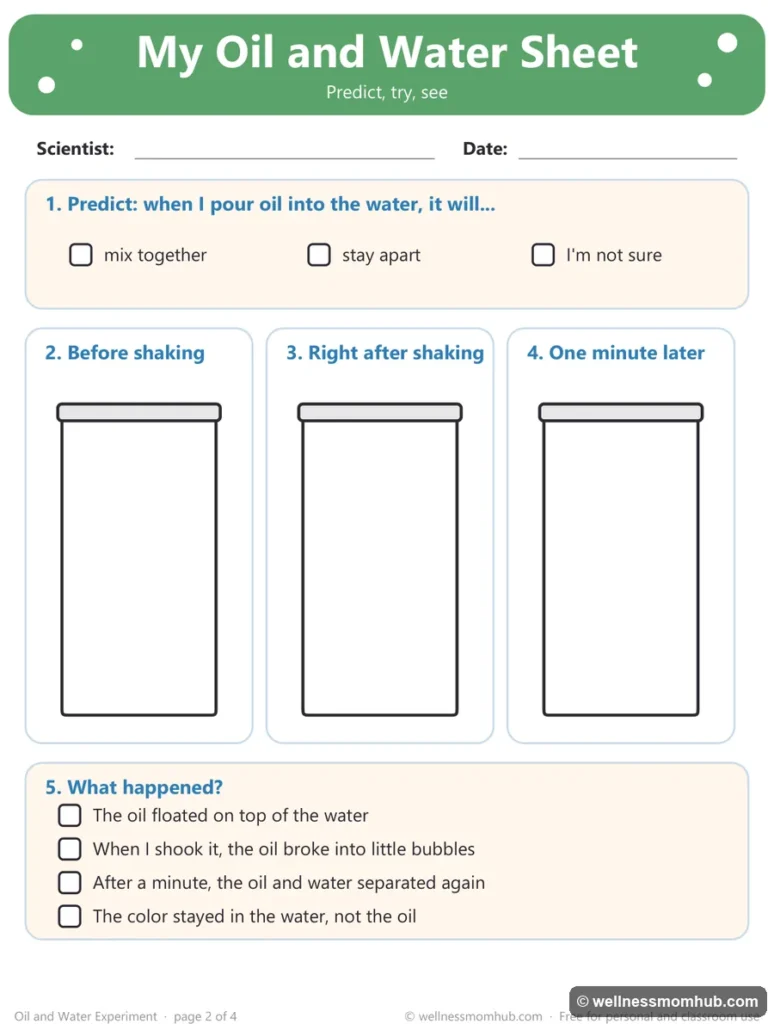
- Predict. Ask, “What will happen when we pour in the oil? Will it mix?” Let your child circle a guess on the observation sheet.
- Pour the oil. A grown-up pours oil until the jar is about three-quarters full. Watch where it goes.
- Draw it. Your child draws the jar: colored water at the bottom, oil on top.
- Shake. Put the lid on tight and shake hard. The oil breaks into lots of little bubbles.
- Watch for one minute. Set the jar down. The bubbles rise and join up until the oil is a layer on top again.
- Draw it again. Compare the “before” and “after” pictures. Was your guess right?
 Save
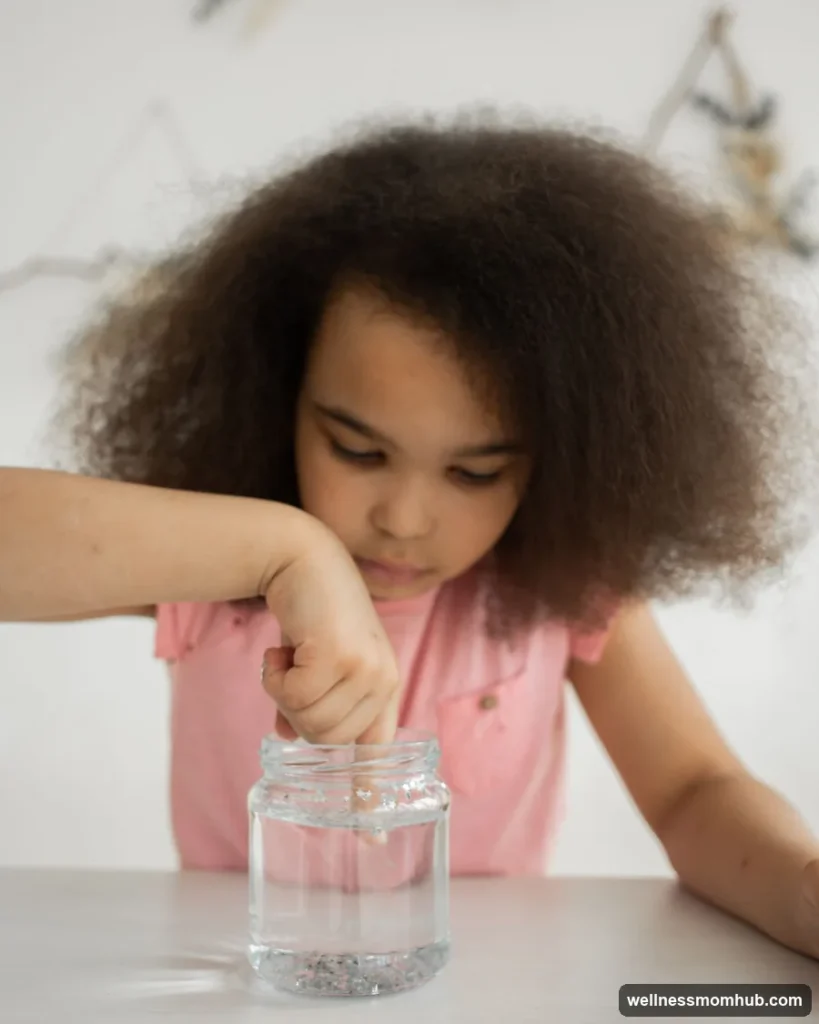
Ages 3 to 6 can do every step with help. Three-year-olds love the shaking and the colors. Five- and six-year-olds can predict, draw and explain what they saw.
Why don’t oil and water mix?
The kid answer: water likes to stick to water, and oil likes to stick to oil. Even when you shake them together, they find their own kind again. Oil is also lighter than water for its size, so it floats on top.
The grown-up answer: water molecules are polar, which means they have slightly charged ends that pull strongly on each other. Oil molecules are nonpolar, so they don’t join in, and the water squeezes them out. That’s why scientists call oil and water immiscible: they can’t mix on their own. Because oil is less dense than water, it ends up on top.
Food coloring is made to mix with water, not oil. You’ll see it in the next experiment, where colored drops wait in the oil and only spread once they reach the water (Science Notes).
 Save
3 more oil and water experiments to try
1. Salt lava lamp experiment (no fizzing tablets)
Most lava lamp experiments use fizzing antacid tablets. We skip them for young kids: each Alka-Seltzer Original tablet contains 325 mg of aspirin, and the label warns that children and teenagers who have or are recovering from chickenpox or flu-like symptoms should not use it (DailyMed label). They’re medicine, so they belong out of reach. Salt makes a lava lamp too:
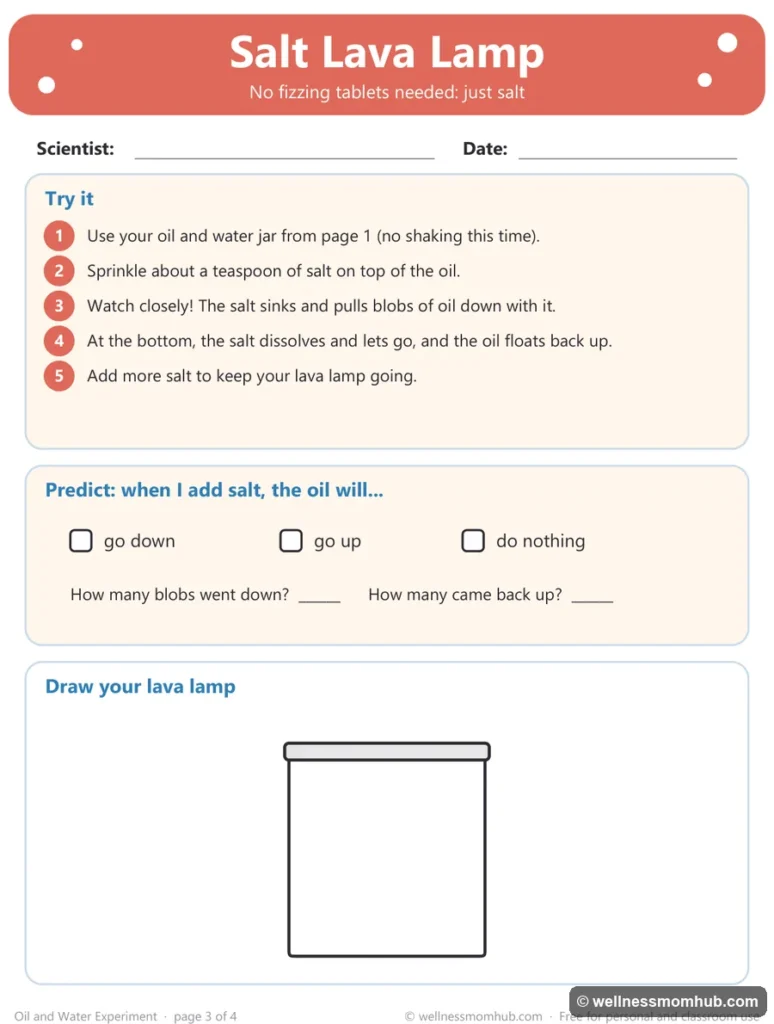
- Start with your oil and water jar, no shaking.
- Sprinkle about a teaspoon of salt on top of the oil.
- Watch the salt sink and pull blobs of oil down with it.
- At the bottom, the salt dissolves and lets go, and the oil floats back up.
- Add more salt to keep it going.
 Save
2. Fireworks in a glass
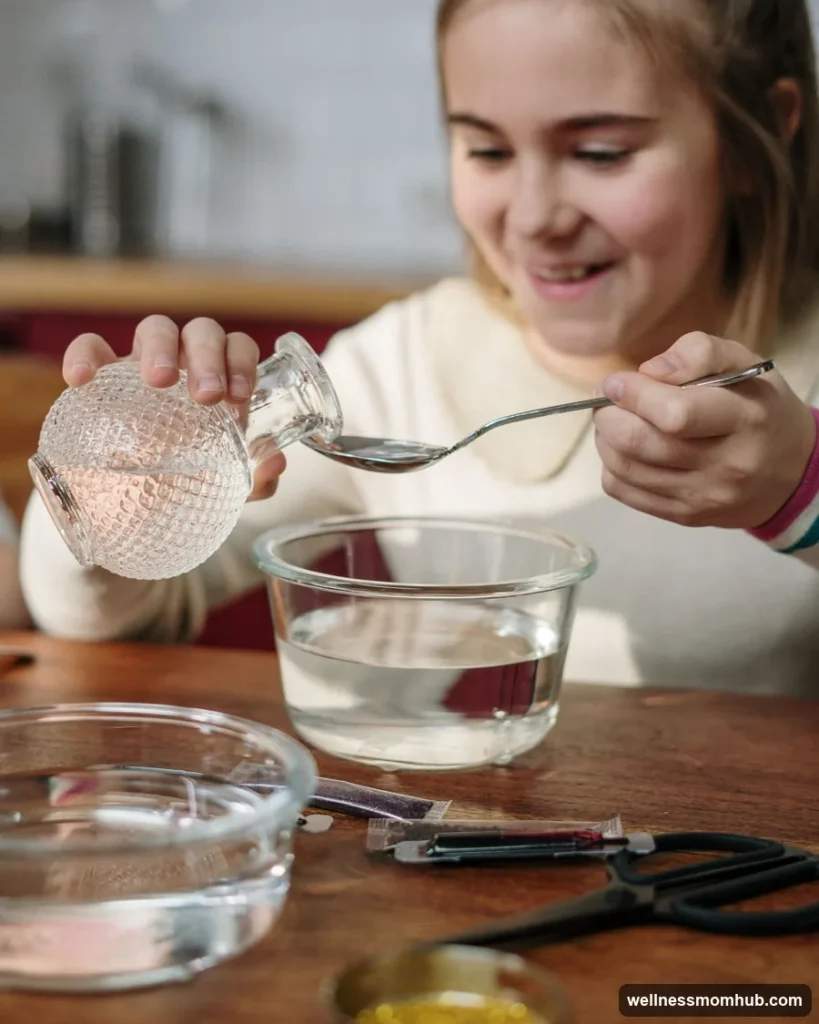
Pour a few spoons of oil into a small cup and add several drops of food coloring. Stir gently: the color stays in little beads. Then pour the oil onto a glass of water. As each colored drop sinks out of the oil and reaches the water, it bursts open and spreads like slow-motion fireworks.
 Save
3. The soap test
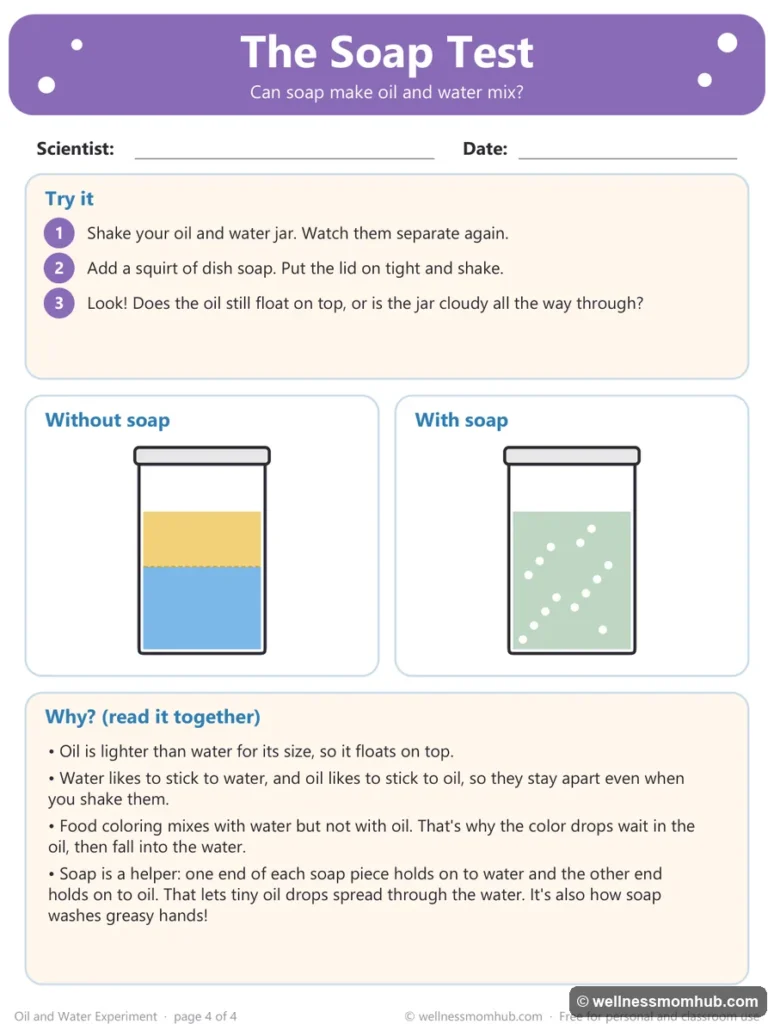
Shake your oil and water jar and watch it separate. Then add a squirt of dish soap and shake again. Now the jar turns cloudy all the way through. Soap is an emulsifier: one end of each soap molecule holds on to water and the other holds on to oil, so tiny oil drops can spread through the water instead of floating on top (Science Notes). It’s the same reason soap washes greasy hands.
 Save
A density experiment for kids: make layers
Want to see density in color? Slowly pour three liquids into a tall clear glass, one at a time: honey or corn syrup first, then colored water, then oil. They stack in layers because each one is heavier or lighter for its size. Drop in small, safe objects like a grape or a cork (with grown-up supervision) and see where each one stops.
Talk about it: “Which one is at the bottom? Why do you think the oil stayed on top?” There’s no wrong guess, only the next thing to try.
Science questions to ask by age
| Age | Try asking |
|---|---|
| 3 | “What color is the water? Where did the oil go? Can you shake it?” |
| 4 | “What do you think will happen next? Did the oil and water mix?” |
| 5 to 6 | “Why do you think the oil floats? What happened when we added soap? What else could we test?” |
The point isn’t the right answer. It’s the habit of guessing, testing and noticing. For more hands-on ideas, see our preschool activities at home and the pumpkin life cycle lesson.
 Save
Safety notes for kitchen science
- A grown-up handles glass and pours the oil. A plastic jar with a screw lid is best for little shakers.
- Nothing here is for drinking. Say it before you start, especially with toddlers in the room.
- Wipe oil spills right away. Oil on a hard floor is slippery.
- Keep fizzing tablets away from kids. Some contain aspirin. Use salt instead.
- Small objects in the density glass are for watching. Grapes and similar small items are choking-size for toddlers.
Pouring and stirring are also great practice for small hands. See our fine motor activities for toddlers and sensory bin ideas for more.
Free oil and water experiment sheets
The free oil and water experiment sheets are a 4-page PDF:
- Page 1: what you need, picture steps and grown-up notes.
- Page 2: the observation sheet: predict, then draw before shaking, after shaking and one minute later.
- Page 3: the salt lava lamp, with a prediction and a jar to draw.
- Page 4: the soap test and “Why?” in kid words.
Free for personal and classroom use, no email required.
Oil and water experiment FAQ
Do oil and water mix?
No, not on their own. Shaking breaks the oil into bubbles for a moment, but it always separates again and floats to the top. Add dish soap and they can stay mixed.
Why does oil float on water?
Oil is less dense than water, which means it’s lighter for the same amount. Lighter liquids rise above heavier ones, so the oil stays on top.
What age is the oil and water experiment for?
Ages 3 to 6 with a grown-up, and older kids enjoy the density layers and the soap test. Toddlers can watch and shake a jar with a tight lid.
How do you make a lava lamp without Alka-Seltzer?
Use salt. Sprinkle a teaspoon on top of the oil and water: the salt carries oil down, dissolves, and the oil floats back up. It skips the aspirin in fizzing tablets.
What oil works best?
Any clear cooking oil works. Vegetable or canola oil is cheap and easy to see through. Baby oil is very clear but is not for kitchens with little ones who might taste it.
Why does food coloring not mix with oil?
Food coloring is water-based. It stays in little beads in the oil and only spreads once it reaches the water.