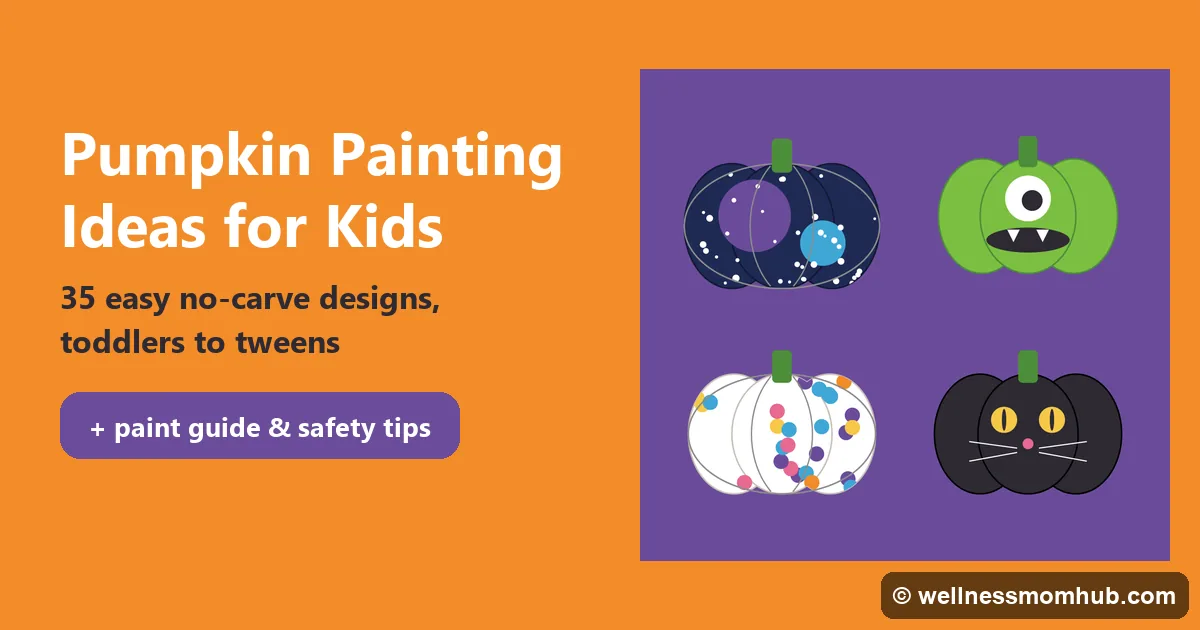
Painting a pumpkin gives kids the whole jack-o’-lantern experience without a carving knife. A painted pumpkin also lasts much longer than a carved one, because the shell stays sealed. These pumpkin painting ideas are sorted by age, from a one-year-old’s handprint to a ten-year-old’s galaxy, and each one lists the paint that works best for it.
Quick answer: for toddlers, use washable tempera or dot markers and try color-block ribs, polka dots, or a handprint. Preschoolers can handle monster faces, ghosts, and candy corn stripes. Big kids can try galaxy, paint drip, and spider web pumpkins with acrylic paint and paint pens. The paint guide, step-by-step method, and all 35 ideas are below.
What paint to use on a pumpkin
The paint matters more than the design. Pumpkin skin is waxy and slick, so some paints bead up or flake off once they dry.
| Paint | Best for | Pros | Watch out for |
|---|---|---|---|
| Washable tempera | Toddlers, ages 1–4 | Wipes off hands and tables, cheap, bright | Can crack or rub off a slick pumpkin once dry |
| Kids’ acrylic paint | Ages 4 and up | Sticks well, bold colors, dries fast | Stains clothes. Wash brushes before it dries |
| Dot markers | Ages 1–4 | Almost no mess, easy to grip | Light coverage. Best for dots and patterns |
| Paint pens | Ages 6 and up | Fine lines for faces, webs, and lettering | Shake well. Needs a dry base coat first |
| Chalkboard paint | Ages 6 and up (adult paints the base) | Draw a new face every day | The base coat takes a while to dry |
Tip for tempera: many teachers mix a drop of dish soap into tempera paint so it grips the waxy skin better. Wiping the pumpkin with a damp cloth and letting it dry fully before painting helps any paint stick.
Whatever you choose, look for paint labeled non-toxic. For art supplies sold in the US, the ACMI “AP” seal means a toxicologist has certified the product contains nothing in amounts harmful to children or adults when used as intended.
How to paint a pumpkin with kids
- Pick a smooth pumpkin. Small pie pumpkins and white pumpkins are easiest for little hands. Deep ridges are perfect for color-block designs.
- Wash and dry it. Wipe off dirt with a damp cloth, then let it dry completely.
- Cover the table. Lay down newspaper, an old shower curtain, or a flattened cardboard box, and put kids in a smock or an old T-shirt.
- Base coat (optional). For dark designs like galaxy or black cat, paint the whole pumpkin first and let it dry for about an hour.
- Paint the design. Let younger kids paint freely. Older kids can sketch first with a pencil.
- Add details last. Eyes, whiskers, and web lines go on once the base is dry, so the colors don’t muddy.
- Seal it (adults only). A coat of clear acrylic sealer or decoupage glue helps the paint survive porch weather. Spray sealers should be applied by an adult, outdoors, away from kids.
Pumpkin painting ideas for toddlers (ages 1–3)
For toddlers, the fun is in the squishing, dotting, and smearing, not the result. Keep sessions short, use washable paint, and stay close: paint and brushes end up in mouths at this age. For more October ideas that skip anything scary, see our Halloween activities for toddlers.
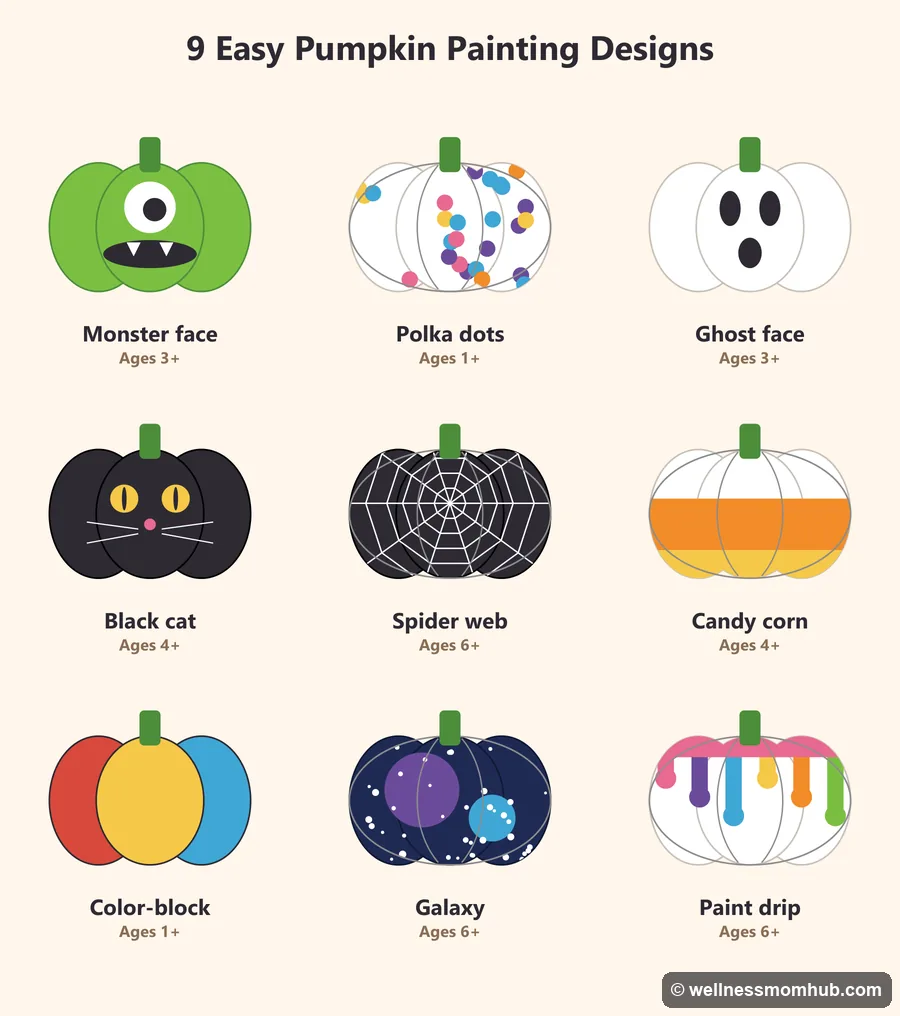
1. Color-block ribs. Give one color per section between the pumpkin’s natural ridges. The ridges act as built-in lines, so even wobbly strokes look intentional.
2. Dot marker polka dots. Hand over two or three dot markers and let them stamp all over a white pumpkin. It’s the lowest-mess option on this list.
3. Handprint pumpkin. Paint your toddler’s palm green and press it near the stem to make leaves and a vine. Add their name and the year with a paint pen, and it becomes a keepsake.
4. Fingerprint confetti. Fingertip dots in four bright colors, all over. Wipe hands between colors if you want the colors to stay clean.
5. Sponge stamping. Cut kitchen sponges into circles or triangles, clip each one with a clothespin as a handle, and stamp.
6. Sticker pumpkin (no paint). Big foam stickers or face stickers make a jack-o’-lantern with zero cleanup. Skip small stickers for kids who still put things in their mouths.
7. Washi tape stripes. Give toddlers strips of painter’s or washi tape to wrap around the pumpkin. It’s great fine motor practice, and you can peel it off and start again.
8. Paint-in-a-box roll. Put a mini pumpkin in a shoebox with a few blobs of paint, close the lid, and let your toddler shake it. Open it to a surprise splatter pattern.
9. Two-color smoosh. Squirt two colors on top of a pumpkin and let your toddler smear them down with their hands. Orange plus yellow or purple plus green both look great.
Pumpkin painting ideas for preschoolers (ages 3–5)
Preschoolers like to make something recognizable. Simple faces and bold patterns are the sweet spot: easy shapes, a clear “it’s a monster!” moment, and nothing too detailed. If you’re planning a party around the painting, our Halloween games for kids are sorted by age too.
10. One-eyed monster. Paint the pumpkin green, then add one big white eye, a black mouth, and two triangle teeth. Monsters can’t be “wrong,” so they’re perfect for this age.
11. Ghost face. On a white pumpkin, paint two black ovals for eyes and a round “oooh” mouth. It’s the easiest face there is.
12. Black cat. Paint the pumpkin black and let it dry. Then add yellow eyes, a pink nose, and white whiskers with a cotton swab.
13. Candy corn stripes. Paint a yellow band at the bottom and an orange band in the middle, and leave the top white (use a white pumpkin, or paint it white first).
14. Rainbow pumpkin. One color per rib in rainbow order. It’s a quiet color-name lesson.
15. Silly face mix-and-match. Cut eyes, noses, and mouths from craft foam and let kids glue on the funniest combination.
16. Spider pumpkin. Paint a big black dot and eight bent legs. Add googly eyes only for kids past the mouthing stage.
17. Sticker resist. Press star or heart stickers onto a white pumpkin, paint over everything, let it dry, then peel. The shapes “appear” like magic.
18. Bandage mummy. Wrap strips of white masking tape around the pumpkin, leaving a gap for two painted eyes.
19. Frankenstein. A green pumpkin with a black painted “hair” fringe at the top, a stitched scar, and two bolts drawn on the sides.
20. Bubble wrap print. Paint a sheet of bubble wrap and press it onto the pumpkin for an instant honeycomb texture.
21. Sunflower pumpkin. A yellow petal ring around a brown center makes a cheerful, non-spooky option for fall.
Pumpkin painting ideas for big kids (ages 6–12)
School-age kids can plan a design, wait for layers to dry, and use fine tools. These designs need acrylic paint, paint pens, and a little patience.
22. Galaxy pumpkin. Paint a navy or black base, sponge on purple and blue clouds, then flick white paint off a toothbrush for stars.
23. Paint drip. Set a white pumpkin upside down on a cup, then pour thinned acrylic paint over the base and let it run. Flip it once dry for drips that fall from the stem.
24. Spider web. Black base, then white paint-pen lines from the stem down, joined by curved strands. Add a small spider dangling from one line.
25. Constellation pumpkin. On a dark base, dot the stars of a real constellation and connect them with thin lines. Kids can look up their birthday-month constellation first.
26. Mandala dots. Use the end of a paintbrush, a pencil eraser, and a cotton swab to make dots in three sizes, working out in rings from the stem.
27. Plaid pumpkin. Paint wide stripes in one direction, let them dry, then cross them with thinner stripes in a second color.
28. Chalkboard pumpkin. An adult paints it with chalkboard paint, then kids draw a new face every day of October.
29. Favorite character. Use the pumpkin’s shape as a head: a superhero mask, a robot, an emoji, or a favorite animal. Sketch it in pencil first.
30. Sports ball. A white pumpkin becomes a baseball with red stitching, or an orange one becomes a basketball with black lines.
31. Name or monogram pumpkin. Lettering with a paint pen, or one big initial. These make easy gifts for grandparents and teachers.
Pumpkin painting ideas for the whole family
32. Family pumpkin patch. One pumpkin per person, each painted to look like its owner. Line them up on the steps.
33. Group monster. Each person paints one feature on the same big pumpkin without seeing the others’ plans.
34. Stack of three. Paint three pumpkins of different sizes as one stacked snowman, ghost, or totem, and display them stacked.
35. Pumpkin painting party. Set up one pumpkin per guest, a paint station, and a drying table. Hand out “awards” for the funniest, spookiest, and most colorful, so everyone gets one.
Turn it into a Halloween afternoon
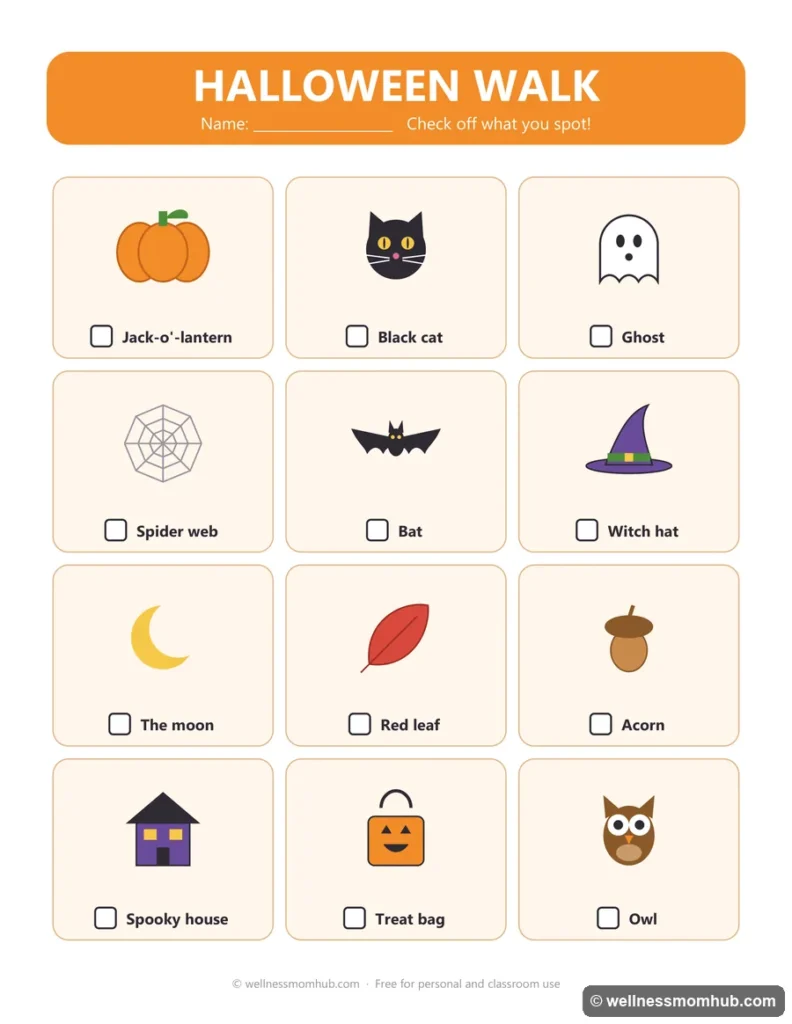
While the paint dries, keep kids busy with our free printable Halloween scavenger hunt. It has a picture checklist for a Halloween walk (jack-o’-lanterns, black cats, spooky houses), an indoor hide-and-find game, and picture cards to cut out and hide. Every item has a picture, so toddlers and non-readers can play.
How to make painted pumpkins last
- Don’t carve it. An uncut pumpkin keeps its shell sealed, so it lasts far longer than a carved jack-o’-lantern.
- Keep it dry and out of direct sun. Rain softens paint and sun fades it. A covered porch is ideal.
- Seal the paint. Clear acrylic sealer or decoupage glue (adult job) protects the design.
- Check the bottom. Soft spots start underneath. Set pumpkins on a plate or a piece of cardboard so they don’t sit in damp.
- Bring it in on frosty nights. Freezing and thawing turns pumpkins mushy fast.
Pumpkin painting safety notes
- Choose non-toxic, washable paint for anyone under 4, and supervise closely. Young kids put brushes and fingers in their mouths.
- Skip small add-ons for little ones. Googly eyes, buttons, sequins, and small pom-poms are choking hazards for children under 3 (CPSC toy safety).
- Grown-ups handle sprays, glue guns, and any cutting. Use spray sealer outdoors, away from children.
- Wash hands after painting, especially before snack time.
Looking for more fall ideas? Our fall activities for toddlers and sensory bin ideas pair well with a pumpkin painting day. When November comes, try these Thanksgiving crafts for toddlers. Need a shape to trace or a paper pumpkin to decorate? Grab our free pumpkin outline templates.
Pumpkin painting FAQ
What is the best paint for painting pumpkins?
Acrylic paint sticks best and holds up on a porch, so it’s the best choice for kids aged 4 and up. For toddlers, washable tempera or dot markers are easier to clean up, though tempera may crack or rub off once dry. Paint pens are best for fine details like faces and webs.
Can toddlers paint pumpkins?
Yes. Use washable, non-toxic paint, a small pumpkin, and simple designs like color-block ribs, polka dots, or a handprint. Keep the session short and stay close, because toddlers often put brushes and fingers in their mouths.
Do you need to seal a painted pumpkin?
Not for a pumpkin kept indoors. For porch pumpkins, a coat of clear acrylic sealer or decoupage glue protects the paint from rain and scuffs. An adult should apply spray sealers outdoors.
How long does a painted pumpkin last?
Much longer than a carved one, because the skin isn’t cut. Keep it dry, out of direct sun, and off damp ground, and bring it inside on freezing nights.
Should you paint a real pumpkin or a craft pumpkin?
Real pumpkins are cheaper and kids love the texture. Foam craft pumpkins are worth it when you want to keep the design for years, such as a handprint keepsake or a family name pumpkin.