The best toddler activities at home use stuff you already own: painter’s tape, a muffin tin, dried pasta, a laundry basket, a stack of paper cups. You don’t need a craft closet or an Amazon order. You need 45 screen-free ideas sorted by how much energy your kid has and how much cleanup you can stomach. That’s this list.
I put this together with a toddler who treats “it’s raining” as a personal insult. Some of these buy you twenty minutes to drink a hot coffee. Others get rejected on sight, and that is normal. Every list like this is really a menu, not a plan.
Important: This post shares general play ideas from home, not medical, developmental, or professional safety advice. Children and products differ, so check the manufacturer’s age label and instructions, supervise throughout, and ask your pediatrician about individual concerns.
Easy Toddler Activities You Can Set Up in 5 Minutes
The fastest easy toddler activities need one or two things you already have and take under five minutes to set up. These are your “it’s 7 a.m. and I haven’t had coffee” options. Low prep, low mess, high payoff. Start here when you need something right now.
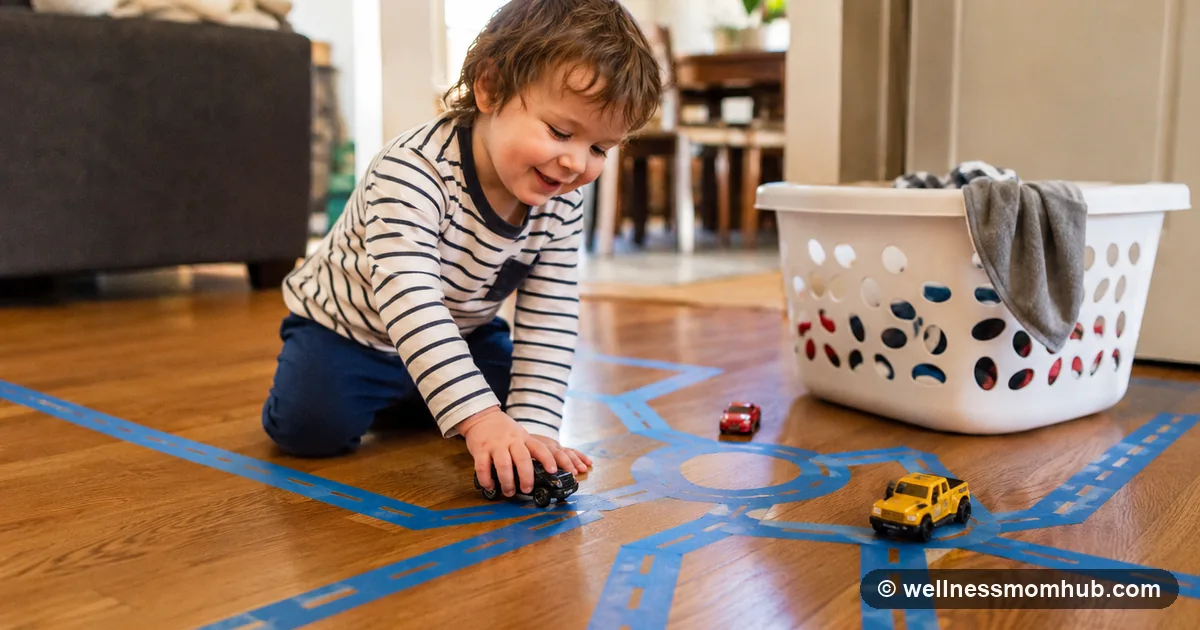
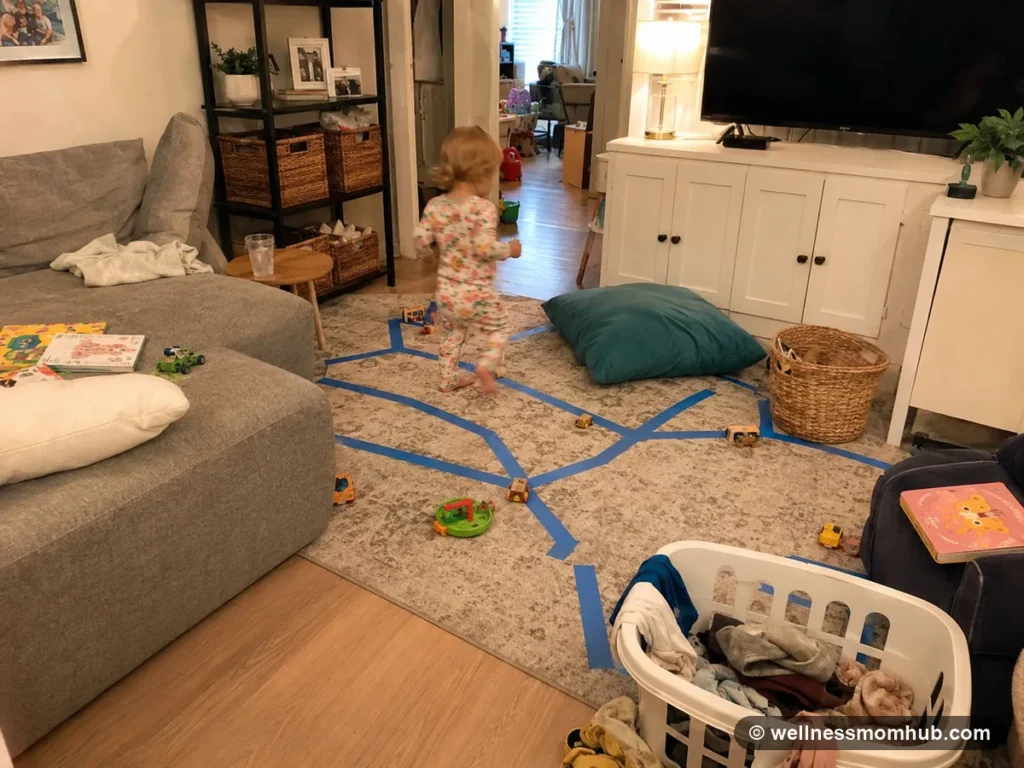
1. Tape road on the floor. Painter’s tape roads across the living room for toy cars. Why it works: it turns your existing floor into a whole new world, and the tape peels up clean.
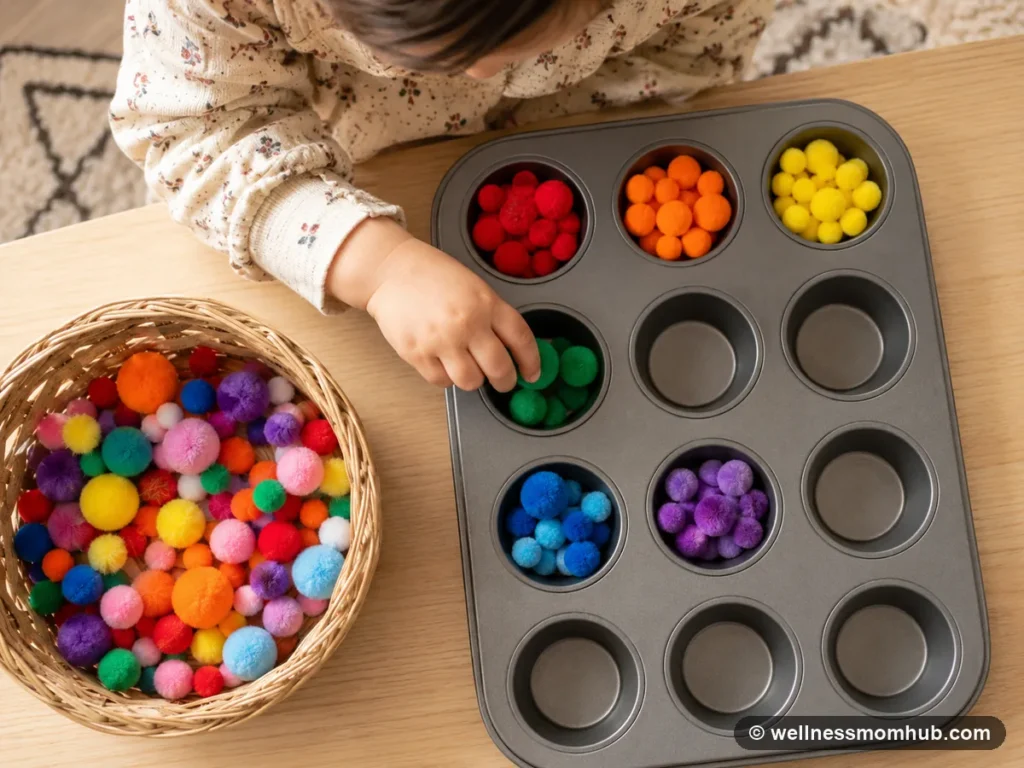
2. Muffin tin sorting. Pom-poms, buttons, or pasta sorted into the cups. Why it works: the compartments make it feel like a real job.
3. Contact paper wall. Tape a sheet sticky-side-out at toddler height. Hand over pom-poms and torn tissue paper. Why it works: no glue, no mess, and this open-ended setup lets them rearrange it a hundred times.
4. Sticker dot page. A sheet of paper plus a roll of dot stickers from the dollar-store aisle. Why it works: peeling stickers is secretly hard fine-motor work, and it’s silent.
5. Cup stacking tower. A sleeve of plastic or paper cups. Why it works: building up and knocking down never gets old, and there’s nothing to break.
6. Colander and pipe cleaners. Poke pipe cleaners through the holes of a colander. Why it works: it looks like magic to a toddler and builds real hand strength.
7. Water “painting” the walls. A cup of water and a clean paintbrush. Let them paint the tub, the tile, the sliding door. Why it works: zero mess, dries itself, weirdly mesmerizing.
8. Sock basketball. Rolled socks into a laundry basket. Why it works: it burns a little energy without a real ball flying into a lamp.
9. Pasta necklace threading. Dry penne on a shoelace. Why it works: threading builds hand-eye coordination, and you can eat the props later.
10. Ice cube rescue. Freeze small toys in a bowl of water. Hand over a spoon and warm water to rescue them. Why it works: it stretches a 5-minute setup into a much longer one.
Toddler Activities at Home That Burn Real Energy
The best activities for toddlers at home on a high-energy day get the big muscles moving without going outside. Your kid is bouncing off the couch. You can’t get to a park. You need gross-motor games that use your hallway, your stairs, and your furniture. These take the edge off.
11. Couch-cushion obstacle course. Pull the cushions onto the floor and make a jump-and-crawl path. Why it works: it’s a full-body workout disguised as destruction, which toddlers love.
12. Balloon keep-up. One balloon, one rule: don’t let it touch the floor. Why it works: it’s slow enough to be safe indoors but burns a shocking amount of energy.
Balloon safety: The U.S. Consumer Product Safety Commission warns that balloons are a choking hazard for children under 8, and uninflated or broken balloons are the most dangerous. Supervise continuously, keep balloons and fragments out of mouths, and throw away damaged balloons immediately.
13. Painter’s-tape hopscotch. Tape a grid, call out numbers or colors to jump to. Why it works: it combines movement with counting practice, no worksheet required.
14. Dance party freeze. Music on. Pause it and everyone freezes. Why it works: the freeze is what makes it a game instead of just flailing.
15. Laundry basket rides. Push them around the house in the basket. Why it works: it burns your energy, honestly, but the giggles are worth it.
16. Animal walk race. Bear crawl, bunny hop, crab walk down the hallway. Why it works: silly names get buy-in, and it’s real physical output.
17. Indoor bowling. Empty water bottles and any ball. Why it works: setup is fast and knocking things down is the whole point of being a toddler.
18. Beanbag toss. Rice-filled socks tossed into a bucket. Why it works: aiming builds coordination and gives you a second to sit.
19. Tape maze race. A winding tape line to walk along without stepping off. Why it works: it’s balance practice they think is a race.
20. Pillow mountain jumps. A pile of pillows to jump into, from the floor, not the furniture. Why it works: it satisfies the jumping urge that would otherwise be aimed at your couch.
Quick reality check on which of these fits your day:
| Activity type | Energy | Mess | Setup | Best for |
|---|---|---|---|---|
| 5-minute setups | Low to medium | Low | Under 5 min | Early mornings, witching hour |
| Energy burners | High | Low to medium | 5 to 10 min | Rainy days, no-nap days |
| Quiet independent play | Low | Low | 2 to 5 min | Conference calls, dinner prep |
| Under-2 low-risk | Low | Low | 2 to 5 min | Newly walking, mouths everything |
| Outdoor counterpoint | High | Medium to high | 5 to 15 min | First dry afternoon in a week |
Rainy Day Activities for Toddlers That Keep Them Busy
Rainy day activities for toddlers work best when they have a beginning, middle, and end. A little project arc that eats real time. On a stuck-inside day you don’t want ten things that last two minutes each. You want three or four that last twenty.
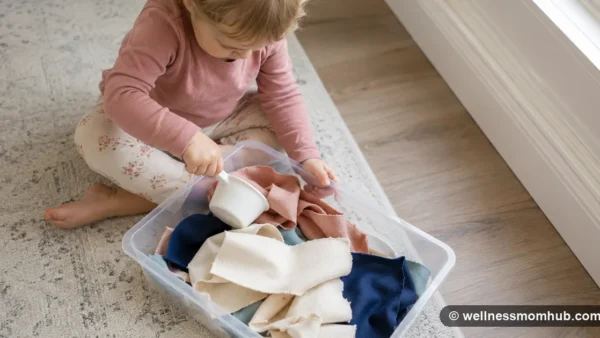
21. Sensory bin with dried beans. A bin of beans or rice, cups, scoops, and a funnel. Why it works: this sensory play has the best time-to-effort ratio on the whole list. See my full sensory bin ideas for toddlers guide for 35 more setups.
22. Baking-soda and vinegar tray. Baking soda in a tray, colored vinegar in a dropper. Why it works: the fizz reaction astonishes them every single time.
23. Kitchen restaurant. Plastic dishes, play food, and a towel over the arm. Why it works: imaginative play stretches long and needs almost nothing from you.
24. Cardboard box anything. A big box becomes a car, a house, a boat. Why it works: the box out-plays every toy that came inside it. This is the one I’d bet money on.
There is a reason every parent finds this out the same way. The box a large appliance arrives in will hold a toddler’s attention longer than anything you bought that month. It becomes a bus, then a shop, then a cave to hide in, and it survives being coloured on. Keep the next big one for a week before you break it down.
25. Indoor picnic. Blanket on the floor, snacks, stuffed-animal guests. Why it works: changing the location of lunch resets the whole mood.
26. Fort building. Blankets over chairs, flashlight inside. Why it works: the fort itself is the activity, then reading inside it is the sequel.
27. Sticker and magazine collage. Old catalogs, safety scissors or just tearing, a glue stick. Why it works: tearing paper is deeply satisfying and free.
28. Homemade playdough. Flour, salt, water, oil. Why it works: making it is half the activity, and it lasts for weeks in a bag.
29. Puzzle marathon. Rotate three or four puzzles they haven’t seen in a while. Basic toy rotation in action. Why it works: “new” old puzzles feel brand new after a month in the closet.
30. Bathtub at 2 p.m. A midday bath with cups and a whisk. Why it works: it’s a total reset for a cranky rainy afternoon and it’s contained.
Quiet Things to Do With a Toddler for Independent Play
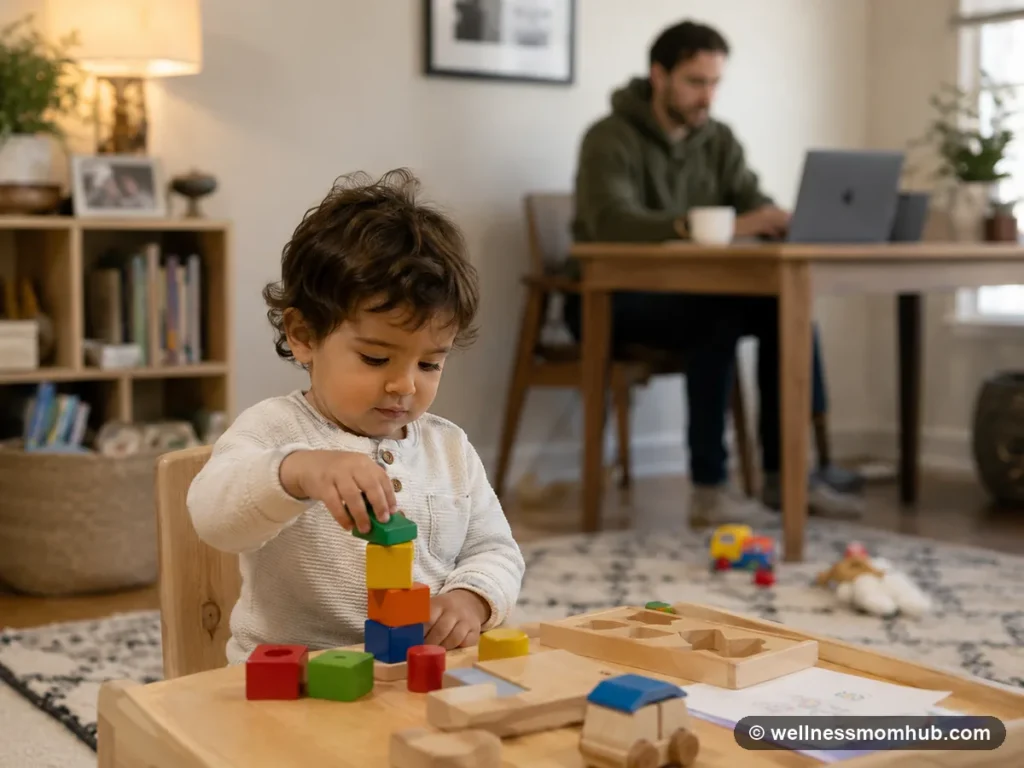
The best quiet things to do with a toddler are self-explaining. Your kid can run the activity without you narrating every step. These at-home activities for toddlers are the ones I reach for during a work call or while I’m getting dinner started. Set it up, step back, and mostly let them go.
31. Busy board or latch board. Zippers, buckles, switches. Very Montessori-style practical life. Why it works: fiddling with real fasteners holds attention with zero input from you.
32. Sticker book. A dedicated reusable sticker book. Why it works: it’s the closest thing to a guaranteed 15 quiet minutes I own.
33. Water bead bin (supervised). Sensory bin of water beads with scoops. Why it works: the texture is hypnotic. Water beads are a choking and swallowing hazard, and they expand after being swallowed. Supervise closely and skip them entirely for kids who still mouth everything.
34. Wooden blocks in a new spot. Move the block bin to a different room. Why it works: a change of scenery makes old toys interesting again.
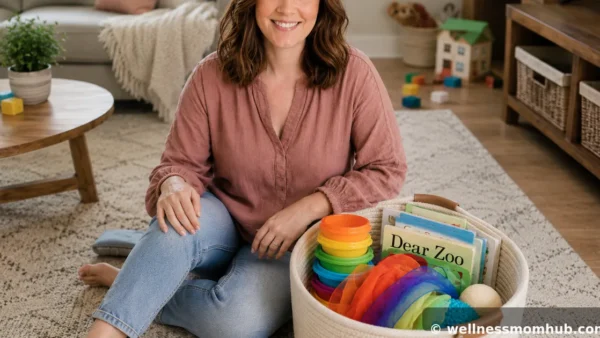
35. Board books in a basket. A basket of books beside a pillow. Why it works: a defined cozy reading corner invites solo page-turning.
36. Pom-poms and an empty tissue box. Push pom-poms through the slot. Why it works: the drop-and-retrieve loop is endlessly repeatable and silent.
37. Magnetic tiles on the fridge. Any magnet set at their height. Why it works: it turns the kitchen into their workspace while you cook.
38. Busy bag at the table. A zip bag of one quiet task, like clothespins on a cup rim or buttons to sort. Why it works: a self-contained busy bag travels to the table, the car, or a waiting room.
Somewhere around activity 30 you’ll lose track of which ones you’ve already done this week. That’s exactly why I made a printable pack of these as flip-and-pick cards. Grab the free Rainy-Day Activity Cards and let your kid pull one when boredom hits. Bonus: handing over the choice ends the “I don’t want to” negotiation before it starts.
Indoor Activities for Toddlers Under 2 (Low-Risk Options)
Indoor activities for toddlers under 2 need to work for a kid who still puts everything in their mouth and is unsteady on their feet. That rules out small parts, real scissors, and anything with a choking hazard. These are simple, big-piece, low-fall-risk options for your newest walker.
39. Stacking cups. Nesting or stacking cups, oversized. Why it works: big pieces, no small parts, and the crash is the reward.
40. Ball drop tube. A cardboard tube taped to the wall. Drop a ball through. Why it works: cause-and-effect is peak entertainment at this age.
41. Soft block towers. Fabric or foam blocks. Why it works: nothing hurts when the tower falls on a foot, and it always falls on a foot.
42. Peekaboo scarf pull. Scarves stuffed into an empty wipes container. Why it works: pulling them out one by one is a full activity at this age, and it resets in seconds when they want it again.
43. Big-knob puzzles. Chunky wooden puzzles with grab knobs. Why it works: the knobs fit tiny hands and there are no swallowable pieces.
44. Empty-and-fill baskets. A basket and a pile of soft toys to load and dump. Why it works: “in and out” is the entire job description of a new toddler.
One honest note for this age group: skip anything with dried beans, water beads, small pom-poms, or deflated balloons until they’re reliably past the mouthing stage. The American Academy of Pediatrics choking-prevention guidance is a good baseline, but you know your kid. Follow your pediatrician on individual concerns.
If your walker is brand new to all of this, the age-matched list is activities for 1 year olds, organised month by month.
Toddler Outdoor Activities for When the Rain Finally Stops
Toddler outdoor activities are the natural reset after days stuck inside. Being outside wears them out faster than anything you can do indoors. The second the rain breaks, get everyone out the door with almost no gear. When in doubt, go outside.
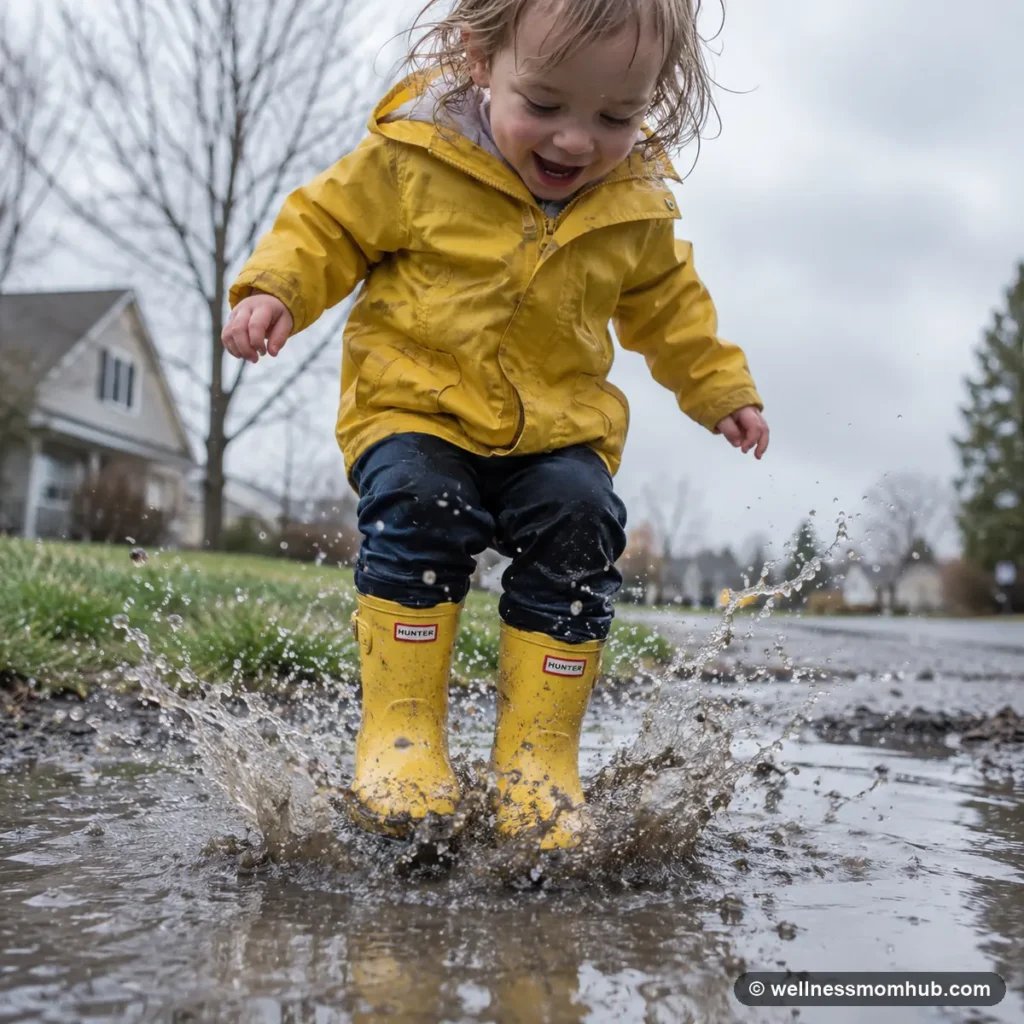
45. Puddle stomping (in boots). Boots on, find the biggest puddle, let them go. Why it works: the thing they most want to do is also the easiest to say yes to. Wet clothes wash.
A few more that don’t need their own number because they’re obvious once you’re out there. A nature hunt for specific colors. Sidewalk chalk. Blowing bubbles. A slow walk around the block naming everything you pass. Washing riding toys with a bucket of soapy water. None of these need a plan. Outside does most of the work for you.
When the weather turns properly warm, 100 summer activities for kids picks up from here.
Frequently Asked Questions
How do you entertain a toddler indoors?
Entertain a toddler indoors by rotating short activities instead of forcing one long one:
- Burn energy with an obstacle course or dance party.
- Offer quiet play like a sensory bin or sticker book.
- Start pretend play with a fort or a play kitchen.
- Switch every 10 to 15 minutes to match their attention span.
- Lower your mess standards on the hard days.
What do you do with a toddler all day at home?
You get through a full day at home with a toddler by loosely blocking the day into chunks: morning energy burn, a snack, quiet independent play, lunch, a big project activity, and outdoor time if the weather allows. You don’t need to fill every minute. A mix of active and calm activities with real breaks works better than a packed schedule. Keeping a printed list or activity-card deck on the fridge saves you from decision fatigue at 3 p.m.
What are the easiest toddler activities that don’t make a mess?
The easiest low-mess toddler activities use stickers, tape, cups, and pom-poms. Things that don’t stain, spill, or need cleanup. Sticker pages, cup stacking, tape roads, and pushing pom-poms through a tissue-box slot are all near-zero-mess and take under five minutes to set up. Save the sensory bins and paint for days you have the energy to clean up after.
What household items make good toddler activities?
The best toddler activities at home come from things you already own: painter’s tape, muffin tins, plastic cups, cardboard boxes, dried pasta, laundry baskets, colanders, and old socks. Most viral activity ideas are just clever uses of kitchen and recycling-bin items. Before you buy anything, check your junk drawer, your recycling, and the dollar-store bins. You’re probably one cardboard box away from a full afternoon.
How do I keep my toddler busy while I work from home?
Keep a toddler busy during work-from-home stretches by prepping two or three self-running activities the night before: a busy bag, a sensory bin, and a sticker book. Rotate them during your calls. Set each one up during a break so it’s ready to hand over the moment you need 15 minutes. Independent-play activities buy you the most uninterrupted time.
How long will a toddler play independently?
Most toddlers play independently in short bursts, anywhere from a few minutes to about 20, and it stretches with practice and the right activity. Self-explaining setups like sensory bins, busy boards, and sticker books hold attention longest. If your kid taps out fast, start with five minutes nearby and build from there. Every toddler is different.
Your free printable: I pulled 24 of these into the free Rainy-Day Activity Cards, a print-and-cut deck you keep on the fridge for the next stuck-inside day. The cards are colour-coded by type, so you can grab a 5-minute setup, an energy burner, a quiet-play card, or a go-outside card depending on the kind of day it is. Print it once, laminate if you’re fancy (I’m not), and let your toddler pull a card when boredom hits.
Related reading: activities for 2 year olds and activities for 3 year olds.
Once the activity is sorted, lunch is the next decision. 60 toddler lunch ideas covers daycare, cold boxes, and picky eaters.
If the harder part is the shape of the whole day rather than the activity, here is a realistic stay-at-home mom schedule built on five flexible anchors.